Article Text
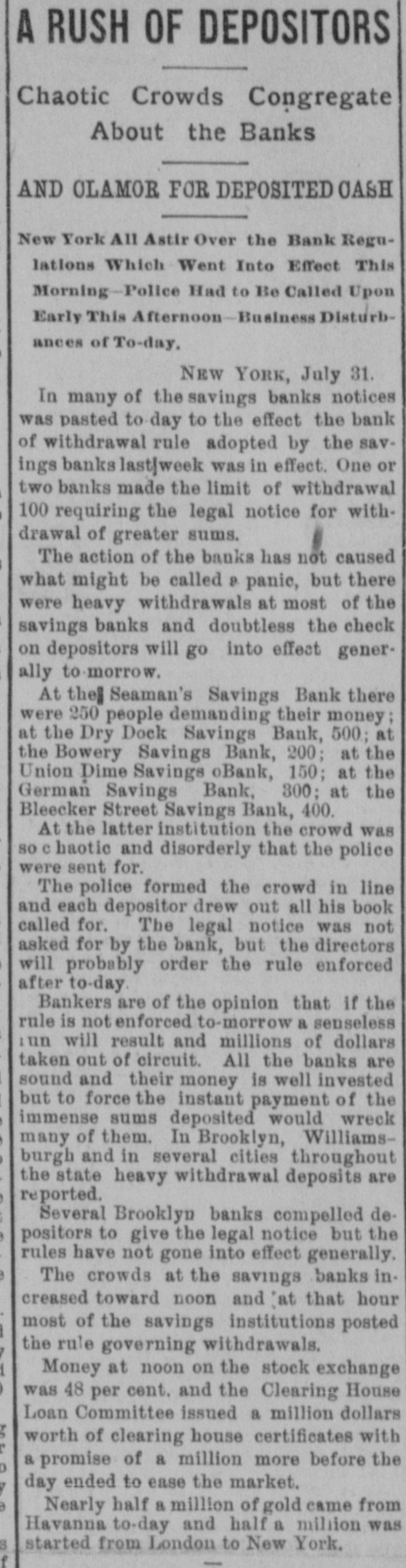
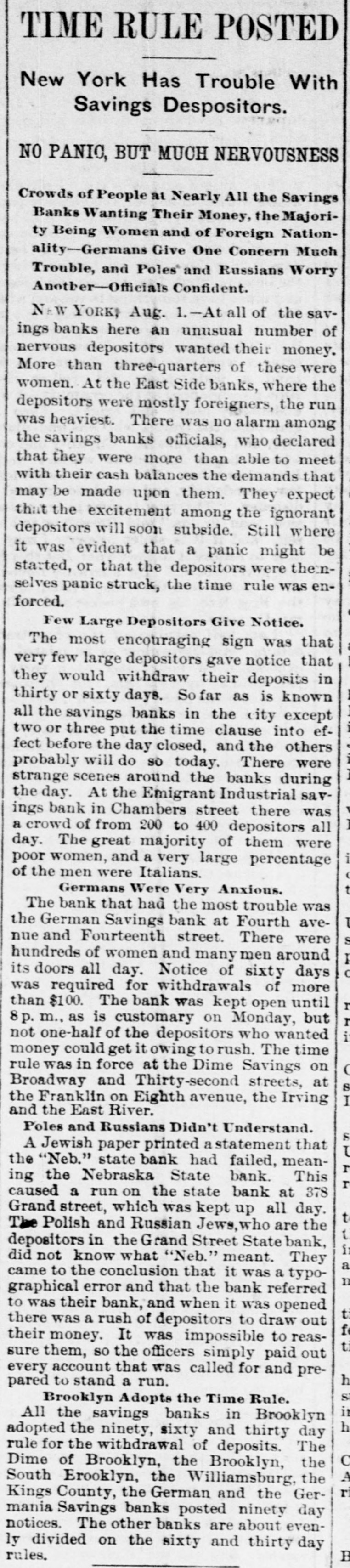
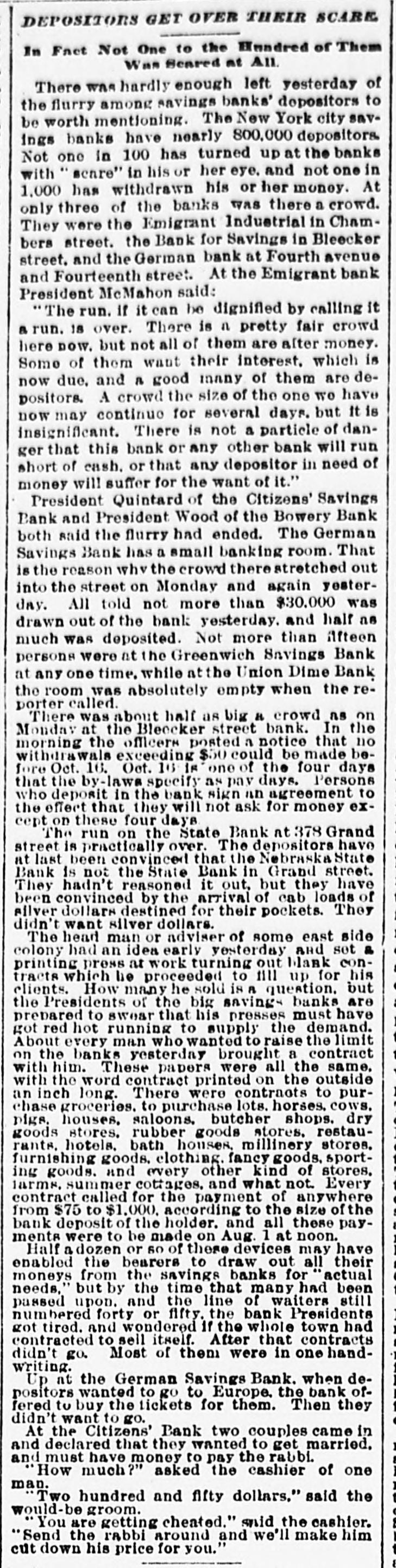
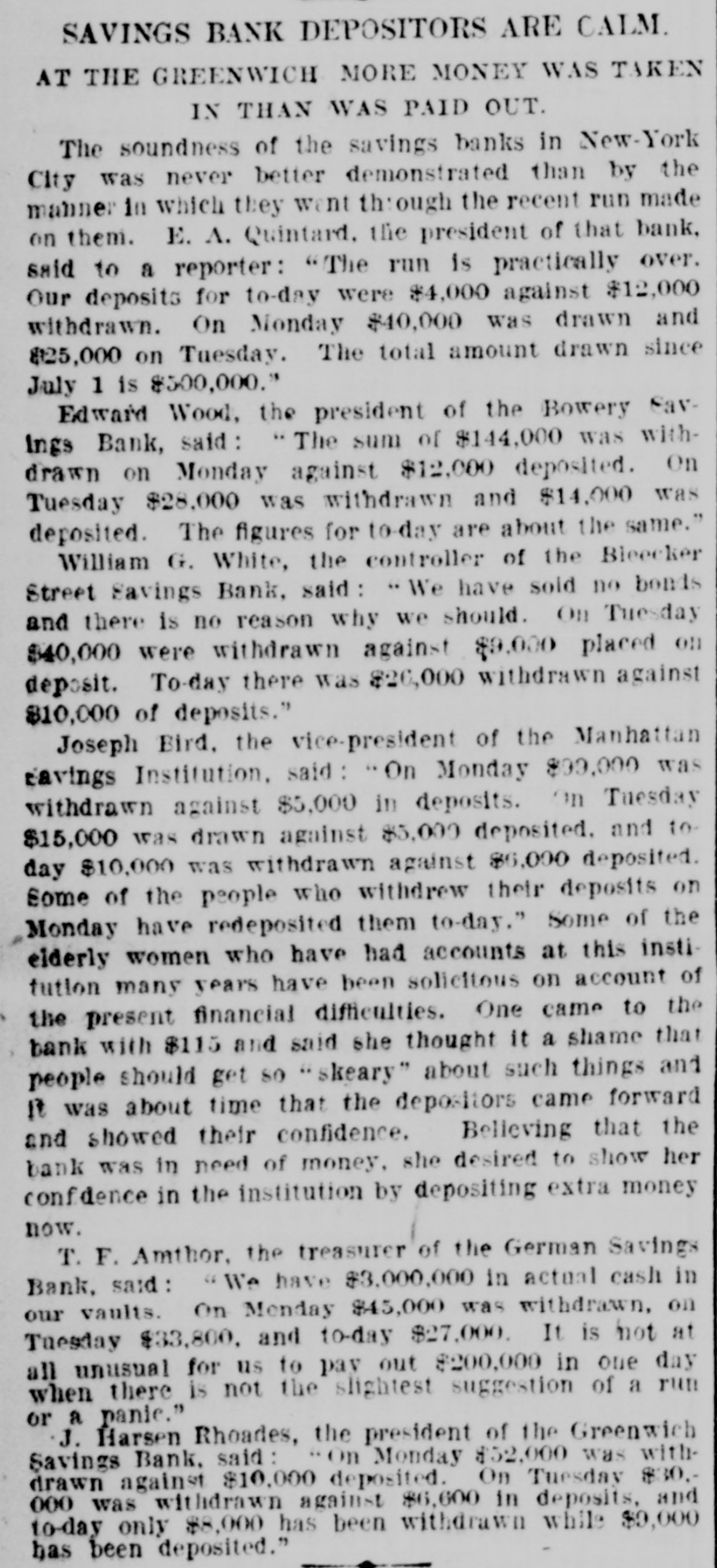
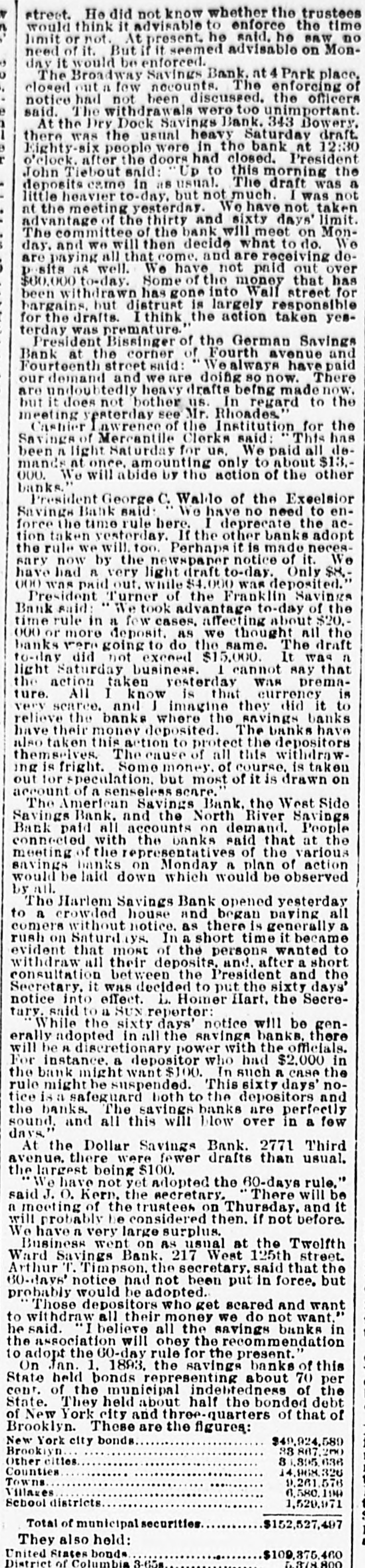
and nu SZUJABS ey enjorce eye sjunooou MOJ " 1110 per ice had not been discussed. the officer 1. The withdrawals were too unimportant the Dry Dock Savings Bank. 343 Bowery e was the usual heavy Saturday draft hty-six people were in the bank at 12:30 ock. after the doors had closed. President n Tiebout said: Up to this morning the osits came in as usual. The draft was e heavier to-day. but not much. I was not 10 meeting yesterday. We have not taken antage of the thirty and sixty days' limit committee of the bank will meet on Monand we will then decide what to do. We paying all that come. and are receiving dets as well. We have not paid out over 000 to-day. Some of the money that has 1 withdrawn has gone into Wall street for rains. but distrust is largely responsible he drafts. I think the action taken yesay was premature. esident Bissinger of the German Savings k at the corner of Fourth avenue and teenth street said: We always have paid demand and we are doing so now. There indoubtedly heavy drafts being made now. t does not bother us. In regard to the ting yesterday see Mr. Rhoades." shier awrence of the Institution for the ngs of Mercantile Clerks said: This has n. light Saturday for us. We paid all dede at once. amounting only to about $13.We will abide by the action of the other s." sident George C. Waldo of the Excelsior -ue 07 peou ou DAWY OM :ping NUMB HMU . the time rule here. I deprecate the actaken vesterday. If the other banks adopt ale we will. too. Perhaps it is made necesnow by the newspaper notice of it. We had A very light draft to-day. Only $8.personed. SUM 000't$ AMM uno pind SUA sident Turner of the Franklin Savings : said: We took advantage to-day of the -'OAS enoque cases. MOJ R up alna out 114 though OM SW Tisodop олош ,10 s vere going to do the same. The draft u SUM 11 '000'91$ редэха 100 PIP A Saturday business. 1 cannot say that action taken yesterday Was prema#! servence think SI mour I IIV scaree. and I imagine they did it to ve the banks where the savings banks their money deposited. The banks have taken this action to protect the depositors selves. The cause of all this withdraw4 fright. Some money. of course. is taken or speculation. but most of it is drawn on secure securites v jo que . American Savings Bank, the West Side gs Bank. and the North River Savings paid all accounts on demand. People reted with the banks said that at the ing of the representatives of the various gs banks on Monday a plan of action I be laid down which would be observed , I. Harlem Savings Bank opened yesterday crowded house and began paving all 8 SI there SB received another 9.1 on Saturday In a short time it became nt that most of the persons wanted to short B rette 'pun peposits. that II" iltation between the President and the tary. it was decided to put the sixty days' e into effect. L. Homer Hart. the Secrerepreter was " 04 plus hile the sixty days' notice will be gen* adopted in all the savings banks. there e R. discretionary power with the officials. up $2.000 puy 044 B ink might want $100. In such a case the night he suspended. This sixty days' no, a safeguard both to the depositors and anks. The savings banks are perfectly Moj B up JOAO MOTH IIIM sills 118 pun i the Dollar Savings Bank. 2771 Third 1e. there were fewer drafts than usual. rgest being $100. e have not yet adopted the 60-days rule." . O. Kern. the secretary. There will be ting of the trustees on Thursday. and it robably be considered then. if not before. ave n very large surplus. iness went on as usual at the Twelfth Savings Bank. 217 West 125th street. r 'I'. Timpson. the secretary. said that the vs' notice had not been put in force. but bly would be adopted. hose depositors who get scared and want hdraw all their money we do not want." d. "I believe all the savings banks in sociation will obey the recommendation