Article Text
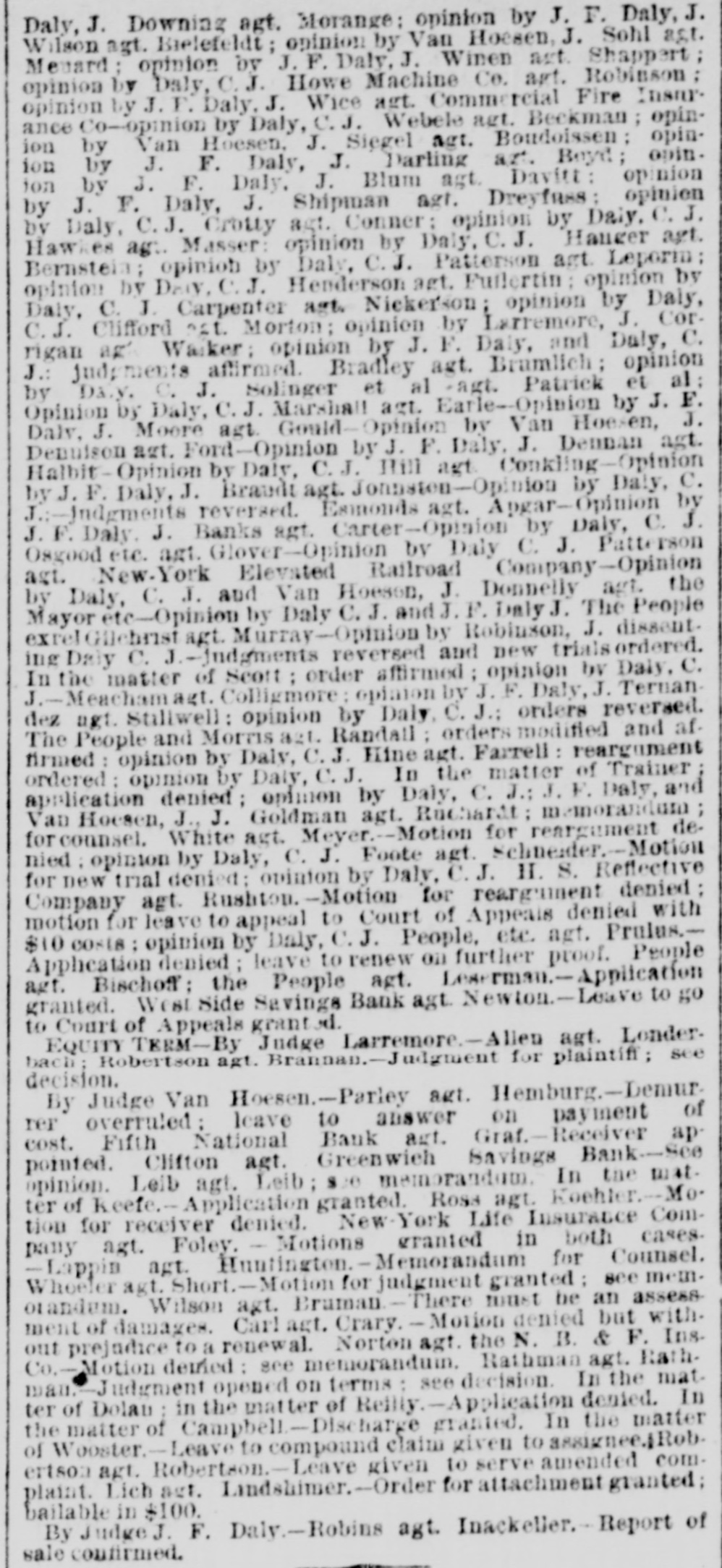
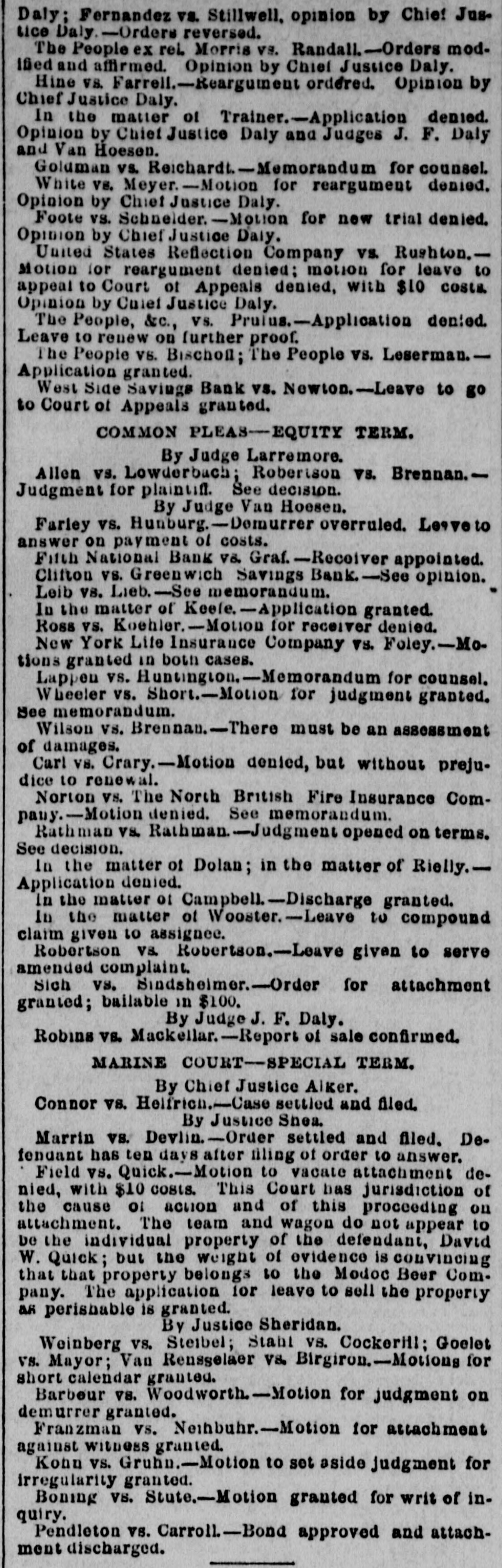
Daly; Fernandez vs. Stillwell, opinion by Chief Jus- tice Daly.-Orders reversed. The People ex rel. Morris vs. Randall.-Orders mod- ified and affirmed. Opinion by Chief Justice Daly. Hine vs. Farrell.-Reargument ordered. Opinion by Chief Justice Daly. In the matter of Trainer.-Application denied. Opinion by Chief Justice Daly and Judges J. F. Daly and Van Hoesen. Goldman vs. Reichardt.-Memorandum for counsel. White vs. Meyer.-Motion for reargument denied. Opinion by Chief Justice Daly. Foote vs. Schneider.-Motion for new trial denied. Opinion by Chief Justice Daly. United States Reflection Company vs. Rushton.- Motion for reargument denied; motion for leave to appeal to Court of Appeals denied, with $10 costa. Opinion by Chief Justice Daly. The People, &c., vs. Pruius.-Application denied. Leave to renew on further proof. The People vs. Bischofl; The People vs. Leserman. - Application granted. West Side Savings Bank vs. Newton. -Leave to go to Court of Appeals granted. COMMON PLEAS-EQUITY TERM. By Judge Larremore. Allen vs. Lowderbach; Robertson vs. Brennan. Judgment for plaintiff. See decision. By Judge Van Hoesen. Farley vs. Hunburg.-Demurrer overruled. Lesve to answer on payment of costs. Fifth National Bank vs. Graf. -Receiver appointed. Clifton vs. Greenwich Savings Bank. -See opinion. Leib vs. Lieb. - See memorandum. In the matter of Keefe. -Application granted. Ross vs. Koehler. - Motion for receiver denied. New York Life Insurance Company vs. Foley.-Mo- tions granted in both cases. Lappen vs. Huntington. -Memorandum for counsel. Wheeler vs. Short.-Motion for judgment granted. See memorandum. Wilson vs. Brennan. There must be an assessment of damages. Carl vs. Crary. -Motion denied, but without preju- dice to renewal. Norton vs. The North British Fire Insurance Com- pauy.-Motion denied. See memorandum. Rathman vs. Rathman.-Judgment opened on terms. See decision. In the matter of Dolan; in the matter of Rielly. - Application denied. In the matter of Campbell. -Discharge granted. In the matter of Wooster.-Leave to compound claim given to assignee. Robertson vs. Robertson.-Leave given to serve amended complaint. Sich vs. Sindsheimer. - Order for attachment granted; bailable in $100. By Judge J. F. Daly. Robins vs. Mackellar.-Report of sale confirmed. ### MARINE COURT-SPECIAL TERM. By Chief Justice Alker. Connor vs. Helfrich. - Case settled and filed. By Justice Shea. Marrin vs. Devlin. -Order settled and filed. De- fendant has ten days after filing of order to answer. Field vs. Quick. - Motion to vacate attachment de- nied, with $10 costs. This Court has jurisdiction of the cause of action and of this proceeding on attachment. The team and wagon do not appear to be the individual property of the defendant, David W. Quick; but the weight of evidence is convincing that that property belongs to the Modoc Beer Com- pany. The application for leave to sell the property as perishable is granted. By Justice Sheridan. Weinberg vs. Steibel; Stahl vs. Cockerill; Goelet vs. Mayor; Van Rensselaer vs. Birgiron.-Motions for short calendar granted. Barbour vs. Woodworth.-Motion for judgment on demurrer granted. Franzman vs. Neihbuhr.-Motion for attachment against witness granted. Kohn vs. Gruhn.-Motion to set aside judgment for irregularity granted. Boning vs. Stute.-Motion granted for writ of in- quiry. Pendleton vs. Carroll. -Bond approved and attach- ment discharged.