Click image to open full size in new tab
Article Text
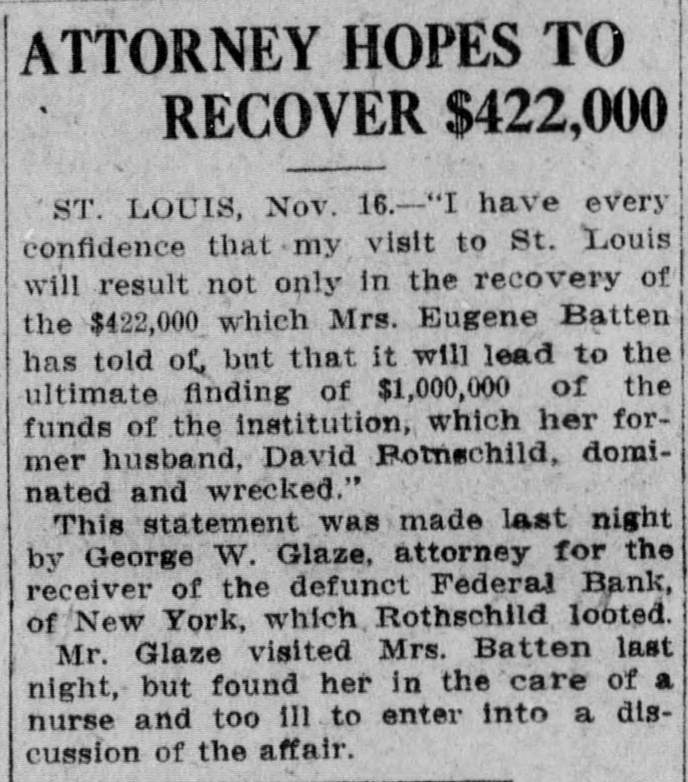
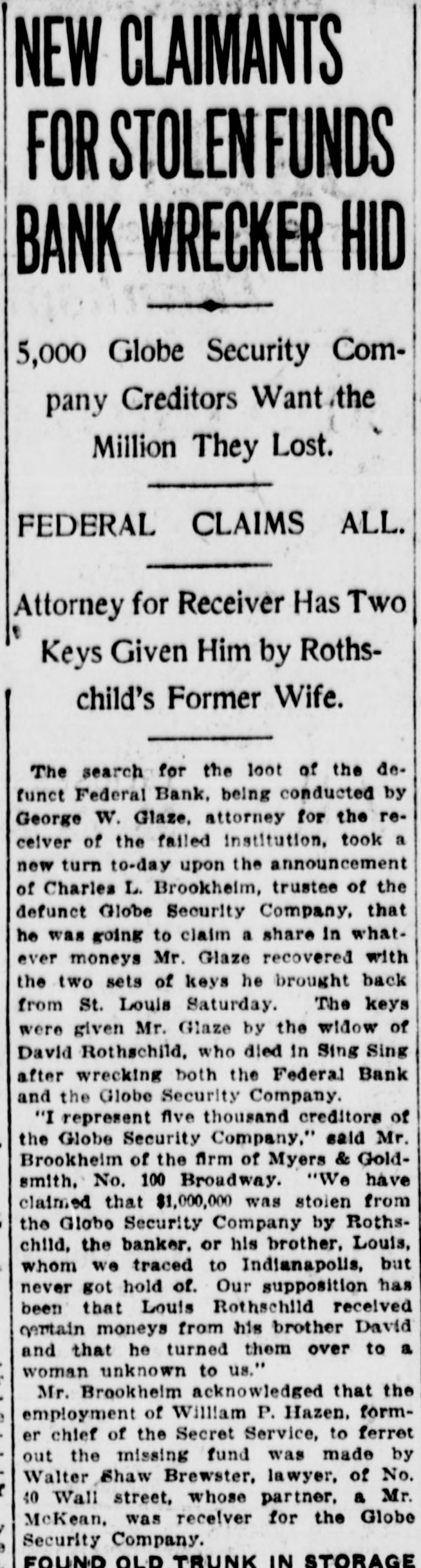
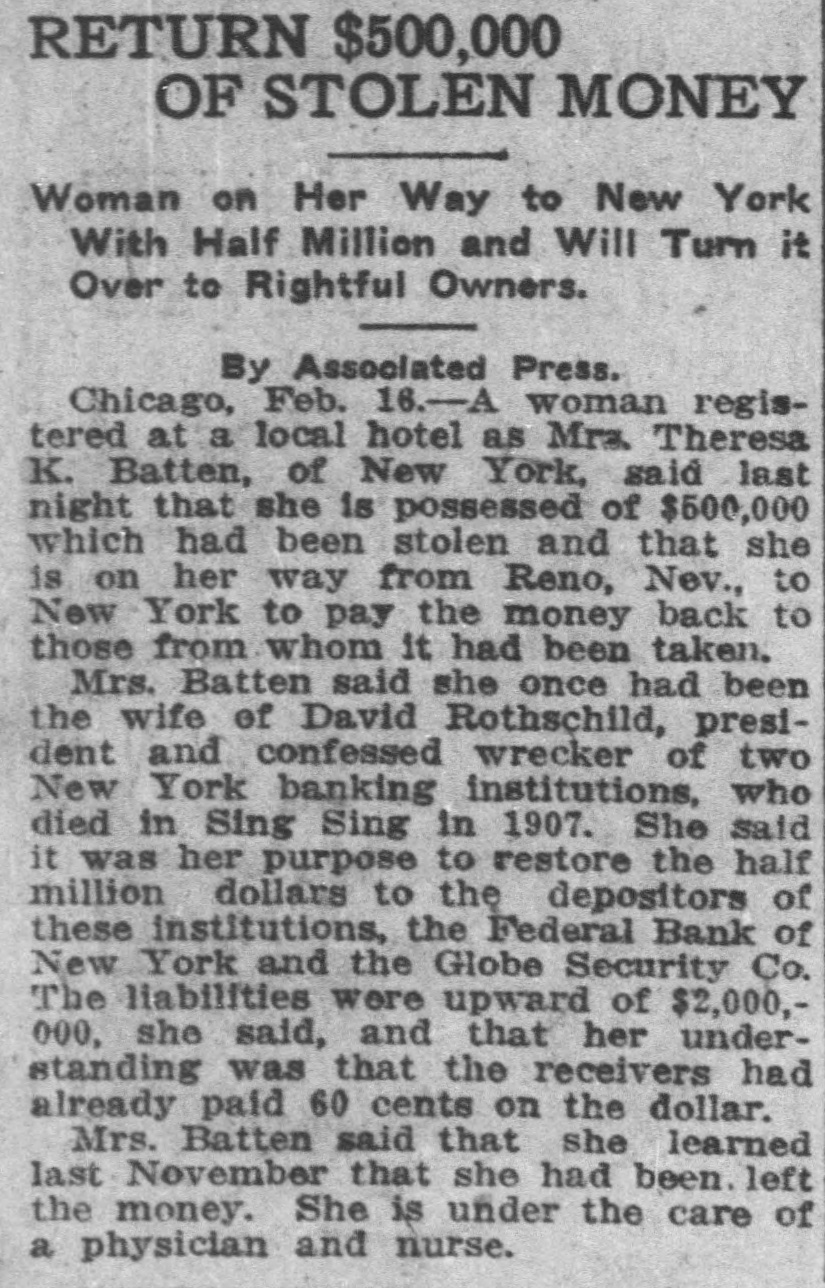
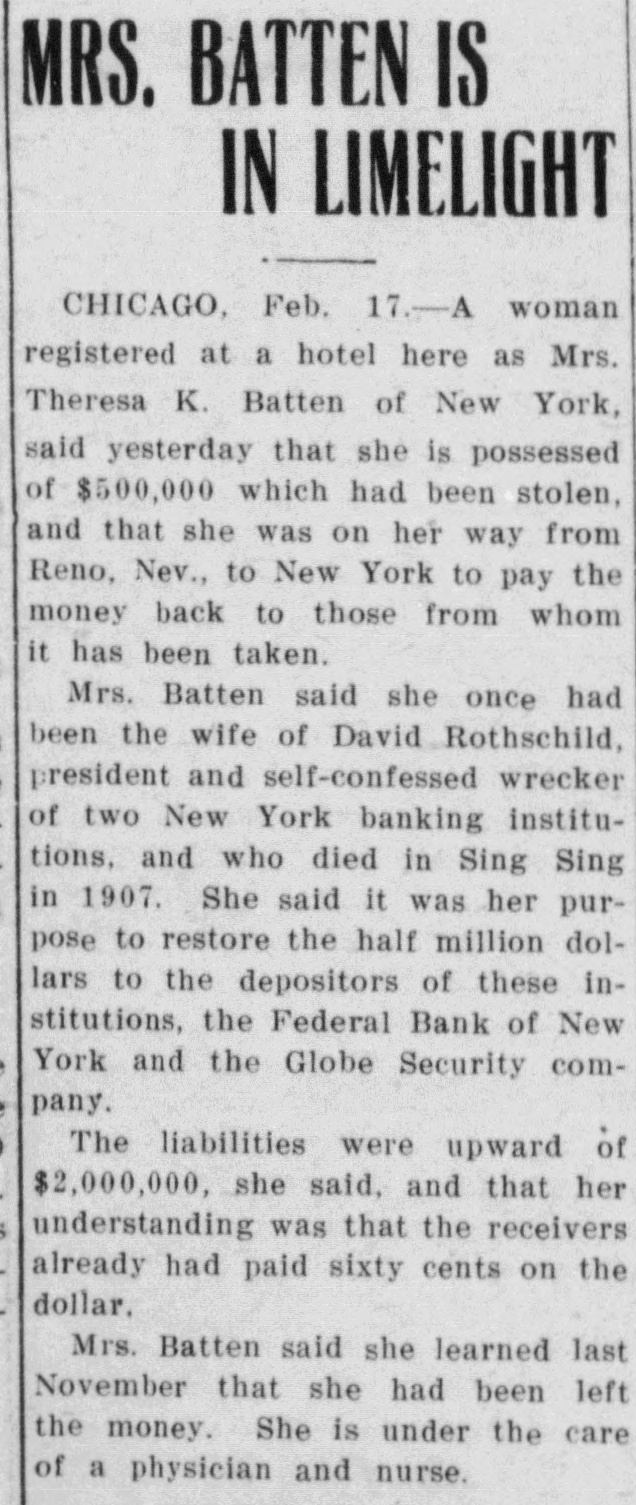
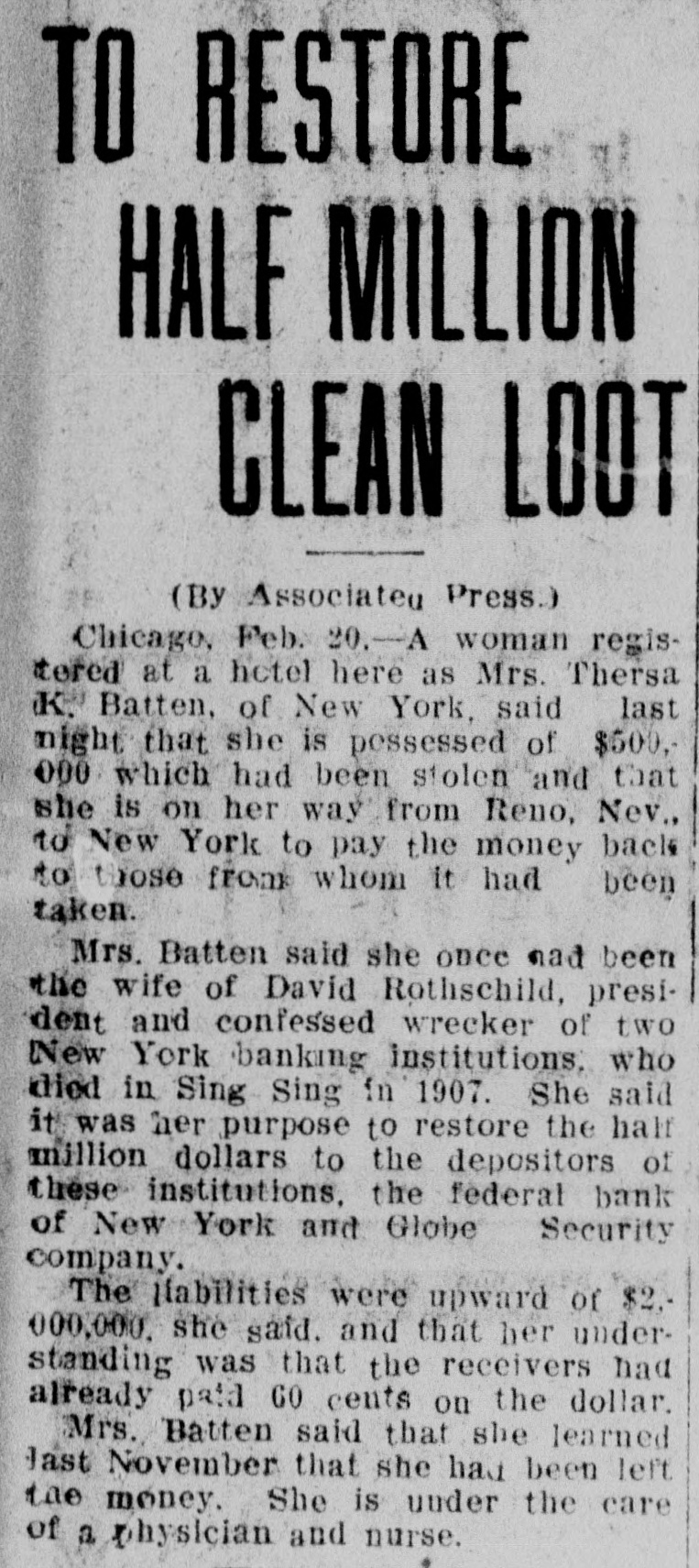
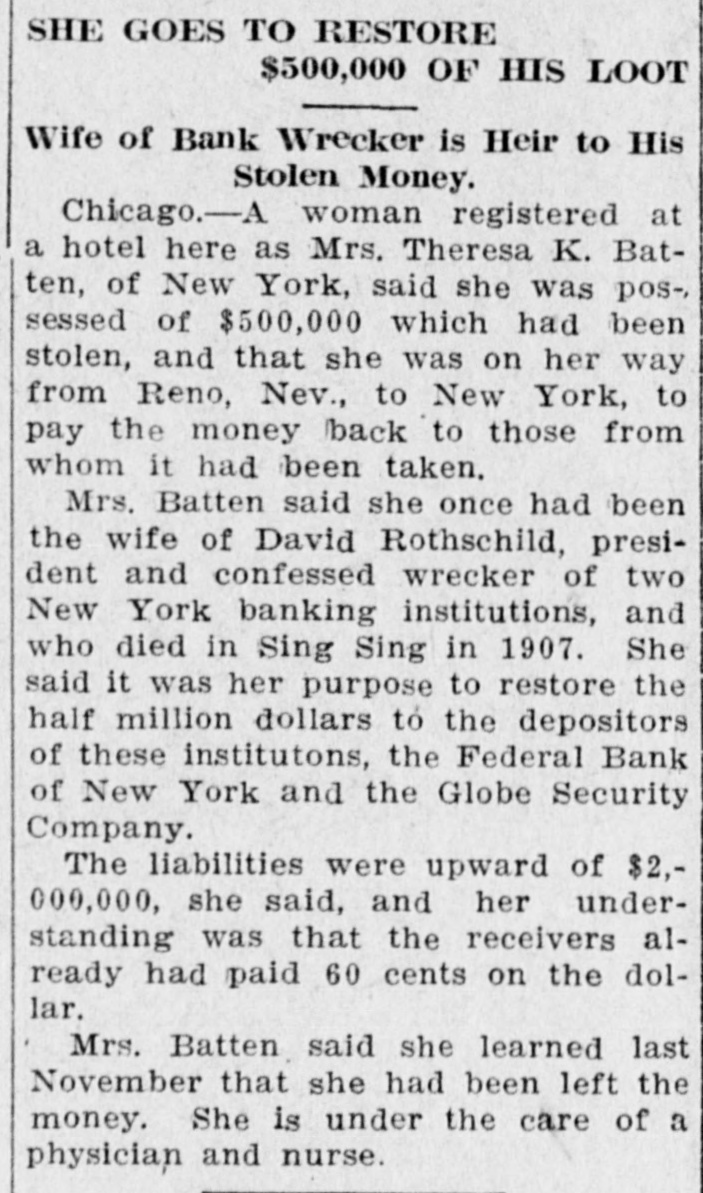
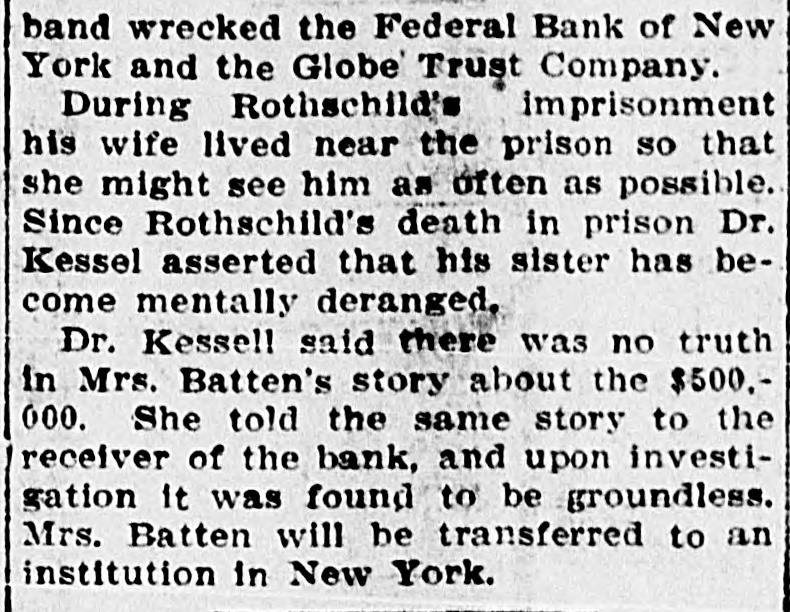
KEYS GIVENITO THE ATTORNEY May Lead to Discovery of Rothschild's Hidden Wealth. New York, November 20.-George W Glaze, attorney for the Receiver of the defunct Federal Bank, returned from St. Louis this afternoon with two sets of keys to the safe deposit boxes in which Rothschild, the comvicioned President,, who died in prison, hid his wealth when the was about to be annested. The attorney said immediately he had material avidence that Rothschild did hide nearly half a million of currency, and he believes that he holds the keys to the mystery in a literal samse. Mr. Glaze will begin n systematic search to find the two setts of safety deposits boxes that will fit the keys. There are four keys in alltwo in each set. One set bears the number "5." The keys appear to have been Ifititle used. The other two made were well worn and showed the had been cititen used. Mr. Glaze went at once to his home, No. 606 West One Hundred and Sixor telenth street, where his wide is seriously ill. (He made this statement when asked about his trip: "Acting upon a telegram from Mrs. Eugens C. Batten, whose first husband was the late David Rothschild, President of the defunct Federal Bank, to the effect that she had reason to believe $442,000 existed in some New York or New Jersey bank, I went to St. Louis. I flound her so ill that I had trouble getting her physician to let me slee her. "Mrs. Batten," maid the attorney, has given me trwo sets of keys,which she says Rothschild gave to her just before he went to serve his sentence, with the injunction ever to guard them until the came out. "Systematei search is in progress n under the auspices of the banking t departments of New York and New E Jersey, added by District Attorney b Whitman, and twie have great expecq tations. We find that no steps have been taken to probate any will made S by David Rothschild." H In the statement made by Mrs. Batd ten to the abtormey she said Rothschild said to her when she went to the prison to visit him: "Don't worry; B when I get out we, will be all right C Stick tome." h Mr. Glaze added that he gained the to information that Rothschild dived from till the effects of eating too much cheose. ce His wife took him a lange cheese and ti he proceeded to gorge himself with T it, the abtaick that killed him resultit ing. St The attionney said that a safety deA posit box in the Lincoln Trust Comec pany had been searched a short time N before he went to St. Louis and that II mothing had been found in it except an agreement between Rothschild and a man named Wood respecting X the Presidency of the Federal Bank. j