Article Text
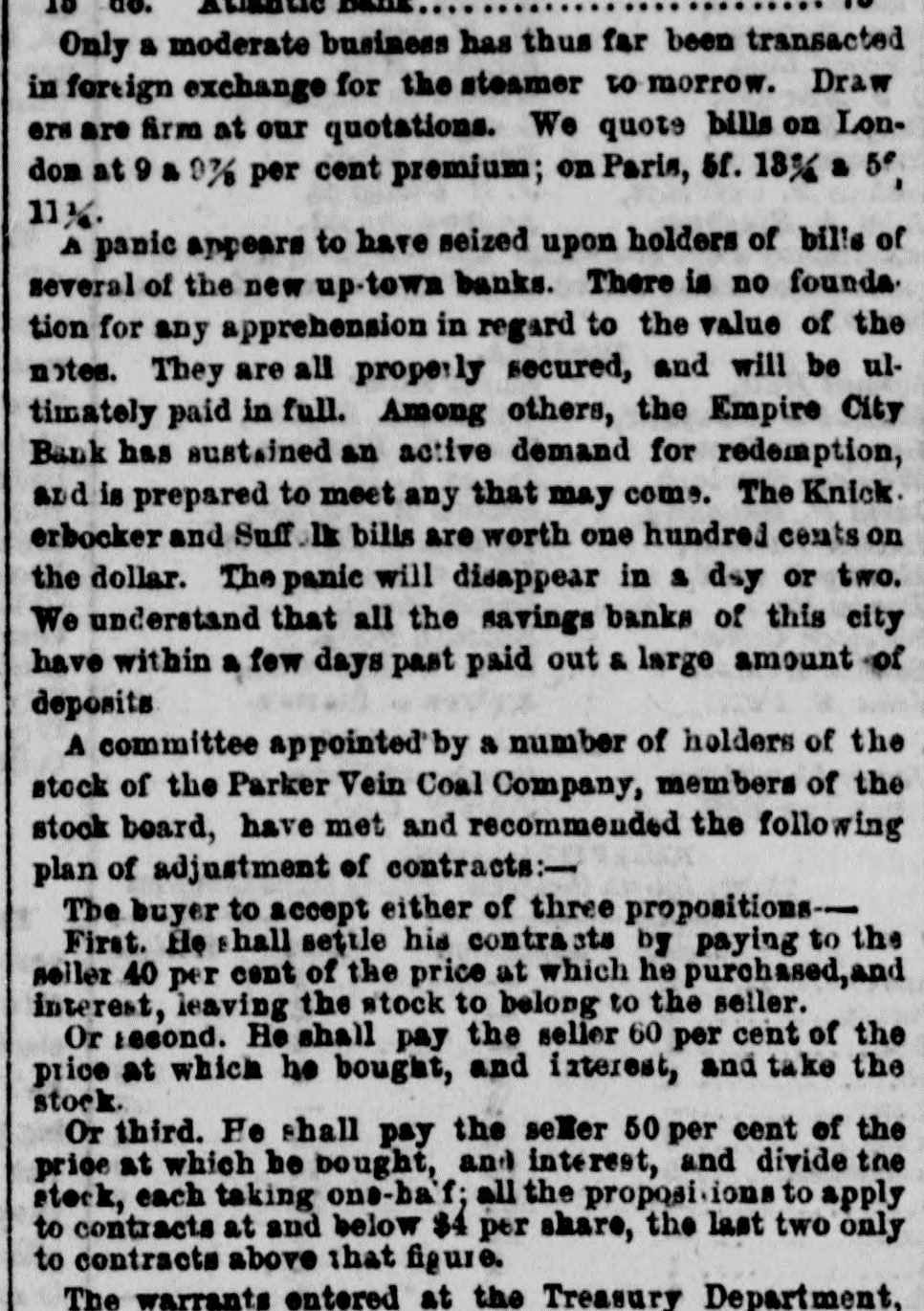
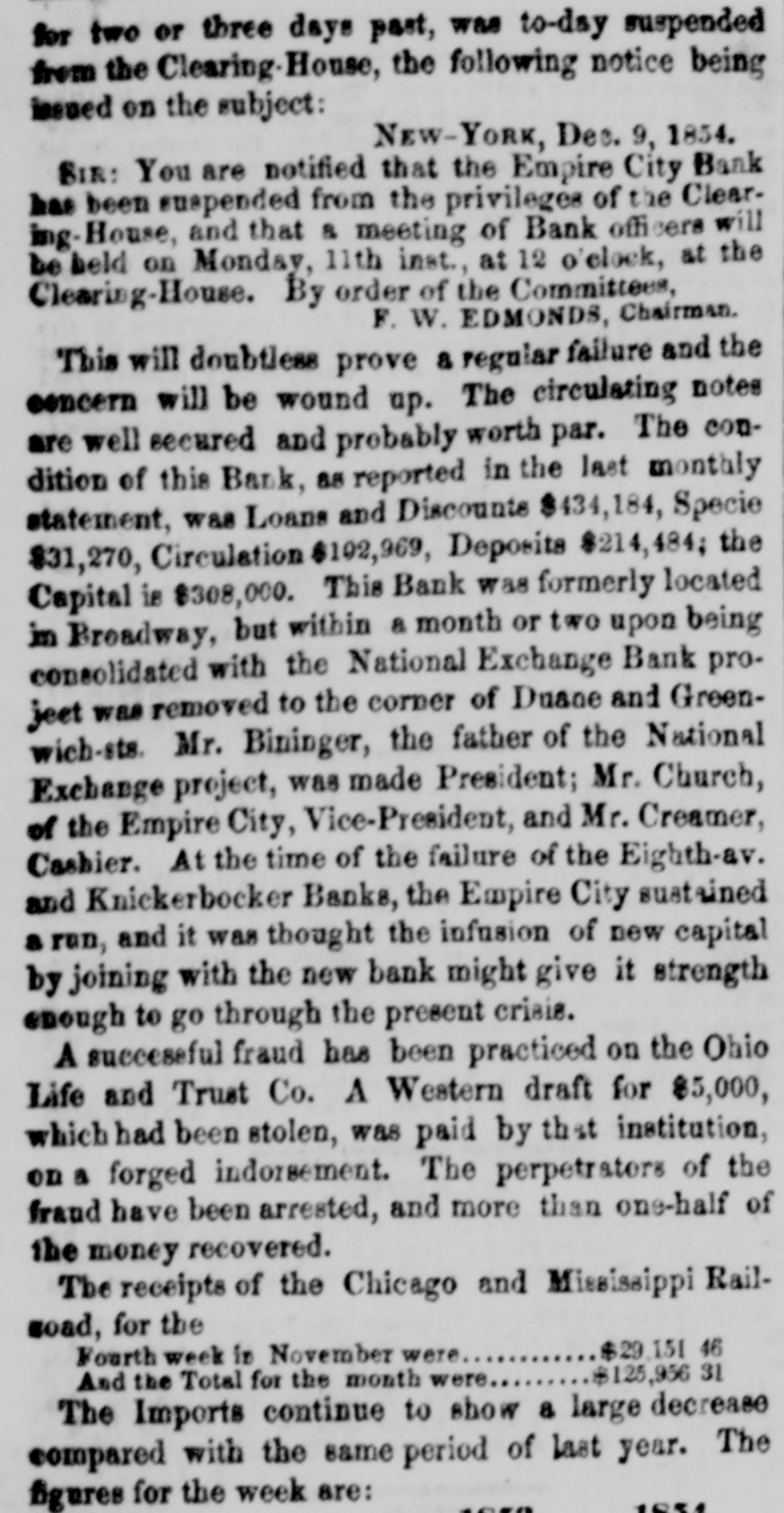
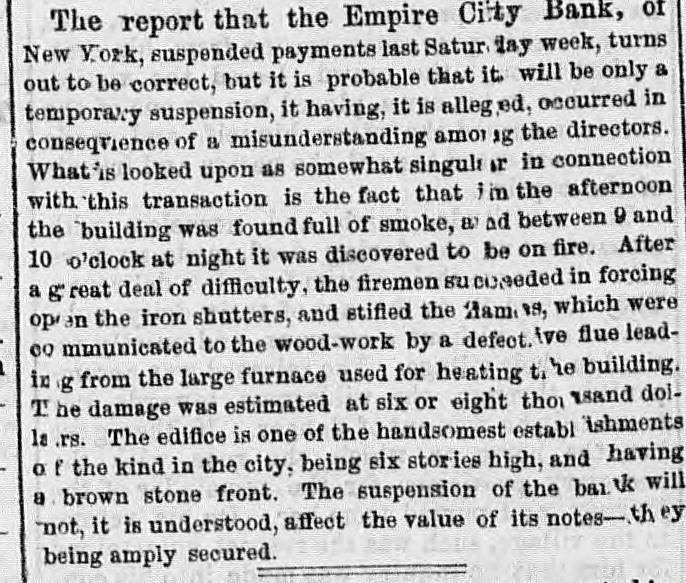
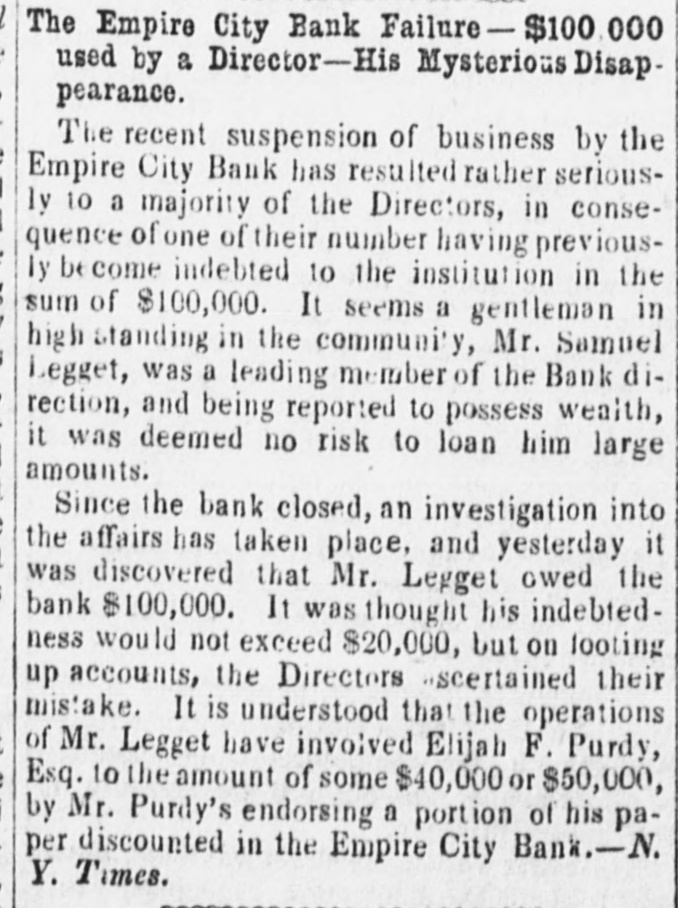
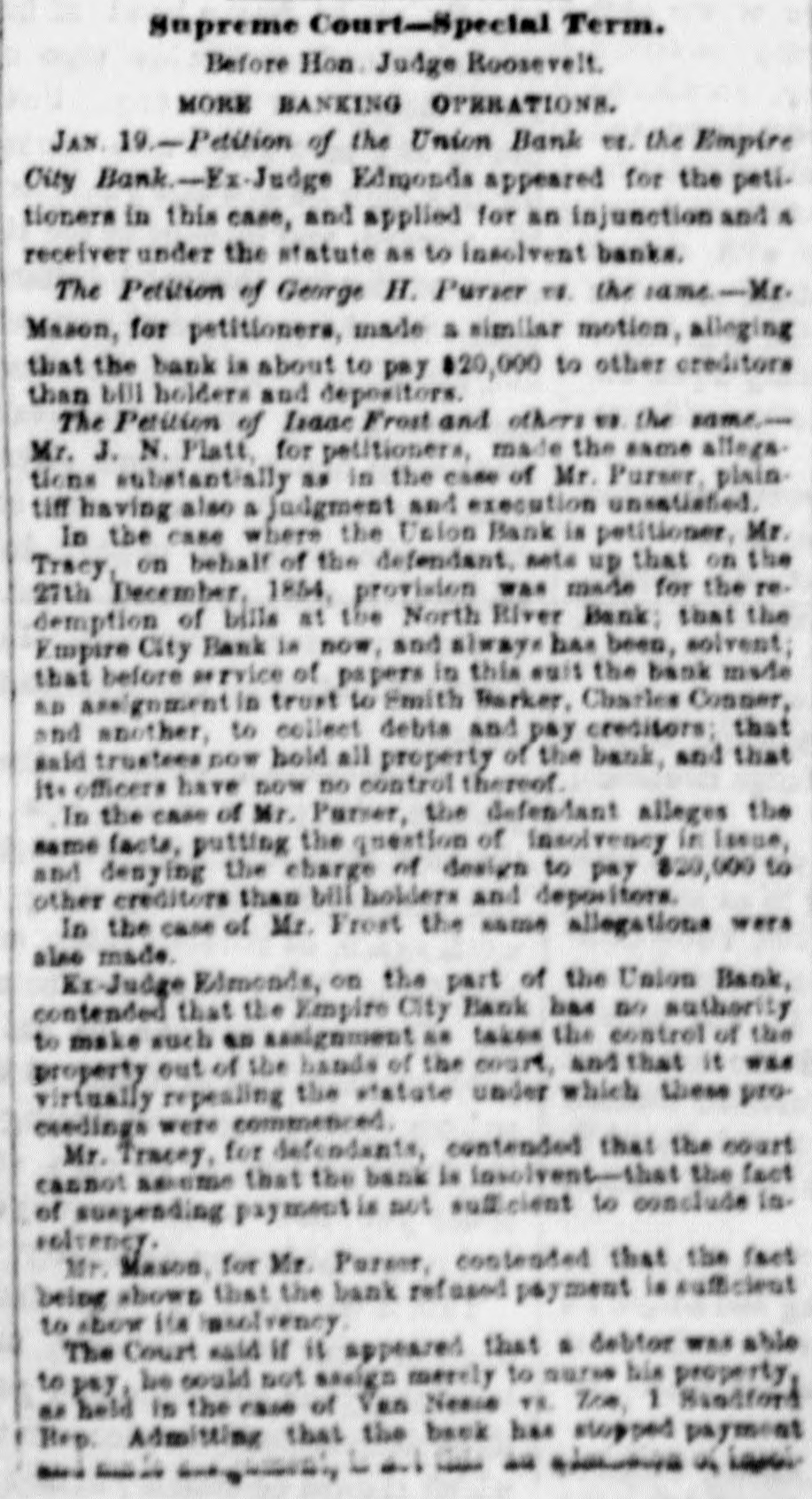
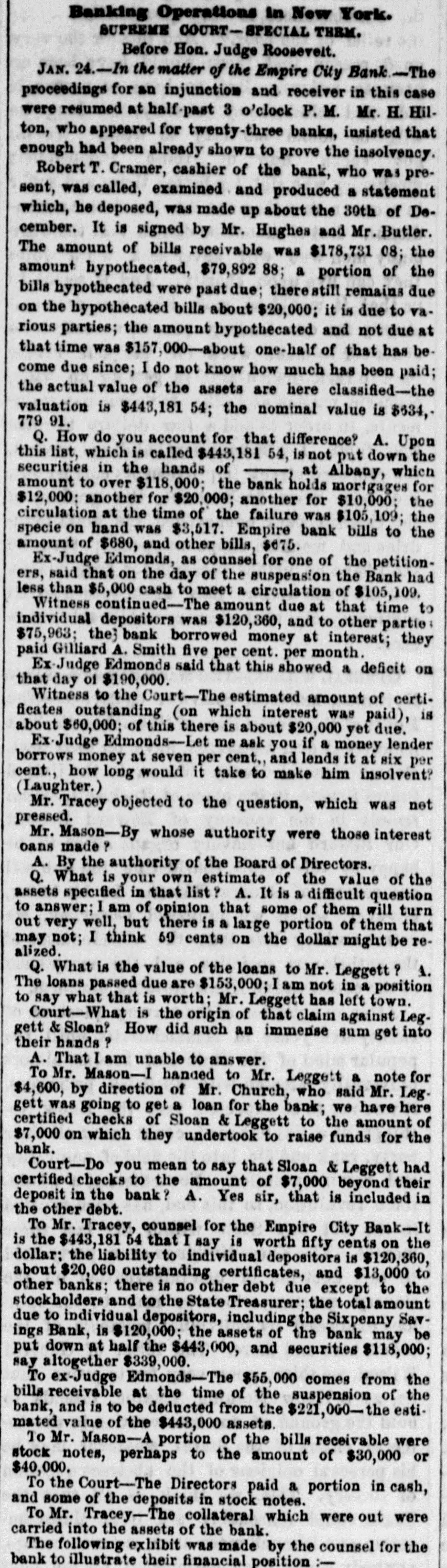
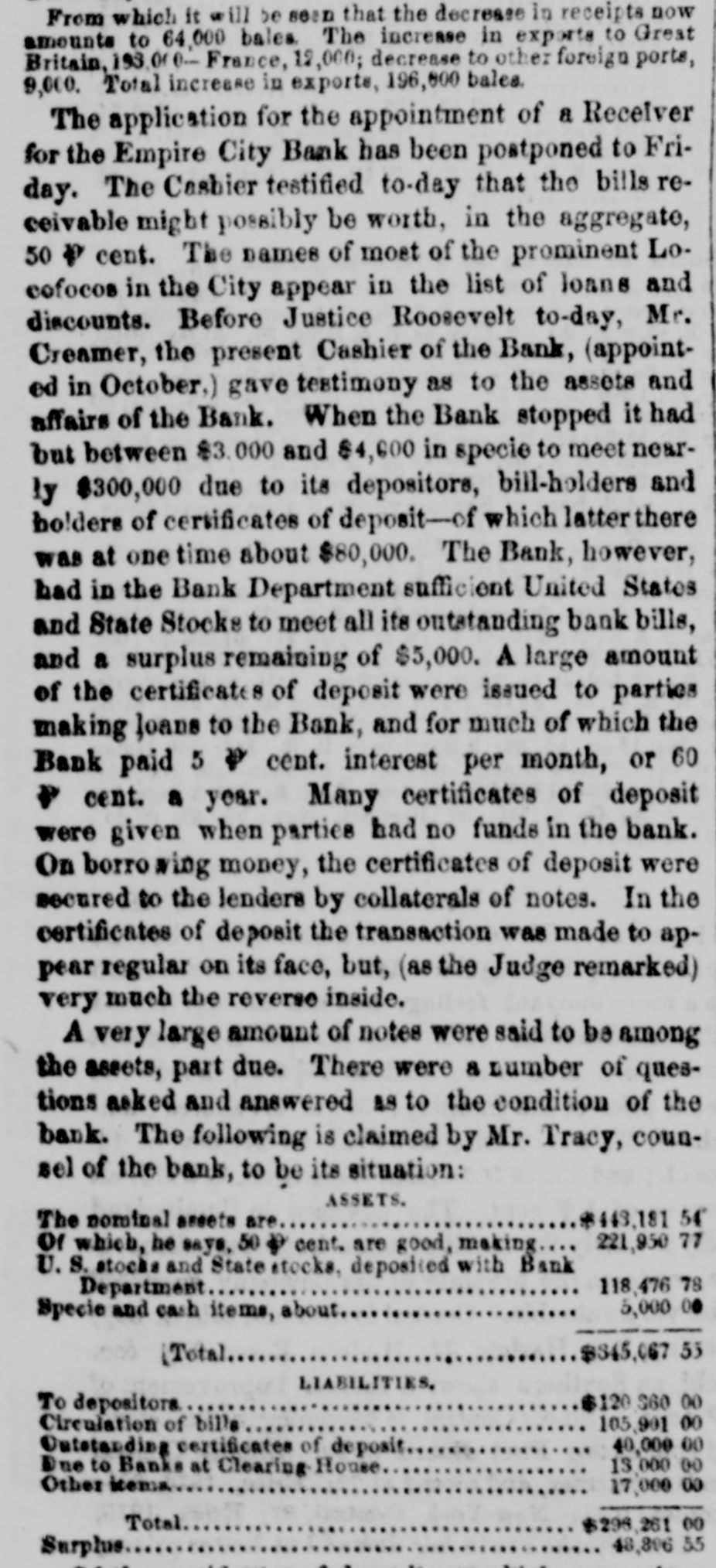
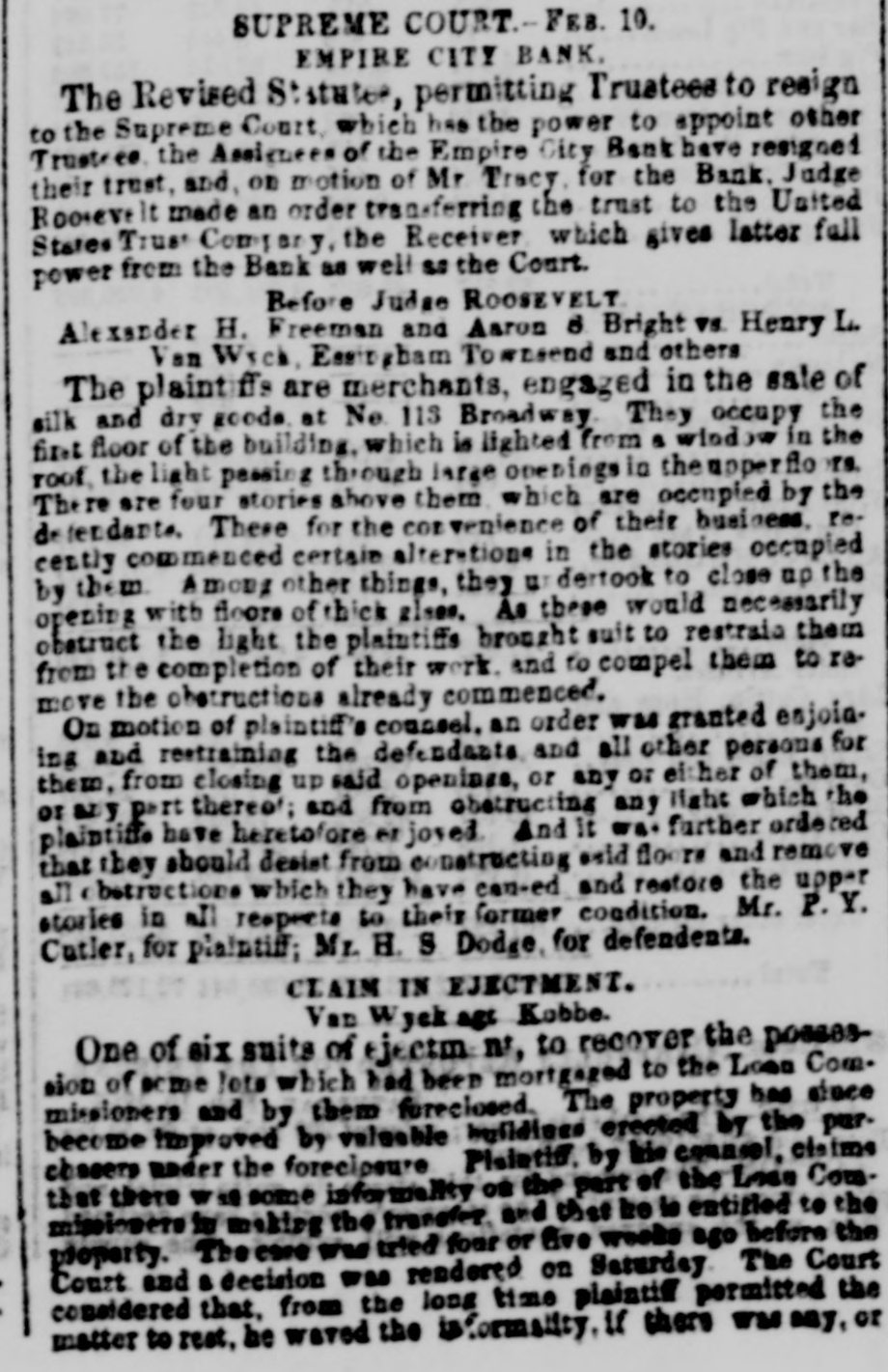
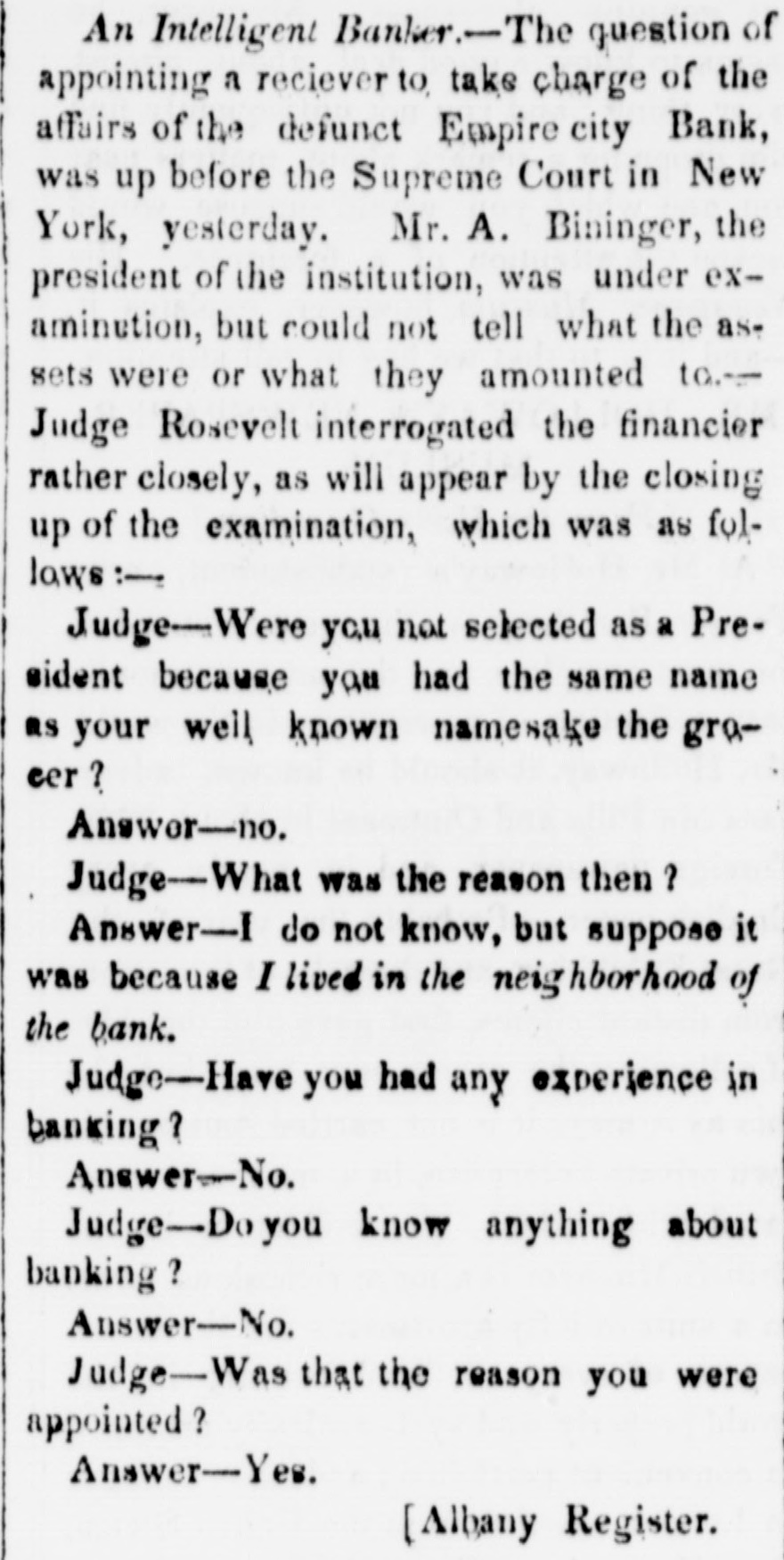
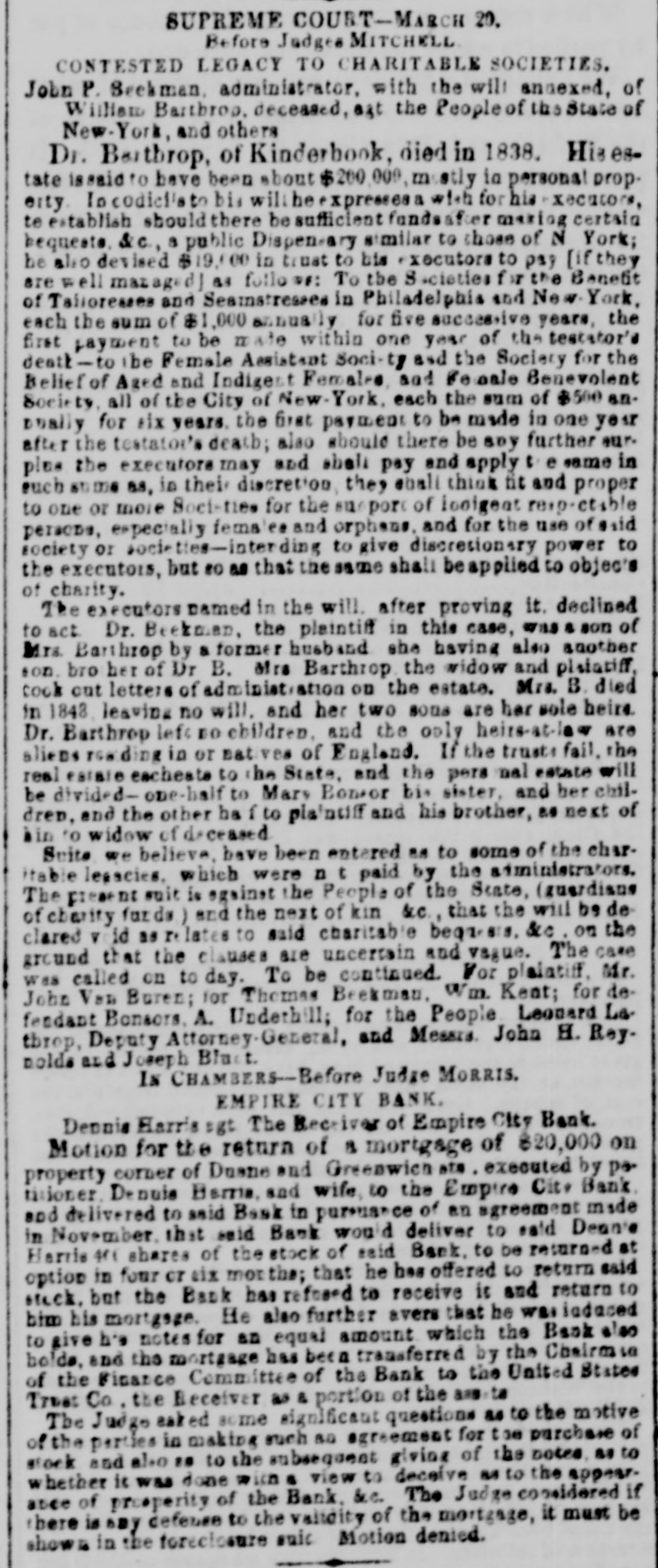
Thursday, Oct. 12-P. M. There was a much larger activity in the Stock market to-day and prices generally were buoyant, mainly through sympsthy with the rise in Erie. At the Secend Board there was less buoyancy and the market closed heavy. Erie was 45% about the closing price of yesterday. Reading has been stimulated by the large profits of its business and closed at 74, a further improvement of 1 P cent. Central improved to 91; Nicaragua 23, with good demand; Hudson River, 44. Cumberland closed at 30, showing a firm market. The Western Railroads are dull and generally heavy. In Railroad Bonds the business is $85,000, including New-York Central, 86%; Illinois Central, 681; Panama, 88; Erie, 1862, 73; 1871, 701; Incomes, 86; Saratoga and Sacketts Harbor, 88, &e. In Government Stocks there was nothing done; but a sale of North Carolinas was made at 102, and Californias at 85. The business in Exchangeis limited and the rates have a downward tendency. Sterling is 9@94, with some leading bankers' bills at9f P cent. in large bills. Francs, 5.13}@5.114. The supply of Commercial bills is quite light. From South there have been some France received, but we hear of but few remittances of Sterling. Freights arequiet. To Liverpool we hear of 50,000 bushels Grain at 3}@4d. in bulk; Cotton, d.; Dead-weight, 12/6. A charter was made for Malaga, but the terms did not transpire. To London, 350 bales Hops, 4d. The receipts at the Sub-Treasury are $92,334; paid, $60,485; balance, $5,876,174. The aggregate deposits at the Assay Office have been about $700,000 or $800,000. The first deposit was made by Mr. C. W. Thomas. From some unexplained delay at Philadelphia no bars have yet been received, but a pareel are expected to-night. The Exchanges at the Clearing House were large-$19,531,000. The shipments of gold by the Atlantic on Saturday promise to be nearly a million of dollars, of which $150,000 or more will be in Mexican silver. There is yet about a million of the Mexican fund remaining in Bank. The remainder of the seven millions, 88 far as can be ascertained, has been remitted to Europe. The money market continues without important change. The demand from merchants is large, and they pay high rates, but the stock houses are quite easy, and get what loans they want with facility at 7 P cent. The offerings at Bank are large, and increasing. The street rates for first-class paper are 10@12 P cent. The continuance of the large payments of the month, without important defalcations, is increasing the confidence of capitalists in commercial paper, and the demand for first-class paper is nearly equal to the supply. The multiplication of small banks with capital mainly paid up in notes renewable continually, and managed by parties having but little knowledge of banking, is producing its natural result. To the Eighth-av. and Knickerbocker Banks, already ebronicled as suspended, must now be added the Suffolk. The Suffolk has been in poor credit for some time past, having no arrangement for settlements through the Clearing-House. The capital is $250,000. The circulation is reduced to some $50,000, and will be redeemed by the Metropolitan Bank being secured amply by stocks in the Bank Department The deposits have been drawn down to about $40,000. It is thought the assets of the bank will yield enough very soon to pay their deposits. The dividend to the stockholders will not probably be a large one. There was rather a serious run on the Empire City Bank this morning, but the bank paid up to 3 o'clock. The circulation of this Bank is about $100,000, well secured by Stocks and the deposits about $240,000. There is a Sixpenny Savings Bank conrected with this institution, upon which there was also some run Nearly all the small up-town Banks suffered by the tongue of rumer to day. Most of the depositors in Savings Banks being of the uneducated classes, it is very easy to get up a panic in regard to them with very little distinction between the old established charter institutions and the new bogusdescription such 88 that connected with the Eighth-av. Bank. The depositsin all the Savings Banks will probably run down for awhile, but the excitement will gradually die away and they will run up again. There was some considerable demand for deposites at the Greenwich Saving *Bank to-day, but this institution having a million of dollars invested in Government and State Stocks, which are at any time available can stand any run. The Knickerbocker Bank made a strong attempt today to get aid to the extent of $100,000 with which to resume payment, but did not succeed. The securities in the Savings Bank connected with it are not, we hear, of the most reliable description. The Eighthav. Bank are endeavoring to negotiate their bonds and mortgages in the Bank Department, when they will commence redeeming their notes. There appears to be a determination upon the part of the managers of the Clearing House to purge the City banking system of all Banks the condition of which does not entitle them to full commission. Some half dozen banks outside the Clearing House have been living on from day to day by making their exchanges through some member of the House. Such Banks are to be discredited and forced into liquidation. Atleast such we understand is to be the future policy. No Banks are to be tolerated but such as have a bona fide paid up capital, and such as are prudently and skilfully conducted according to the rules of the Clearing House. The Banks at present members of the Clearing House are: Irving Bank, American Exchange Bank, Atlantic Bank Leather Manufacturers' Bank, Bank of New-York, Manhattan Company, Merchants' Bank. Bank of America, Butchers' & Drovers' Bank, Mechanics' Bank, Bank State of New York, Merchants' Exchange Bank, Bank of Commerce, Mechanics' & Traders' Bank