Multiple contemporary reports (Feb 8, 1895) describe a run on the Second National Bank of Cortland, NY while Bank Examiner Van Vranken was examining the bank. Depositors were paid in full and there is no mention of a suspension or receivership. OCR shows variant spellings of President Fitzboyington (e.g., 'Fitz Boyington'); corrected here. Cause inferred as bank-specific concerns prompted by an examination (no discrete hoax/misinformation reported).
Events (2)
1.November 25, 1882Chartered
Source
historical_nic
2.February 8, 1895Run
Cause
Bank Specific Adverse Info
Cause Details
Depositors reacted to an ongoing examination by Bank Examiner Van Vranken and the absence/departure of President Fitzboyington, raising suspicion of irregularities.
Measures
Depositors were paid in full.
Newspaper Excerpt
There was a run on the Second National bank here. ... Examiner Van Vranken refused to tell whether there had been any irregularities in the institution's affairs.
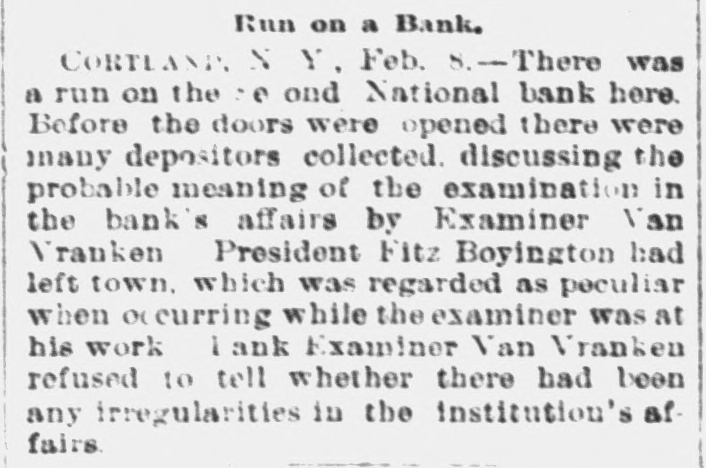
Run on a Bank. CORTLAND I Y. Feb. 8.--There was a run on the : e ond National bank here. Before the doors were opened there were many depositors collected. discussing the probable meaning of the examination in the bank's affairs by Examiner Van Vranken President Fitz Boyington had left town. which was regarded as poculiar when or curring while the examiner was at his work i ank Examiner Van Vranken refused to tell whether there had been any irregularities in the institution's af fairs
2.February 8, 1895The Providence NewsProvidence, RI
Click image to open full size in new tab
Article Text
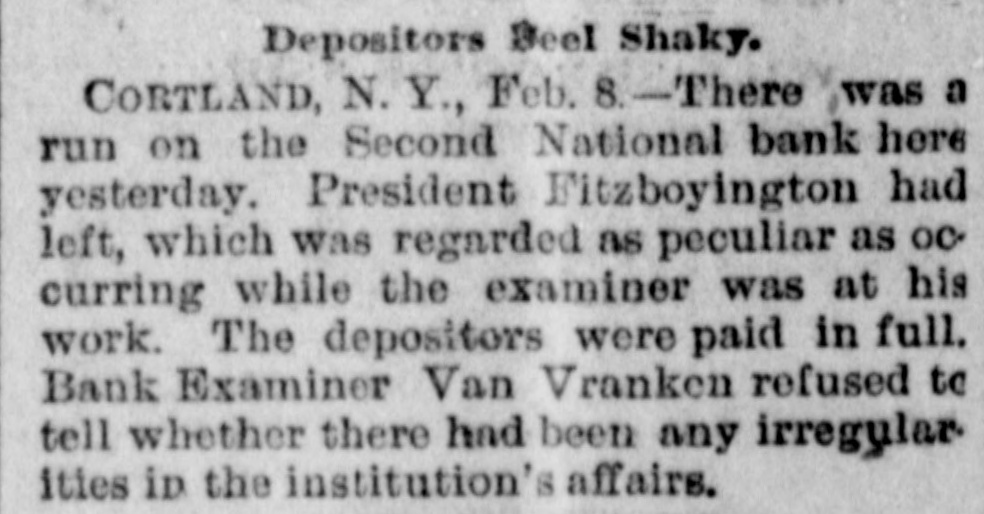
Depositors Beel Shaky. CORTLAND, N. Y., Feb. 8.-There was a run on the Second National bank here yesterday. President Fitzboyington had left, which was regarded as peculiar as OCcurring while the examiner was at his work. The depositors were paid in full. Bank Examiner Van Vranken refused to tell whether there had been any irregular. ities in the institution's affairs.
3.February 9, 1895Evening JournalWilmington, DE
Click image to open full size in new tab
Article Text
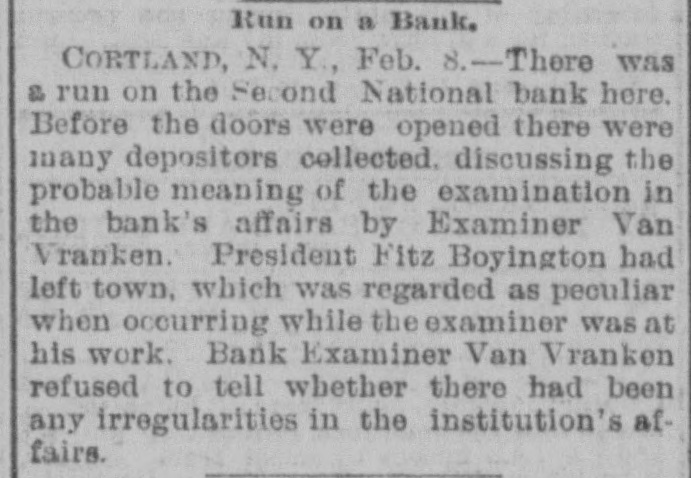
Run on a Bank, CORTLAND, N. Y., Feb. 8.--There was a run on the Second National bank here. Before the doors were opened there were many depositors collected. discussing the probable meaning of the examination in the bank's affairs by Examiner Van Vranken. President Fitz Boyington had left town, which was regarded as peculiar when occurring while the examiner was at his work. Bank Examiner Van Vranken refused to tell whether there had been any irregularities in the institution's affairs.