Click image to open full size in new tab
Article Text
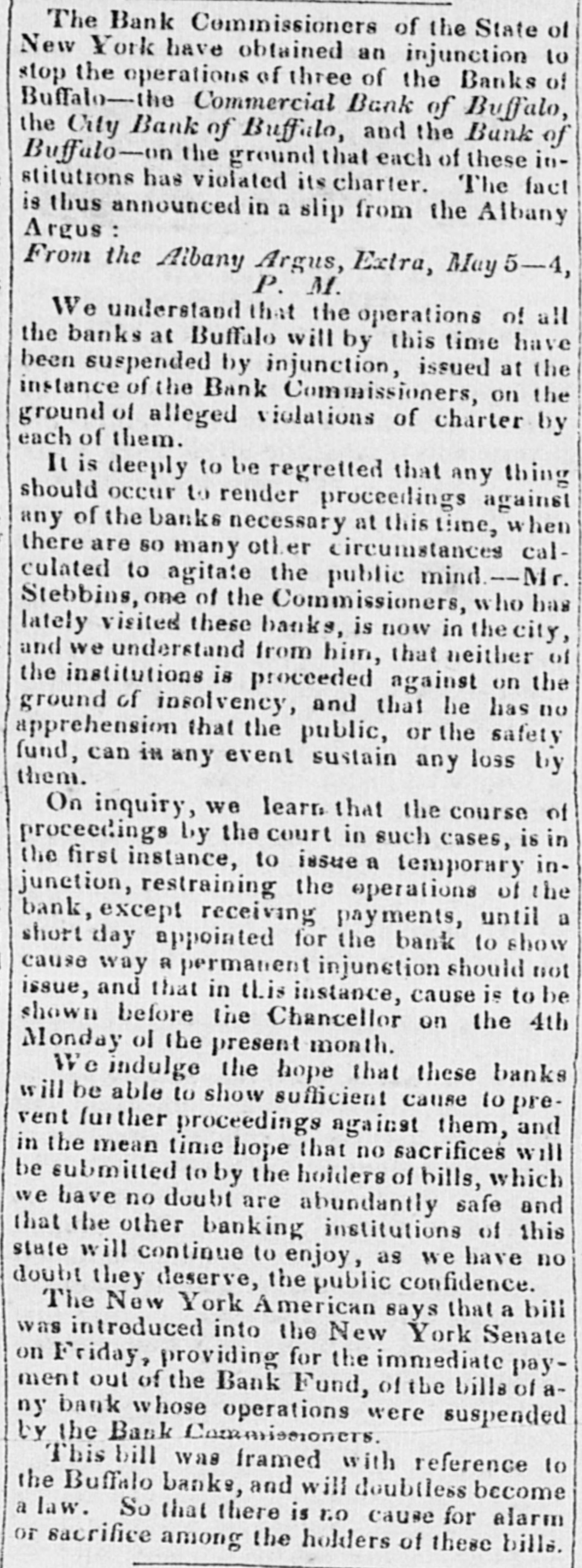
ve atrocities as the following, which th we copy from the Louisville Journal, and the es increasing frequency of brutal outrage, fills y the mind with shame, regret and distressing r apprehensions of future evil. on We have derived from a respectable travoleller the particulars of one of the most attroat cious and horrible occurrences that ever disis graced the annals of human life, civilized or of savage. A feeble bodied man, whose name Id we did not learn, settled a few years ago on nthe Mississippi, a short distance below Ranct dolph, on the Tennessee side. He succeeded to in amassing property to the value of about e $14,000, and, like most of the settlers, made fa business of selling wood to the boats.r This sold at $2.50 a cord, while the neighet bors asked S3. One of them came to remonstrate against his underselling, and had a fight with his brother-in-law, Clark, in which he was beaten. He then went and obtained legal process against Clark, and returned with a deputy sheriff, attended by a posse of desperate villians. When they arrived at Clark's house he was seated among his children, and they instantly fired on him, wounding two children, and putting two or three balls through his body. Clark ran, was overtaken and knocked down in the midst of his cries for mercy, one of the villains fired a pistol in his mouth, killing him instantly. They then required the settler to sell his property to them and leave the country. He, fearing that they would otherwise take his life, sold them his valuable property for $300, land departed with his family.--The sherif was one of the purchasers. CURIOUS TRIAL.--The Southern Correspondent of the New York Evening Star writes a strange circumstance, which is the source of some excitement, is about to undergo investigation in Jones county, Georgia. It appears that some eight years ago, a lad of that county, about 13 years of age, left his home; his father died and left a large property, and he not being heard from, the estate was divided, and his share, some thirty thousand dollars, was divided among those left. Within a few months, he has appeared and laid claim to his property; his mother denies him, and says he is an impostor, as- the real person died some time ago in New Orleans, and she paid his funeral expenses. He is to be tried as an impostor. Opinion is equally divided in regard to his identity: some avow he is the man, and others as decidedly con tend he is no: He has the same marks as the individual-a scar on one supposed of his fingers amputa- of his legs and a joint of one ted. He relates numerous circumstances su connected with his leaving and early youth, b and there are many he cannot remember.n Balt. Chron. pe In BANK FAILURE.--The New York Dry ⑉ Dock Bank stopped business on the 3th inst. A run had been made upon the Bank on Satpr H urday previous, and about $100.000 in specie drawn from its vaults by depositors and pe billholders. The Dry Dock was a Deposite th Bank and had $130,000 of Government mon w ev in possession, which of course the said of Government must lose. No loss will be susup tained by those who hold the notes of this in solvent institution, as the Wall street banks have agreed to redeem them. So the 'experment' progresses. Much excitement prevailed in New York. th Runs and rumors of runs upon several of the ch Banks are mentioned in the papers, but noan hing serious was anticipated. ste The condition of things in New York grows vorse and worse. Three hundred failures cld ave occurred since the Josephs led the way Pro n "the road to ruin". All is dismay in the tio great commercial metropolis.-Dayton Jour. pra mo BATTLE BETWEEN A WEASEL AND SWALLOWS.-M err seasel was observed by some persons in the neighorhood of Garven, in Scotland, to attack some Jac ests of bank swallows hollowed in the sand. A number of the bravest swallows, placed themselves of h battle array pounced upon him, seized him by rev he tai!, raised his hind feet from the ground, and Mr ith great dexterity tumbled him down the declivy, at the top of which the nests were ranged in pul ow. The invader renewed the attack several for mes, but was asofien repulsed in the same manner pea s at firs:, and, being at length worn out by fatigue, ele ielded up the palm of victory to his vanquishers. cha THE FROSTS.-The late severe frosts are said to of ve done great injury to the peach orchards of pat Jew Jersev. To such an extent is the peach ultivated in that State that the Trenton Gazette stimates the damage at 'many hundred thousand ollars.' ca The names of the Buffilo Binks whose doors citi ve closed, are the Commercial Bank of Buffulo, his e City Bank of buffulo, and the Bunk of Buffa con A bill was introduced into the Senate yesterday oridine for the immediate mament out of alm stat