Click image to open full size in new tab
Article Text
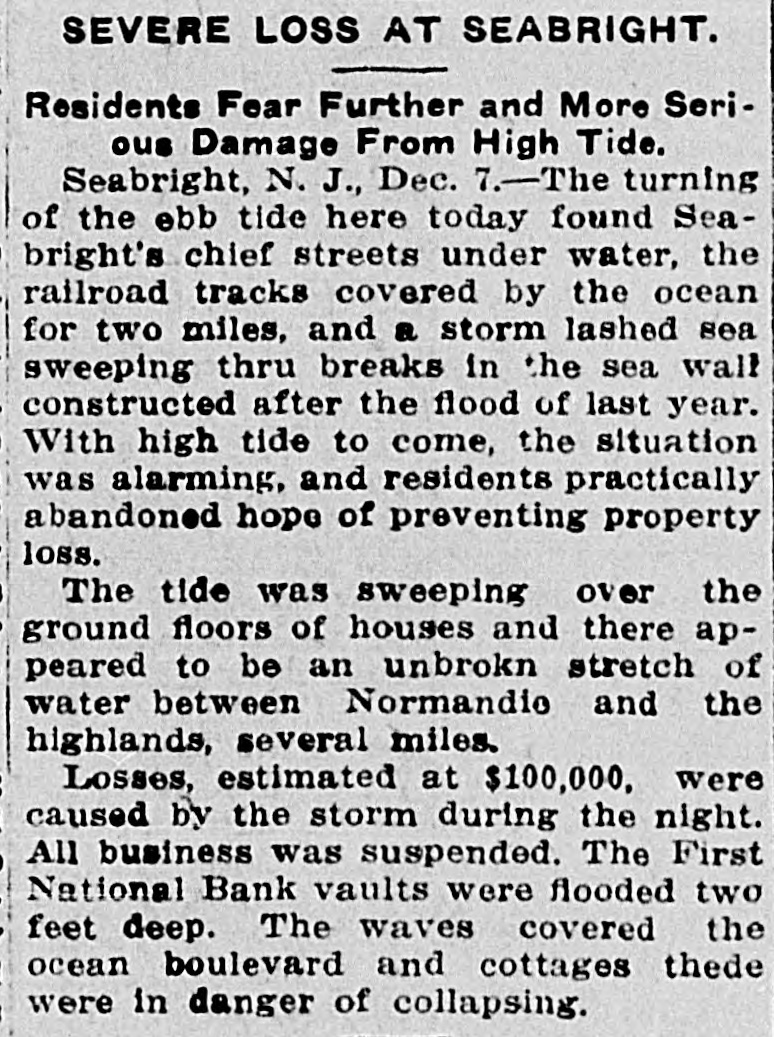
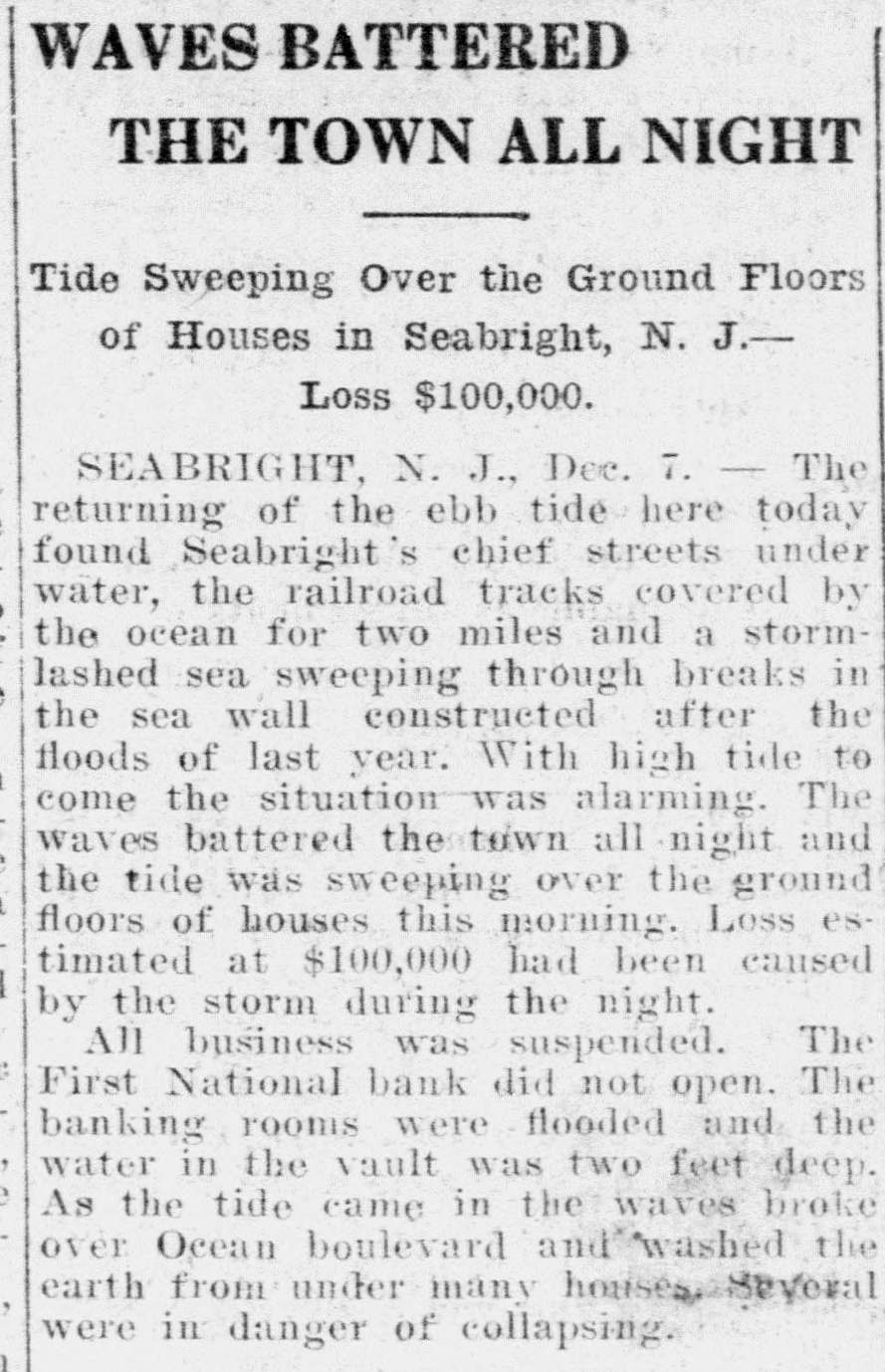
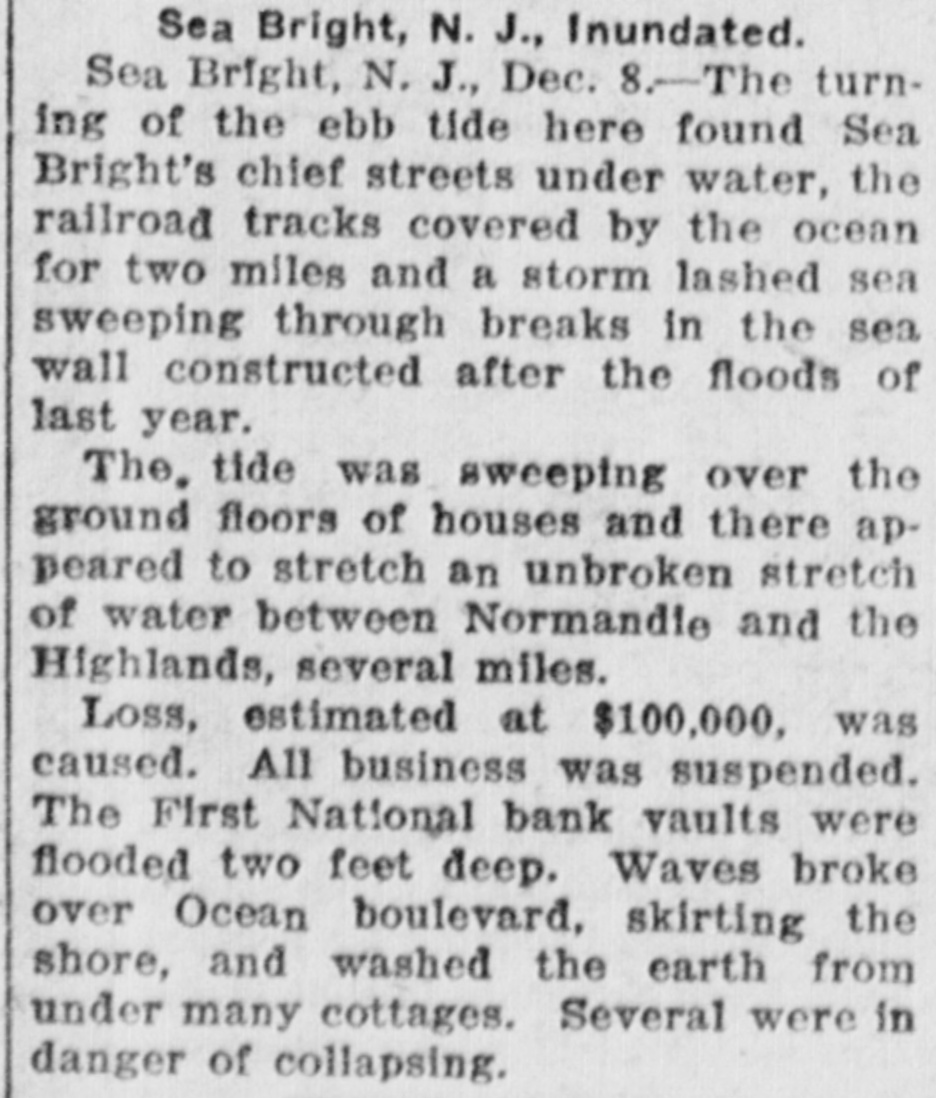
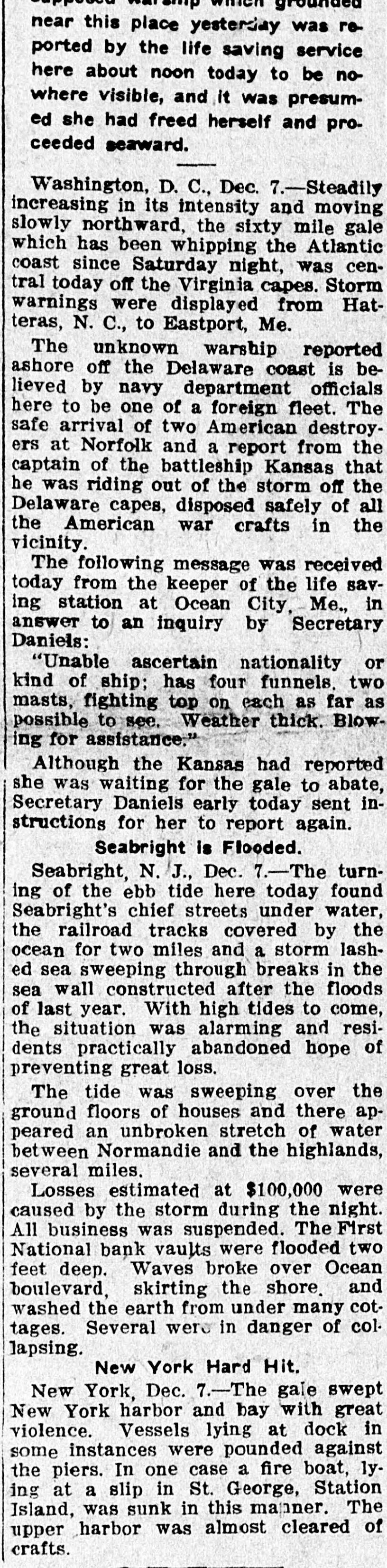
www.up WITH grounded near this place yesterday was reported by the life saving service here about noon today to be nowhere visible, and it was presumed she had freed herself and proceeded seaward. Washington, D. C., Dec. 7.-Steadily increasing in its intensity and moving slowly northward, the sixty mile gale which has been whipping the Atlantic coast since Saturday night, was central today off the Virginia capes. Storm warnings were displayed from Hatteras, N. C., to Eastport, Me. The unknown warship reported ashore off the Delaware coast is believed by navy department officials here to be one of a foreign fleet. The safe arrival of two American destroyers at Norfolk and a report from the captain of the battleship Kansas that he was riding out of the storm off the Delaware capes, disposed safely of all the American war crafts in the vicinity. The following message was received today from the keeper of the life saving station at Ocean City, Me., in answer to an inquiry by Secretary Daniels: "Unable ascertain nationality or kind of ship; has four funnels. two masts, fighting top on each as far as possible to see. Weather thick. Blow. ing for assistance." Although the Kansas had reported she was waiting for the gale to abate, Secretary Daniels early today sent instructions for her to report again. Seabright is Flooded. Seabright, N./J., Dec. 7.-The turning of the ebb tide here today found Seabright's chief streets under water, the railroad tracks covered by the ocean for two miles and a storm lashed sea sweeping through breaks in the sea wall constructed after the floods of last year. With high tides to come, the situation was alarming and residents practically abandoned hope of preventing great loss. The tide was sweeping over the ground floors of houses and there appeared an unbroken stretch of water between Normandie and the highlands, several miles. Losses estimated at $100,000 were caused by the storm during the night. All business was suspended. The First National bank vaults were flooded two feet deep. Waves broke over Ocean boulevard, skirting the shore. and washed the earth from under many cottages. Several were in danger of collapsing. New York Hard Hit. New York, Dec. 7.-The gale swept New York harbor and bay with great violence. Vessels lying at dock in some instances were pounded against the piers. In one case a fire boat, lying at a slip in St. George, Station Island, was sunk in this manner. The upper harbor was almost cleared of crafts.