12320. Farmers State Bank (Havelock, ND)

Bank Information

Episode Type
Run → Suspension → Closure
Bank Type
state
Start Date
November 16, 1920
Location
Havelock, North Dakota (46.475, -102.744)

Metadata

Model
gpt-5-mini
Short Digest
41209984

Response Measures

Full suspension

Other: Receivership appointed; Guaranty Fund later intervened in litigation.

Description

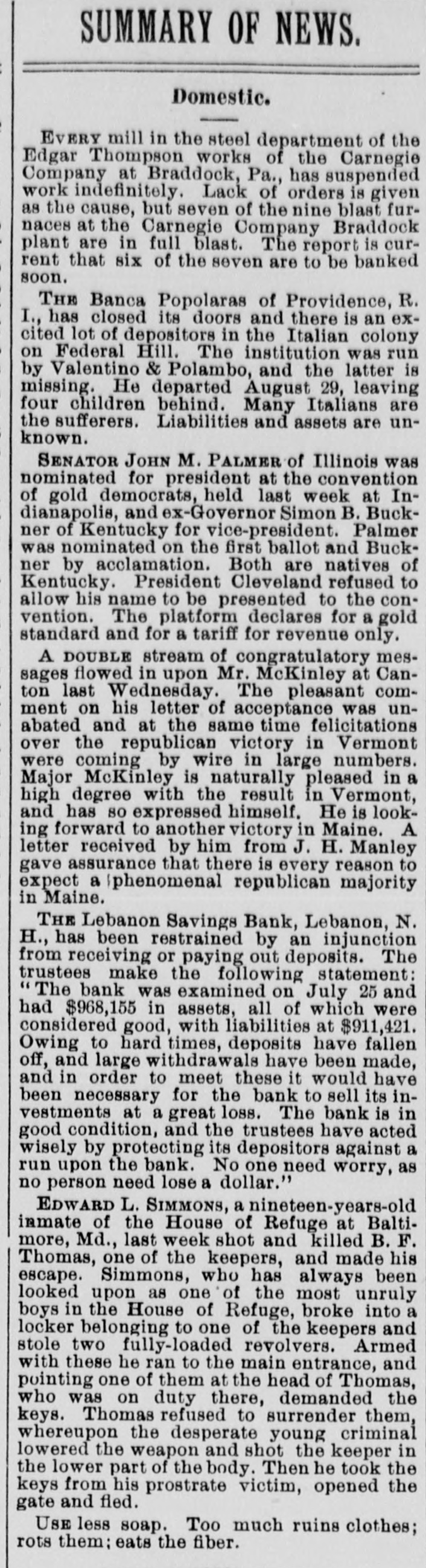
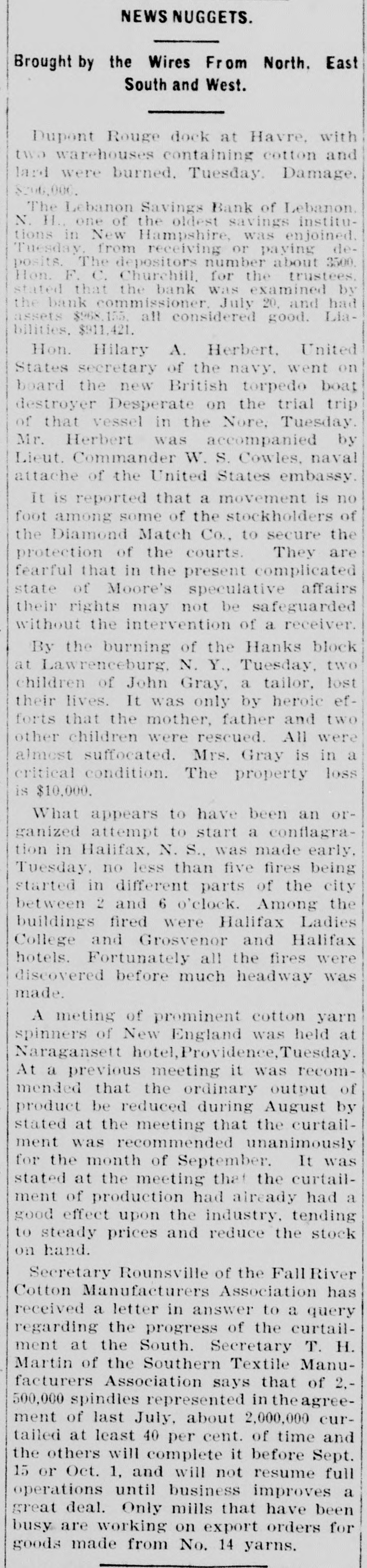
Multiple articles (Nov 1920) report Farmers State Bank of Havelock closed/suspended with a receiver named Nov 17, 1920. Causes cited are successive crop failures and farmers holding wheat (local agricultural shock), and at least one article notes inability to meet unexpected withdrawals, indicating a run that precipitated suspension. Later 1921 pieces discuss receivership and litigation, implying the bank remained closed.

Events (4)

1. November 16, 1920 Run
Cause
Local Shock
Cause Details
Successive crop failures and farmers holding wheat reduced liquidity and deposits, prompting heavy/ unexpected withdrawals from the bank.
Newspaper Excerpt
the institution closing was its inability to meet the unexpected demand for withdrawal of public funds deposited with the bank.
Source
newspapers
2. November 17, 1920 Receivership
Newspaper Excerpt
A. L. Young ... was named receiver of the Farmers State bank of Havelock on Nov. 17, 1920.
Source
newspapers
3. November 17, 1920 Suspension
Cause
Local Shock
Cause Details
Bank reserves fell below legal requirements due to depreciated collateral and farmers refusing to sell grain; suspension followed inability to meet withdrawal demands.
Newspaper Excerpt
A. L. Young ... was named receiver of the Farmers State bank of Havelock on Nov. 17, 1920.
Source
newspapers
4. December 5, 1921 Other
Newspaper Excerpt
Guaranty Fund Commission to intervene ... asking removal of receivers of three banks ... Farmers State Bank of Havelock ... suits alleging mismanagement of the affairs of the three closed banks.
Source
newspapers

Newspaper Articles (5)

Article from The Bismarck Tribune, November 19, 1920

Click image to open full size in new tab

Article Text

3 BANKS CLOSE; HOLDING WHEAT HELD A CAUSE All May Be Reopened SoonCrop Failures Chief Cause of Situation Crop failures and the fact that farmers are holding their wheat are reasons assigned by O. E. Lofthus, state bank examiner, for the closing of three banks in the state, whose reserves fell below legal requirements. The banks are the Security State Bank of New England and the Farmers State Bank of Havelock, both in Hettinger county, and the Tolley State Bank of Renville county. None of them are and it is possible that they will reopen, or pay out virtually in full. "Lean years and successive crop failures in these particular localities is the main reason for the condition," said Mr. Lofthus. "Crops have been spotted 'in the state. The farmers failed to get crops to permit liquidation of their accounts. "The fact that farmers have not sold their wheat naturally prevents liquidation which was expected. Holding of wheat is one of the direct causes for the condition of the New England bank and was indirectly a factor in the other cases, because if crops are not sold in localities where there were crops, those banks do not have surplus money to send into the lo calities where there were crop failures." A good crop next year would entirely change conditions, the examiner stated. All the bank deposits are guaranteed by state law. The president of the New England and Havelock banks is C. W. Merrick, formerly of Bismarck. Fargo, Nov. 19.-The Equity Cooperative Packing company, with headquarters here, is at present following a policy of curtailed activities said J. M. Casey, its president, today. in denying rumors that the company is in serious financial difficulty. Farmers holding wheat for higher prices throughout the state and continued crop failures in the western part of North Dakota are, he says. responsible for the temporary curtailment. Mr. Casey stated that all debts of the company are more than balanced by its property and accounts due. "The Equity plant here representing $1,250,000 is clear of all indebtedness," he added. "Equipment in plants at Duluth and the Twin Cities is also clear of debt."


Article from Every Evening, Wilmington Daily Commercial, November 24, 1920

Click image to open full size in new tab

Article Text

NORTH DAKOTA BANKS CLOSE. Depreciated Collateral and Wheat Situmtion Given AH Reasons. Fargo, N. D. Nov. 24. - Nine banks have been closed in North Dakota during the last ten days as R esult of the "whent strike," three of the group of banks affected being closed yesterday. Depreciated collateral values, coupled with the refusal of the farmers to sell their grain or stock at existing prices, are the elements that have combined to force the suspension of business on the part of the banks. The three that closed their doore today are the First State Bank of Kill Deer, the Security State Bank of Columbus and the Farmers' State Bank of Bolfield. Prior to today the following banks had been closed: Bantry Bank at Bantry, Beach State at Bech, Security State Bank at New England, Farmers' State Bank at Havelock, the Tolley State Bank at Tolley and the First State Bank at Greene.


Article from The Ward County Independent, November 25, 1920

Click image to open full size in new tab

Article Text

the state bank examiner to appoint a receiver. The reason for this institution closing was its inability to meet the unexpected demand for withdrawal of public funds deposited with the bank. Greene is in Renville county. Other banks which have been closed are the Security State Bank of New England; the Farmers State Bank of Havelock, and the Tolley State Bank of Renville county.


Article from The Bismarck Tribune, December 5, 1921

Click image to open full size in new tab

Article Text

GUARANTY FUND TAKES HAND IN STARK CO. SUITS C. L. Merrick Starts Actions For Removal of Receivers of Three Banks CHARGES MISMANAGEMENT Alleges Proper Attention is Not Given to Closed Banks by the Receivers The Sate Guaranty Fund Commis sion has decided to intervene in a suit started in Stark county to oust receivers of three banks, and alleging mismanagement of the affairs of the three closed banks. The suit also attaches blame to the State Banking Board, and the state examiner, referring particularly to activities of the state boards. The banking board which named the receivers for the bank was composed of Governor Frazier, Attorney General Lemke, and Secretary of State Hall, chiefly on recommendation of o. E. Lofthus, former examiner, the board being controlled by the league administration. It now is composed of Governor Nestos, Attorney General Johnson and Secretary of State Hall with Gilbert Semington. state examiner. The Guaranty Fund Commission has employed C. L. Young, attorney, to represent it in cases, which will come up in district court in Dickinson, December 20. It is expected hat the guaranty fund commission will resist the application of C. L. Merrick for removal of re|ceivers but will recommend that one receiver be appointed for three banks involved, tha the name of an experi enced banker will be suggested andthat this plan will be urged as a means of keeping supervision of closed banks in control of state boards rather than court and at same time cutting down expenses of receiverships and conserving assets. Commission announced it had obtained postponement of hearing so that it could intervene. Three Banks Involved. Banks involved are Security State Bank of New England and Farmers State Bank of Huvelock, of which A. L. Young is receiver and Slope, County State Bank of Amidon C. L. Merrick, of Minneapolis, filed the suits as stockholder. He asked the court to name George Laney as received in place of Young and that J. L. Boucher be named for the Slope county bank. A L. Young, former deputy state treasurer, was named receiver of the Security State bank of New England on Nov. 17, 1920, and receiver of the Farmers State bank of Havelock, same date, the complaint filed in the Stark county court says. In suit for removal of Young as receiver of New England bank, C. L. Merrick, plaintiff, says that the assets of the bank consist mainly of loans to farmers amounting to about $350,000 "and that on account of successive crop failures the debtors on such loans were unable to pay the same but that If said loans are properly managed and taken care of they will be paid of in full." He states that $110,000 loans were pledged to the Northwestern National bank of Minneapolis assecurity for money borrowed. Complain of Management. He further says "that the defendant A. L. Young, ever since his appointment as such receiver has not been able to give the affairs of said bank proper care and good and proper business like management on account of the directions given to him by the state banking board through the office of the state examiner and that for such reason the assets of said bank have not been properly taken care of and preserved. He says that the Northwestern National bank "has threatened to and is about to foreclose its pledges on these securities as hereinbefore set forth unless the affairs of said bank are placed in the hands of a competent man and proper management assured and that such foreclosure would result in great and irrevarable loss and injury to the creditors and stockholders of said bank and that if collections on said loans will be forced at this time it will work great hardship on the numerous farmers in the vicinity of New England." Ask Bryant's Removal. Allegation is made in complaint that "there is no supervision or control of or over the duties of said receiver 'A. L. Young. either by the state banking board of the state examiner." With regard to the Slope county bank. after setting forth similar allegations, complaint says "that the defendant. R. O. Bryan, is not a fit and competent person to be receiver of said bank and have charge of its assets and affairs: that he has not since his appointment and does not now give to the affairs of said bank due and proper care and attention and he had of grossly mismanaged the affairs said bank and does squander the assets thereof.' PRODUCE "LOOK WHO'S HERE for Dickinson. Dec. 5-Rearsals musical Who's the


Article from Grand Forks Herald, December 5, 1921

Click image to open full size in new tab

Article Text

Guaranty Fund Commisison To Intervene In Action For Removal Of The Bank Receivers (Continued from page 1.) name of an experienced banker will be suggested and that this plan will be urged as a means of keeping the supervision of the closed banks under control of the state bag"t rather than the court and at the same time cutting down the expenses or the receivership and conserving the assets. The commission announced that it had obtained a postponement of the hearing so that it could intervene. The banks involved are: The Security State bank of New England, and Farmers State bank of Havelock, of which A. L. Young is receiver. and the Slope County State bank of Amidon. L. Merrick. of Minneapolis, filed the suits as a stockholder. He asked the 'court to name George Laney as receiver in place of Young and that J. L. Boucher be named receiver for the Slope County bank, alleging the assets of the banks are now being dissipated. Leaguer in Charge. A. L. Young, the former deputy state treasurer, was named receiver of the Security State bank of New England on Nov. 17. 1920. and receiver of the Farmers State bank of Havelock on the same date, the complaint filed in Stark county court says. Young was also appointed by A. A. Liedenbach, chairman of the Nonpartisan league state committee to look after the league interests in Hettinger county in the recall campaign. In the suit for the removal of Young as receiver of the New England bank. C. L. Merrick, the plaintiff, says that the assets of the bank consist mainly of loans to farmers amounting to about $350,000, 'and that on account of the successive crop failures the debtors on such loans were unable to pay the same but that if said loans are properly aged and taken care of they will be paid in full." He states that $110,000 of loans were pledged to the Northwestern National bank of Minneapolis as security for money borrowed. He further says "that the defendant A. L. Young ever since his appointment as such receiver has not been able to give the affairs of said bank proper care, and good and proper businesslike management on account of the directions given to him by the state banking board through the office of the state examiner. and that for such reason the assets of said bank have not been properly taken care of and received." He says that the Northwestern National bank "has threatened to and is about to foreclose its pledges on these securities as hereinbefore set forth unless the affairs of said bank are placed in the hands of a competent man and proper management assured and that such foreclosure would result in great and irreparable loss and injury to the creditors and stockhold ers of said bank and that if collections on said loans will be forced at this time it will work great hardship on the numberous farmers in the vicinity of New England." No Supervision. Allegation is made in the complaint that "there is no supervision or control of, or over. the duties of said receiver, A. L. Young, either by the state banking board or the state examiner. With regard to the Slope County