Article Text
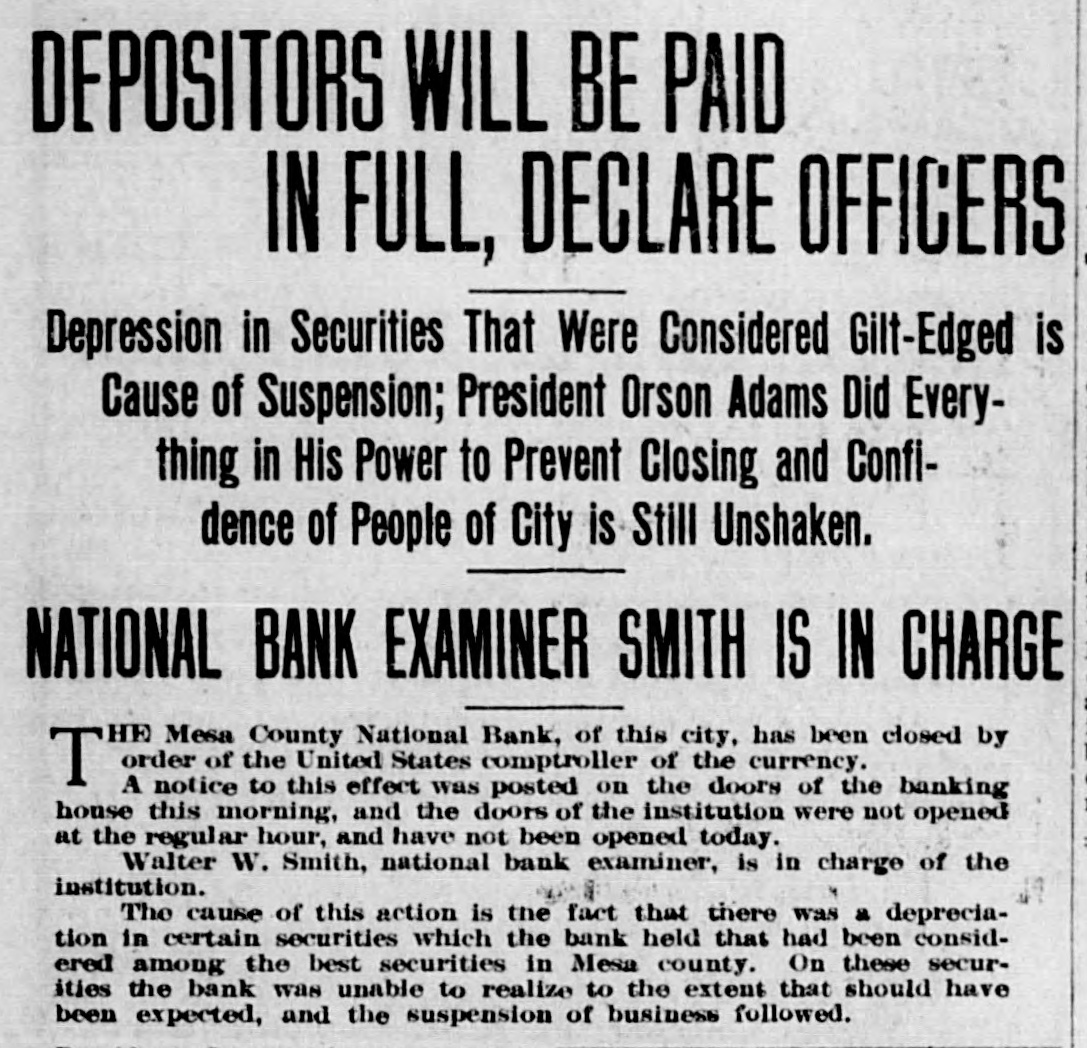
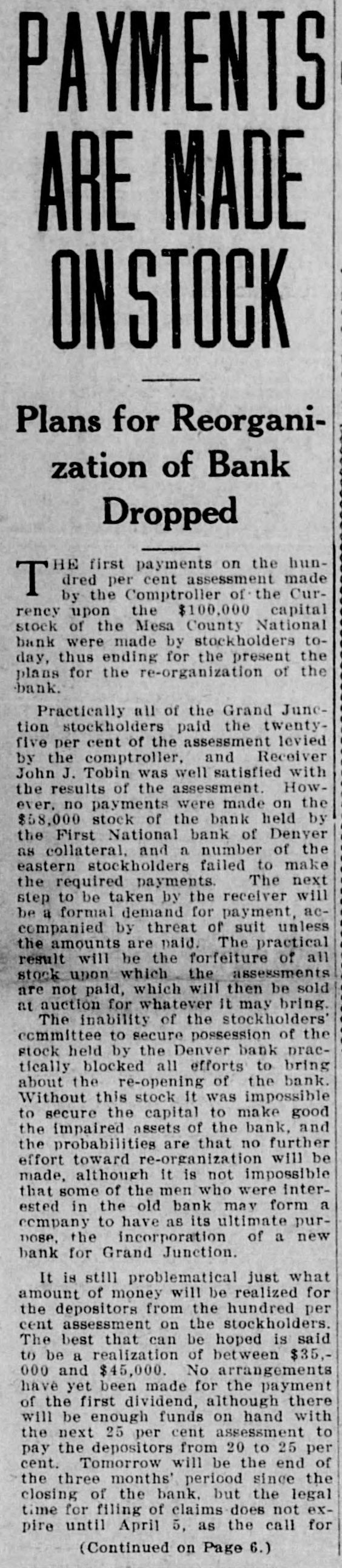
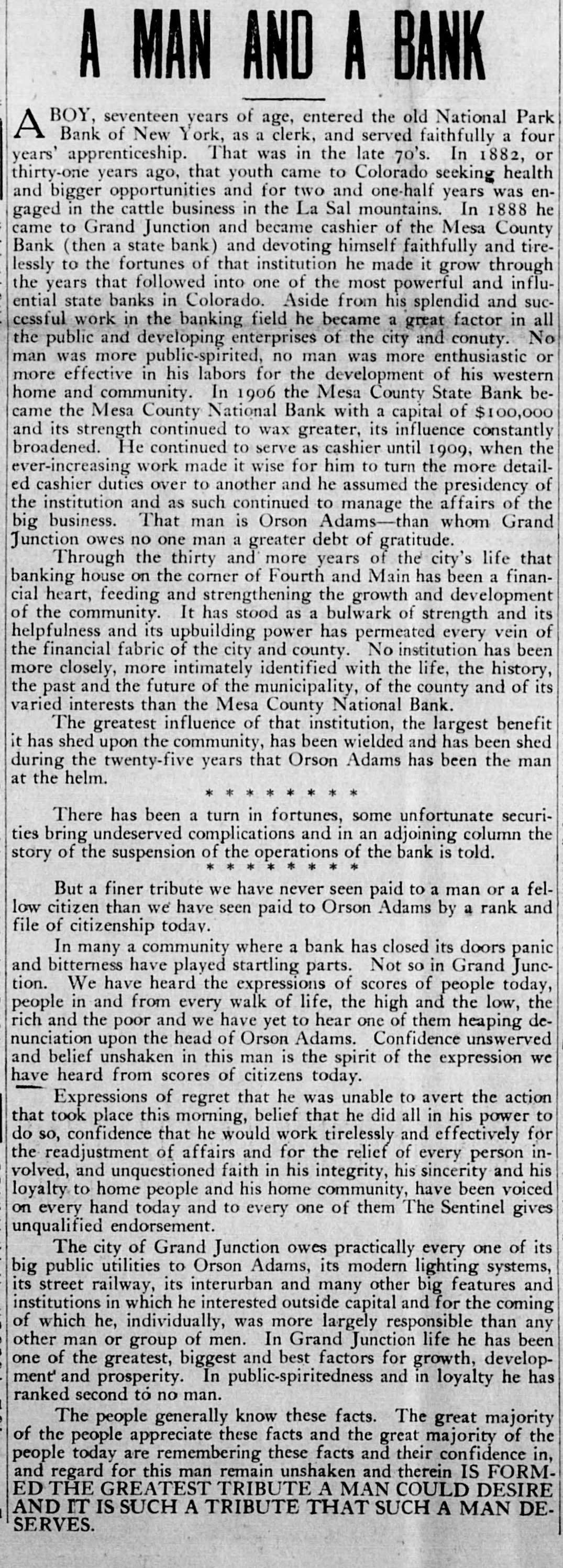
A MAN AND A BANK BOY, seventeen years of age, entered the old National Park A Bank of New York, as a clerk, and served faithfully a four years' apprenticeship. That was in the late 70's. In 1882, or thirty-one years ago, that youth came to Colorado seeking health and bigger opportunities and for two and one-half years was engaged in the cattle business in the La Sal mountains. In 1888 he came to Grand Junction and became cashier of the Mesa County Bank (then a state bank) and devoting himself faithfully and tirelessly to the fortunes of that institution he made it grow through the years that followed into one of the most powerful and influential state banks in Colorado. Aside from his splendid and successful work in the banking field he became a great factor in all the public and developing enterprises of the city and conuty. No man was more public-spirited, no man was more enthusiastic or more effective in his labors for the development of his western home and community. In 1906 the Mesa County State Bank became the Mesa County National Bank with a capital of $100,000 and its strength continued to wax greater, its influence constantly broadened. He continued to serve as cashier until 1909, when the ever-increasing work made it wise for him to turn the more detailed cashier duties over to another and he assumed the presidency of the institution and as such continued to manage the affairs of the big business. That man is Orson Adams-than whom Grand Junction owes no one man a greater debt of gratitude. Through the thirty and more years of the city's life that banking house on the corner of Fourth and Main has been a financial heart, feeding and strengthening the growth and development of the community. It has stood as a bulwark of strength and its helpfulness and its upbuilding power has permeated every vein of the financial fabric of the city and county. No institution has been more closely, more intimately identified with the life, the history, the past and the future of the municipality, of the county and of its varied interests than the Mesa County National Bank. The greatest influence of that institution, the largest benefit it has shed upon the community, has been wielded and has been shed during the twenty-five years that Orson Adams has been the man at the helm. There has been a turn in fortunes, some unfortunate securities bring undeserved complications and in an adjoining column the story of the suspension of the operations of the bank is told. But a finer tribute we have never seen paid to a man or a fellow citizen than we have seen paid to Orson Adams by a rank and file of citizenship today. In many a community where a bank has closed its doors panic and bitterness have played startling parts. Not so in Grand Junction. We have heard the expressions of scores of people today, people in and from every walk of life, the high and the low, the rich and the poor and we have yet to hear one of them heaping denunciation upon the head of Orson Adams. Confidence unswerved and belief unshaken in this man is the spirit of the expression we have heard from scores of citizens today. Expressions of regret that he was unable to avert the action that took place this morning, belief that he did all in his power to do so, confidence that he would work tirelessly and effectively for the readjustment of affairs and for the relief of every person involved, and unquestioned faith in his integrity, his sincerity and his loyalty to home people and his home community, have been voiced on every hand today and to every one of them The Sentinel gives unqualified endorsement. The city of Grand Junction owes practically every one of its big public utilities to Orson Adams, its modern lighting systems, its street railway, its interurban and many other big features and institutions in which he interested outside capital and for the coming of which he, individually, was more largely responsible than any other man or group of men. In Grand Junction life he has been one of the greatest, biggest and best factors for growth, development' and prosperity. In public-spiritedness and in loyalty he has ranked second to no man. The people generally know these facts. The great majority of the people appreciate these facts and the great majority of the people today are remembering these facts and their confidence in, and regard for this man remain unshaken and therein IS FORMED THE GREATEST TRIBUTE A MAN COULD DESIRE AND IT IS SUCH A TRIBUTE THAT SUCH A MAN DESERVES.