Multiple articles (late July–early August 1895) report the Union National Bank of Denver voluntarily closed/suspended and will liquidate; the comptroller/receiver was appointed in early August. Sources emphasize voluntary liquidation and that depositors will be paid in full. Some pieces mention withdrawals after an unfavorable statement, but there is no clear standalone bank run described—this is a suspension leading to permanent closure/receivership.
Events (4)
1.July 30, 1890Chartered
Source
historical_nic
2.July 29, 1895Suspension
Cause
Voluntary Liquidation
Cause Details
Board of directors decided to go into voluntary liquidation; bank did not open and suspended payment due to loss of business and dwindling deposits.
Newspaper Excerpt
The Union National bank ... was closed today. It will liquidate its affairs and go out of business.
Source
newspapers
3.August 2, 1895Receivership
Source
historical_nic
4.August 3, 1895Receivership
Newspaper Excerpt
The comptroller of the currency has appointed William S. Nelson receiver of the Union National bank, which suspended payment July 27.
Source
newspapers
Newspaper Articles (21)
1.July 27, 1895The Meeker HeraldMeeker, CO
Click image to open full size in new tab
Article Text
DENVER BANK FAILS. The Union National Voluntarily Closes It: Doors. Denver, July 29.-The Union National bank did not open Its doors this mornIng. the board of directors having deeided to go into a state of voluntary liquidation, and Zeph T. Hill was appointed receiver and represents the comptroller of currency pending the settlement of all claims. That all depositors will be paid in full, without it being necessary to make an assessment on the stockholders, is the encouraging announcement of the clearIng house officials. From the same authority It is aunounced that there is cash enough on hand to pay a dividend to depositors of 25 per cent. at the end of thirty days. All excitement caused by the failure of the bank to open for business was allayed when It was announced that such action was purely voluntary on the part of the directors, and that the depositors would all be paid in full. The present financial institution known as the Union National bank represents the combined interests of the old Union bank and the State National bank. Both of the latter banks were forced to temporarily suspend business during the disastrous panic of 1893, but both weathered the storm and in the fall of that year the two banks consolidated their interests and became known as the Union National bank. The officials are as follows: Roger W. Woodbury, president; John L McNeal, first vice president: W. N. Byers, second vice president; J. B. Lazear, cashler. The last report made to the comptrol. ler of the currency on the 11th. showed the deposits to be $961,407; loans $1,058,494; cash on hand $59,500.
2.July 29, 1895Santa Fe Daily New MexicanSanta Fe., Santa Fe, NM
Click image to open full size in new tab
Article Text
UNION NATIONALCLOSED R. IV. Woodbury's Bank in Denver Has Gone Into LiquidationClaimed Depositors will Lose Nothing. Denver, July 29.-The Union National bank, of which R. W. Woodbury is president, was closed to-day. It will liquidate and go out of business. The Union National bank was closed during the panic of 1893, but subsequently resumed business and later consolidated with the State National bank, which was also closed during the panic. It is said that the depositors will lose nothing and that business will not be seriously affected.
3.July 29, 1895The Providence NewsProvidence, RI
Click image to open full size in new tab
Article Text
The Bank is Closed. DENVER, Col., July 29.-The Union National Bank, of which W. R. Woodbury is president, was closed today. It will liquidate its affairs and go out of business. The Union Bank was closed during the panic of 1893, but subsequently resumed business and later was consolidated with the State National Bank, which had also been closed during the panic. It is said the depositors will lose nothing.
4.July 29, 1895Deseret Evening NewsSalt Lake City, UT
Click image to open full size in new tab
Article Text
OUT OF BUSINESS. Union National Bank of Denver Closed Today. THE CAUSE OF THE FAILURE. Depositors Will be Paid in Full and All the Liabilities of the Bank Met. DENVER, July 29.-The Union National bank, of which R. W. Woodbury is president, was closed today. It will liquidate and go out of business. The Union bank was closed during the panic of 1893, but subsequently resumed business, and later consolidated with the State National, which also has been closed during the panic, It is said depositors will lose nothing and business not be seriously affected. The immediate cause of the bank's closing was the loss of business. In the published statement 01 July 11 the deposits were given about $800,000. Since then the deposits dwindled to $634,000. The bank's loans and discounts, according to the last statement, amounted to $1,058,494. It will be possible to pay 25 per cent dividend to the depositors from the resources on hand inside of ninety days, and according to the statement of the clearing house, all depositors will be paid in full without the necessity of making an assessment upon the stockholders. The bank's capital is $500,000, divided among 400 persons. David H. Moffat, president of the First National bank, said the closing of the Union National bank would not haveany bad effects. The Times this afternoon says editorially: "Dollar for dollar will be paid deposits and the general situation will be improved by the liquidation of the bank's liabilitles."
5.July 29, 1895The Topeka State JournalTopeka, KS
Click image to open full size in new tab
Article Text
A LARGE BANK QUITS. Union National of Denver Will Go Out of Business. DENVER, Colo., July 29.-The Union National bank of which R. W. Woodbury is president, was closed today. It will liquidate its afiairs and go out of business. The Union bank was closed during the panic in 1893, but subsequently resumed business, and later was consolidated with the State National bank, which had also closed during the panic. The immediate cause of the closing of the bank was its loss of business. In its published statement of July 11, the deposits were given as about $800,000. Since then the deposits have dwindled to $634,000. The bank's capital is $500,000 divided among 400 persons, The Times this afternoon says, editorially, regarding the failure: "Dollar for dollar will be paid depositors, and the general situation will be improved by the liquidation of the bank's liabilities."
6.July 30, 1895The Seattle Post-IntelligencerSeattle, WA
Click image to open full size in new tab
Article Text
Another Denver Bank Fails. Denver, July 29.-The Union National bank, of which R. W. Woodbury is president, was closed today. It will liquidate and go out of business. The Union bank was closed during the panic of 1893, But subsequently resumed business, and later consolidated with the State National, which had also been closed during the panic. It is said the depositors will lose nothing and business will not be seriously affected. The immediate cause of the bank's closing was loss of business. In the published statement of July If the deposits were given at about $800,000. Since then the deposits have dwindled to $634,000. The bank's loans and discounts, according to the last statement, amounted to $1,058,494. It will be possible to pay a 25 per cent. dividend to depositors from the resources on hand inside of ninety days, and according to the statement of the clearing house all depositors will be paid in full without the necessity of making an assessment upon the stockholders. The bank's capital is $500,000, divided among 400 persons. David H. Moffatt, president of the First National bank, said the closing of the Union National bank would not have any bad effects.
7.July 30, 1895The San Francisco CallSan Francisco, CA
Click image to open full size in new tab
Article Text
DENVER BANK FAILURE, The Union National Forced to Close Its Doors to Business. Trouble Caused by Contention Over Deposits of County Funds. DENVER, COLO., July 29.-Simultaneously with the closing of the County Treasurer's office at 10 o'clock this morning the Union National Bank suspended. There has been much contention of late among several of the banks, which claimed they were not receiving a fair proportion of the county's deposits. This contention culminated a few days ago in the withdrawal of several prominent bankers of this city from Treasurer Wygant's bond. Mr. Wygant this morning submitted to the County Commissioners the names of substitute bondsmen, which were rejected. and the office of County Treasurer was declared to be vacant. Cashier C. L. McIntosh of the Bank of Commerce, one of Mr. Wygant's bondsmen, said: 'Myself and associate bondsmen withdrew from Treasurer Wygant's bond because we no longer felt safe in remaining. We felt satisfied that the banks with whom he was doing business could better act as his sureties than ourselves. The unfavorable statement of July 11, made by the Union National, caused a large amount of withdrawal of accounts and brought about the failure. The failure, however, was not unexpected by the other banks, as the bank was intending to liquidate in the near future. I am satisfied the Union National Bank will pay every dollar of its indebtedness." Cashier J. B. Lazar of the Union National Bank said that the assignment of the bank was due to the suit for a receiver for the State and the refusal of the clearing-house this morning to lend the bank $100,000. Mr. Lazar declares that the bank will pay every dollar it owes, and the depositors need have no fear. Bank Examiner Z. T. Hill is now in control of the Union Bank affairs.
Union Bank at Denver Closes. DENVER, Cora, July 29.-The Union National bank, of which W. R. Woodbury is president, was closed to-day. It will liquidate its aftairs and go out of business The Union bank was closed during the panic in 1803, but subsoquently renumed busines and later ---
9.July 30, 1895The Salt Lake HeraldSalt Lake City, UT
Click image to open full size in new tab
Article Text
UNION NATIONAL QUITS. Denver's Big Bank Will Liquidate and Go Out of Business. DENVER, July 29.-The Union National bank, of which R. W. Woodbury is president, was closed today. It will liquidate and go out of business. The Union bank was closed during the panic of 1893, but subsequently resumed business and later consolidated with the State National, which also had been closed during the panic. It is said depositors will lose nothing and business not be seriously affected. The immediate cause of the bank's closing was the loss of business. In the published statement of July 11 the deposits were given as about $800,000. Since then the deposits have dwindled to $634,000. The bank's loans and discounts, according to the last statement, amounted to $1,058,494. It will be possible to pay 25 per cent dividend to the depositors from the resources on hand inside of ninety days, and according to the statement of the clearing house. all depositors will be paid in full without the necessity of making an as essment upon the stockholders. The bank's capital is $500,000, divided among 400 persons. David H. Moffat, president of the First National bank, said the closing of the Union National bank would not have any bad effects. The Times this afternoon says editorially: "Dollar for dollar will be paid depositors, and the general situation will be improved by the liquidation of the bank's liabilities."
10.July 30, 1895St. Paul Daily GlobeSaint Paul, MN
Click image to open full size in new tab
Article Text
DENVER BANK CLOSED. Union National Forced Down by Poor Business. DENVER, Col., July 29.-The Union National bank, of which R. W. Woodbury is president, was closed today. It will liquidate its affairs and go out of business. The Union bank was closed during the panic of 1893, but subsequently resumed business, and later was consolidated with the State National bank, which also closed during the panic. It is said the depositors will lose nothing, and business will not be seriously affected. The immediate cause of the closing of the bank was its loss of business. In its published statement of July 11 deposits were given as about $800,000. Since then the deposits have dwindled to $634,000. The bank loans and discounts, according to the last statement, amounted to $1,058,434. It will be possible to pay a dividend of 25 per cent to depositors from the resources on hand, inside of ninety days, and according to a statement of the clearing house all depositors will be paid in full, without the necessity of making an assessment upon the stockholders. The bank's capital is $500,000, divided among 400 persons. David H. Moffatt, president of the First National bank, said today that the closing of the Union would not have any bad effects upon business, nor cause any embarrassment to the other banks.
Bank Closes. DENVER, July 29.-The Union National bank, of which W. R. Woobury is president, was closed Monday. It will liquidate its affairs and go out of business. The Union bank was closed during the panic in 1893, but subsequently resumed business, and later was consolidated with the State National bank, which also had been closed during the panic. It is said the depositors will lose nothing, and business will not be seriously affected.
12.July 31, 1895St. Paul Daily GlobeSaint Paul, MN
Click image to open full size in new tab
Article Text
DENVER BANK SUSPENDS. Over $100,000 in Its Vaults When It Closed. DENVER, Col., July 30.-Joseph T. Talbert, national bank examiner for the district of Colorado, arrived in Denver today and took charge of the affairs of the Union National bank. It is thought the examiner will be in a position to pay a considerable dididend to depositors at the end of eight or nine days. There was upwards of $100,000 cash in the vaults when the doors were closed yesterday, and in addition a considerable sum is due from other banks, which will of course be collected. It is stated with emphasis that the bank will pay dollar for dollar without having to make a levy on stockholders. The city has $25,008 in the bank, the county about $7,000 and the state about $50,000. SALISBURY, Mo., July 30.-The Bank of Salisbury closed its doors this morning. The shortage is unknown. J. H. Finks was cashier.
13.August 1, 1895Grant County HeraldLancaster, WI
Click image to open full size in new tab
Article Text
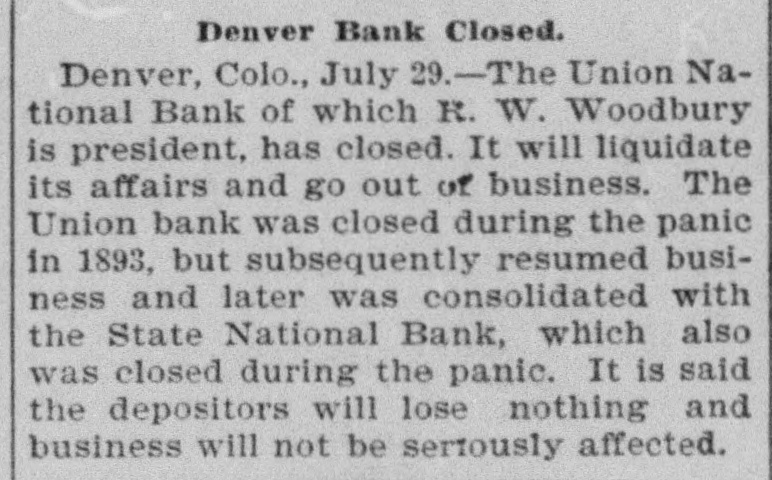
Denver Bank Closed. Denver, Colo., July 29.-The Union National Bank of which R. W. Woodbury is president, has closed. It will liquidate its affairs and go out of business. The Union bank was closed during the panic in 1893, but subsequently resumed business and later was consolidated with the State National Bank, which also was closed during the panic. It is said the depositors will lose nothing and business will not be seriously affected.
14.August 1, 1895The Salt Lake HeraldSalt Lake City, UT
Click image to open full size in new tab
Article Text
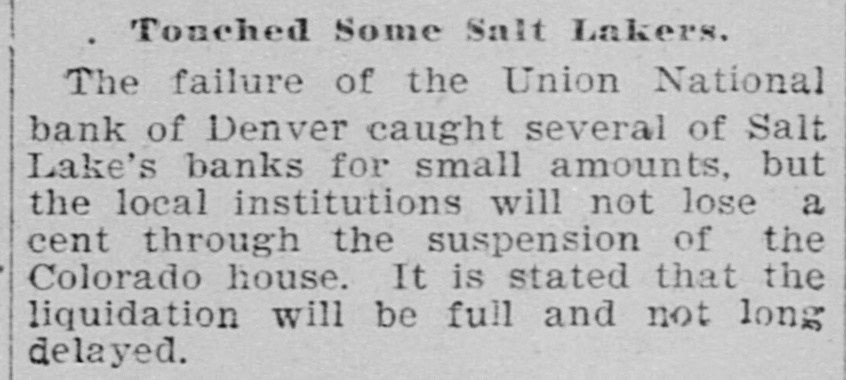
Touched Some Salt Lakers. The failure of the Union National bank of Denver caught several of Salt Lake's banks for small amounts, but the local institutions will not lose a cent through the suspension of the Colorado house. It is stated that the liquidation will be full and not long delayed.
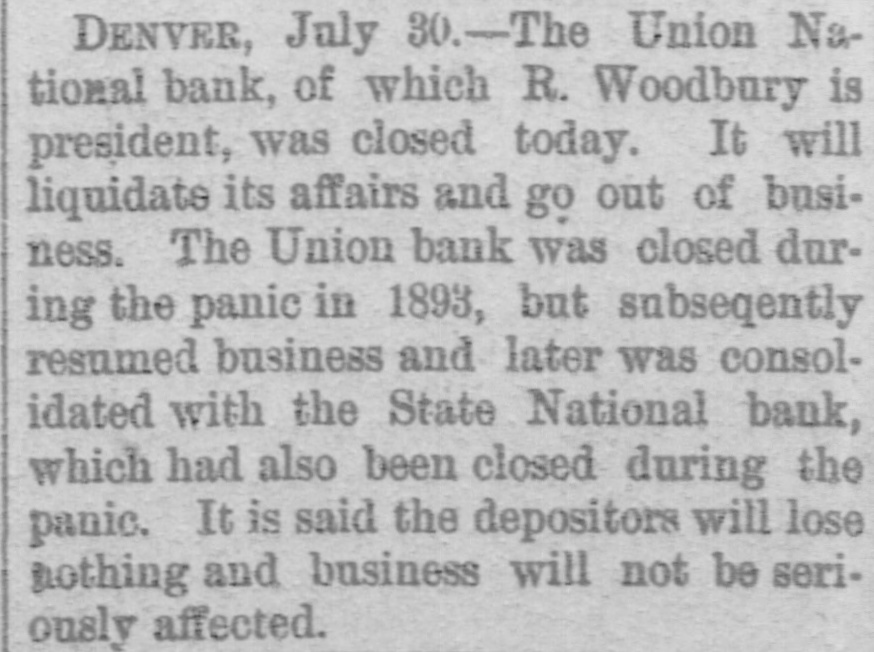
DENVER, July 30.-The Union National bank, of which R. Woodbury is president, was closed today. It will liquidate its affairs and go. out of business. The Union bank was closed during the panic in 1893, but subseqently resumed business and later was consolidated with the State National bank, which had also been closed during the panic. It is said the depositors will lose nothing and business will not be seriously affected.
16.August 3, 1895The Salt Lake HeraldSalt Lake City, UT
Click image to open full size in new tab
Article Text
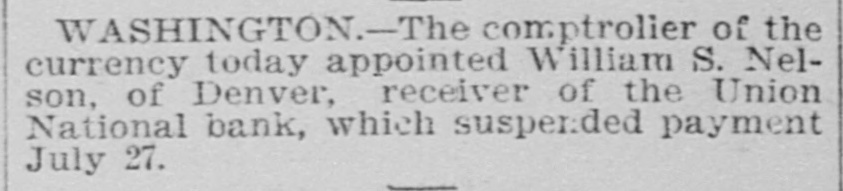
WASHINGTON.-The comptroller of the currency today appointed William S. Nelson, of Denver, receiver of the Union National bank, which suspended payment July 27.
17.August 3, 1895The Kootenai HeraldBonners Ferry, Kootenai, ID
Click image to open full size in new tab
Article Text
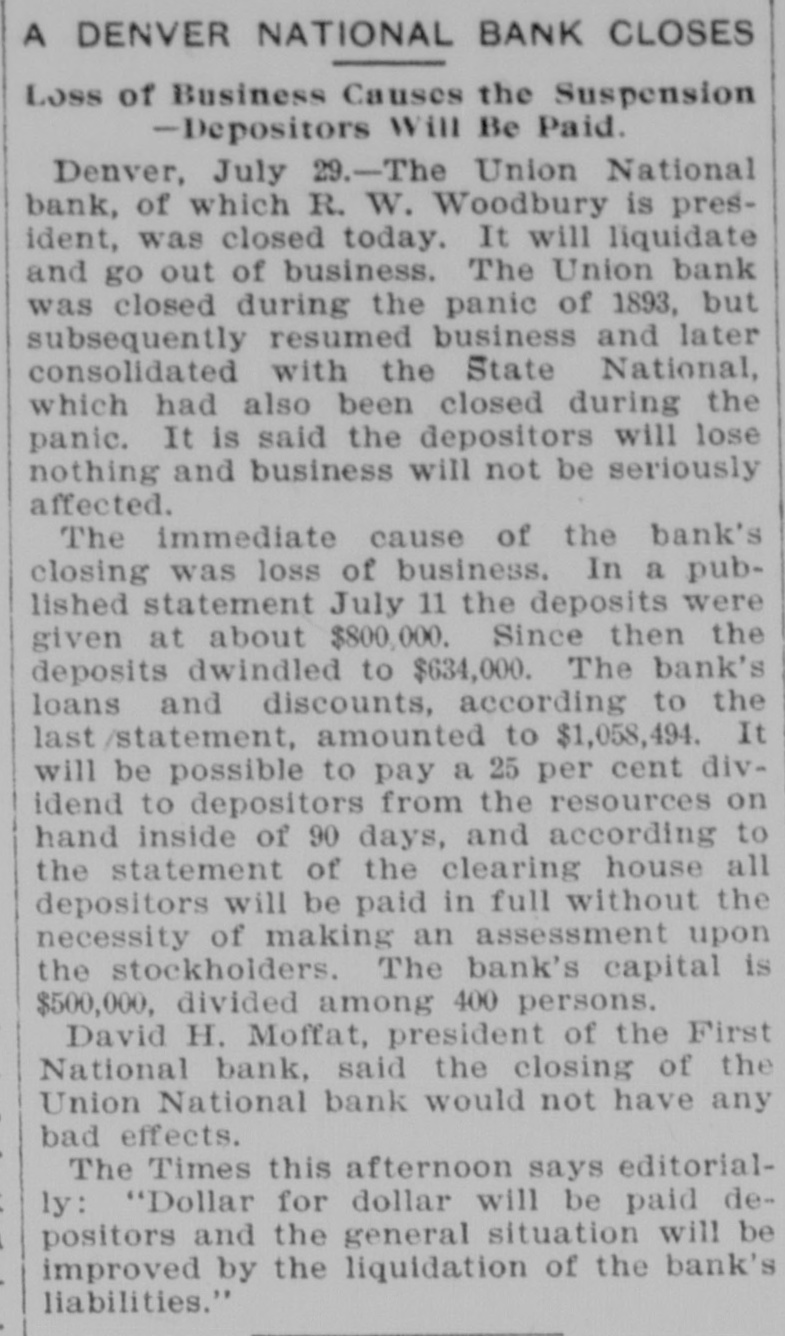
A DENVER NATIONAL BANK CLOSES Loss of Business Causes the Suspension -Depositors Will Be Paid. Denver, July 29.-The Union National bank, of which R. W. Woodbury is president, was closed today. It will liquidate and go out of business. The Union bank was closed during the panic of 1893, but subsequently resumed business and later consolidated with the State National, which had also been closed during the panic. It is said the depositors will lose nothing and business will not be seriously affected. The immediate cause of the bank's closing was loss of business. In a published statement July 11 the deposits were given at about $800,000. Since then the deposits dwindled to $634,000. The bank's loans and discounts, according to the last/statement, amounted to $1,058,494. It will be possible to pay a 25 per cent dividend to depositors from the resources on hand inside of 90 days, and according to the statement of the clearing house all depositors will be paid in full without the necessity of making an assessment upon the stockholders. The bank's capital is $500,000, divided among 400 persons. David H. Moffat, president of the First National bank, said the closing of the Union National bank would not have any bad effects. The Times this afternoon says editorially: "Dollar for dollar will be paid depositors and the general situation will be improved by the liquidation of the bank's liabilities."
18.August 3, 1895The Lamar RegisterLamar, CO
Click image to open full size in new tab
Article Text
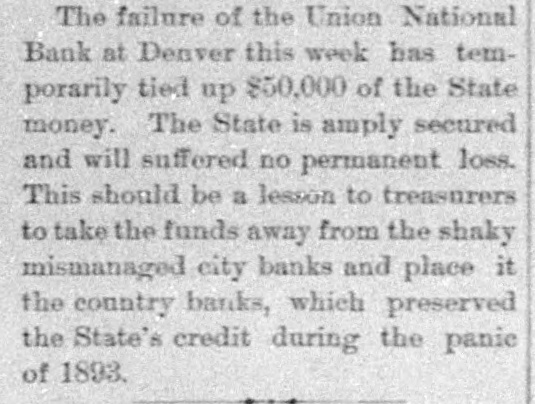
The failure of the Union National Bank at Denver this week has temporarily tied up $50,000 of the State money. The State is amply secured and will suffered no permanent loss. This should be a lesson to treasurers to take the funds away from the shaky mismanaged city banks and place it the country banks, which preserved the State's credit during the panie of 1893.
19.August 3, 1895The Providence NewsProvidence, RI
Click image to open full size in new tab
Article Text
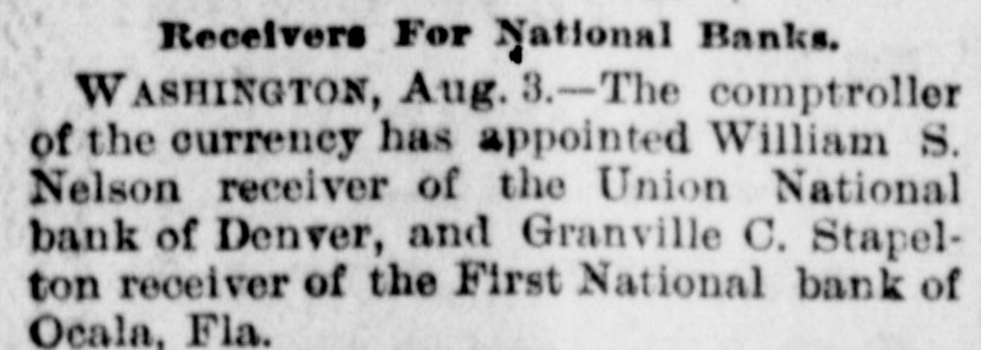
Receivers For National Banks. W ASHINGTON, Aug. 3.-The comptroller of the currency has appointed William S. Nelson receiver of the Union National bank of Denver, and Granville C. Stapelton receiver of the First National bank of Ocala, Fla.
20.August 5, 1895Evening StarWashington, DC
Click image to open full size in new tab
Article Text
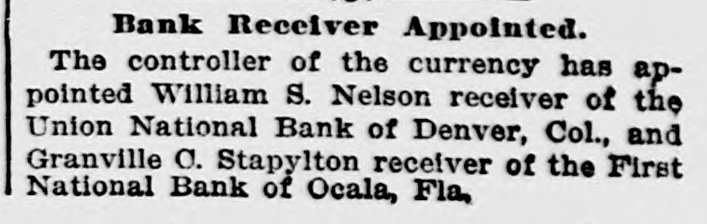
Bank Receiver Appointed. The controller of the currency has appointed William S. Nelson receiver of the Union National Bank of Denver, Col., and Granville C. Stapylton receiver of the First National Bank of Ocala, Fla,
21.December 5, 1895Rocky Ford EnterpriseRocky Ford, CO
Click image to open full size in new tab
Article Text
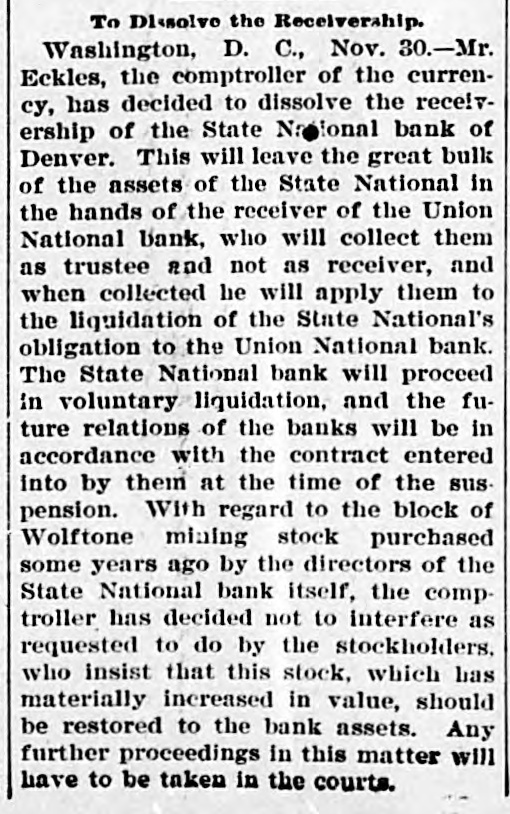
To Dissolve the Receivership. Washington, D. C., Nov. 30.-Mr. Eckles, the comptroller of the currency, has decided to dissolve the receivership of the State National bank of Denver. This will leave the great bulk of the assets of the State National in the hands of the receiver of the Union National bank, who will collect them as trustee and not as receiver, and when collected he will apply them to the liquidation of the State National's obligation to the Union National bank. The State National bank will proceed in voluntary liquidation, and the future relations of the banks will be in accordance with the contract entered into by them at the time of the sus. pension. With regard to the block of Wolftone mining stock purchased some years ago by the directors of the State National bank itself, the comptroller has decided not to interfere as requested to do by the stockholders. who insist that this stock, which has materially increased in value, should be restored to the bank assets. Any further proceedings in this matter will have to be taken in the courts.