11576. Farmers State Bank (Eagle, NE)

Bank Information

Episode Type
Suspension โ†’ Closure
Bank Type
state
Start Date
January 13, 1933
Location
Eagle, Nebraska (40.817, -96.430)

Metadata

Model
gpt-5-mini
Short Digest
a3533bb0f3ff71a8

Response Measures

None

Description

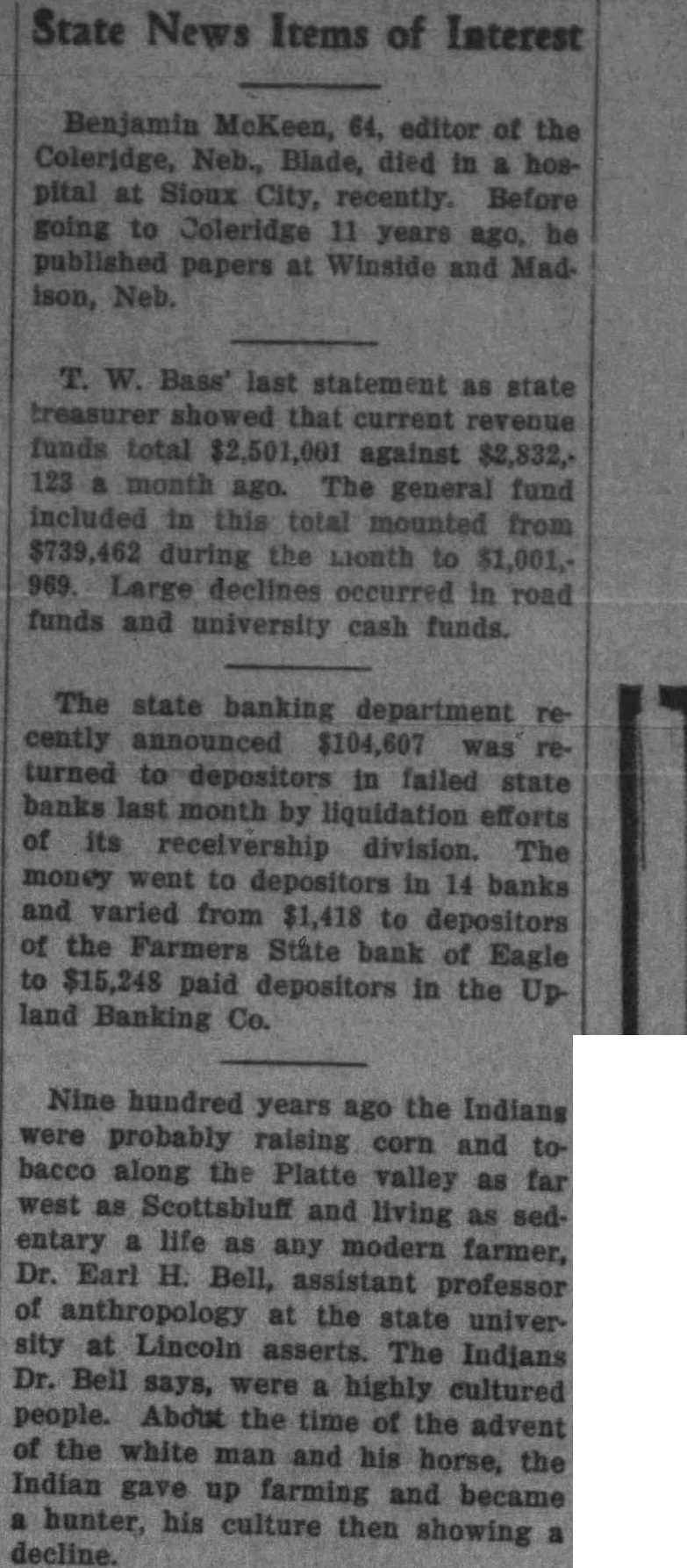
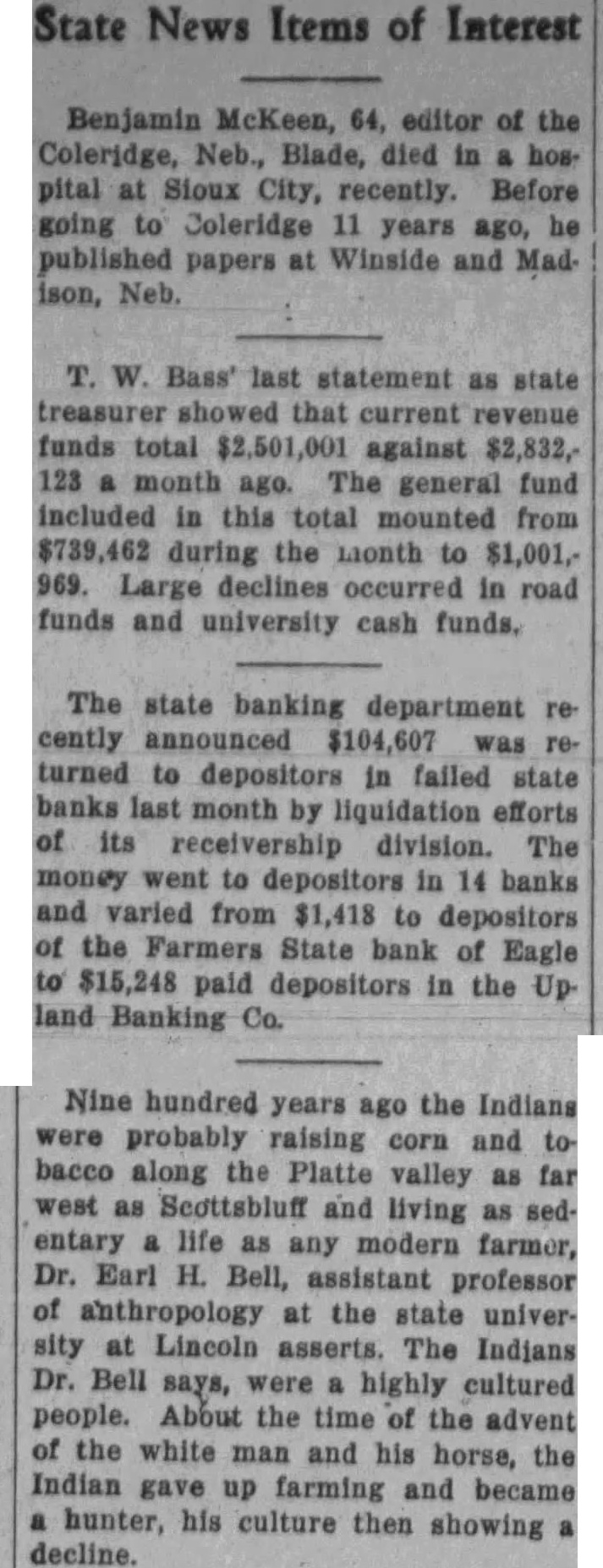
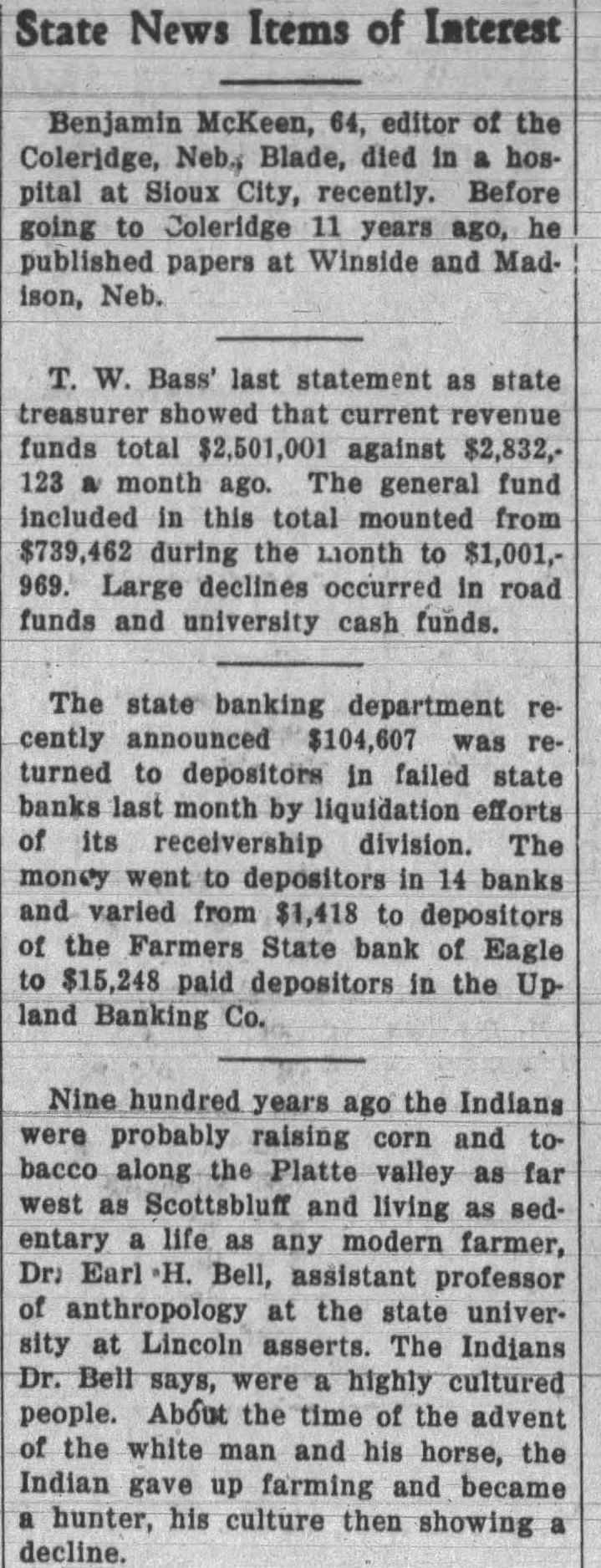
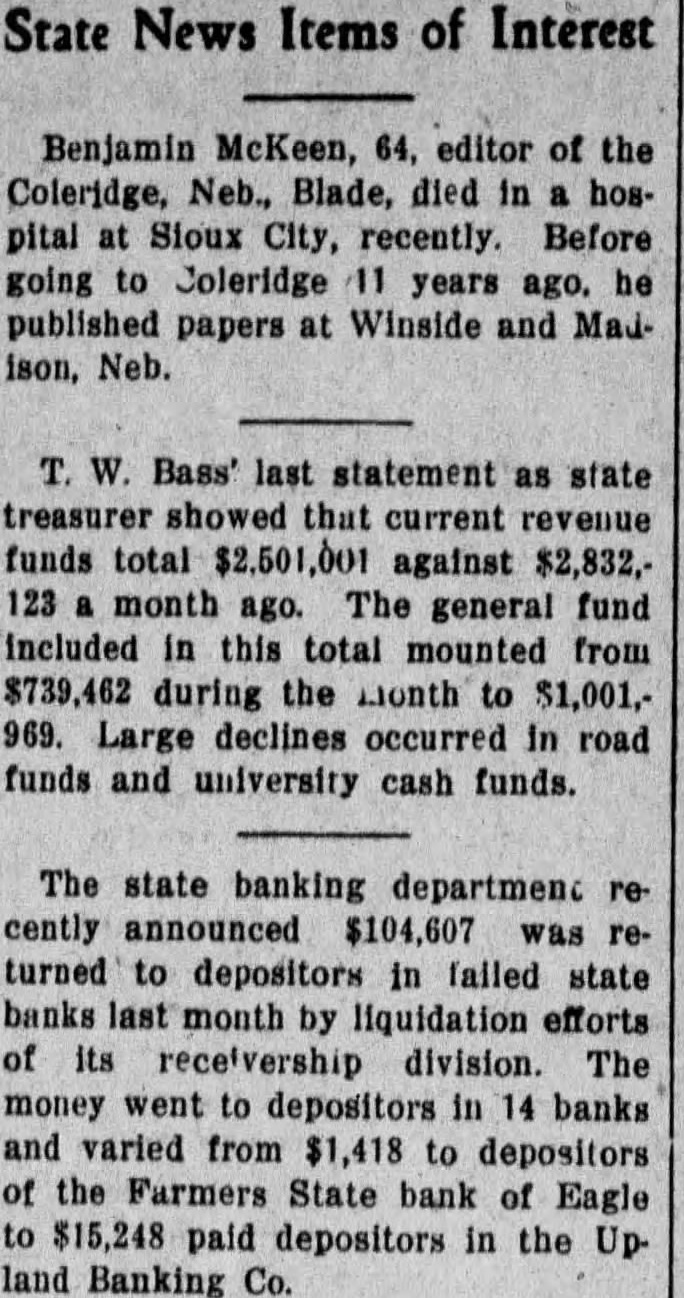
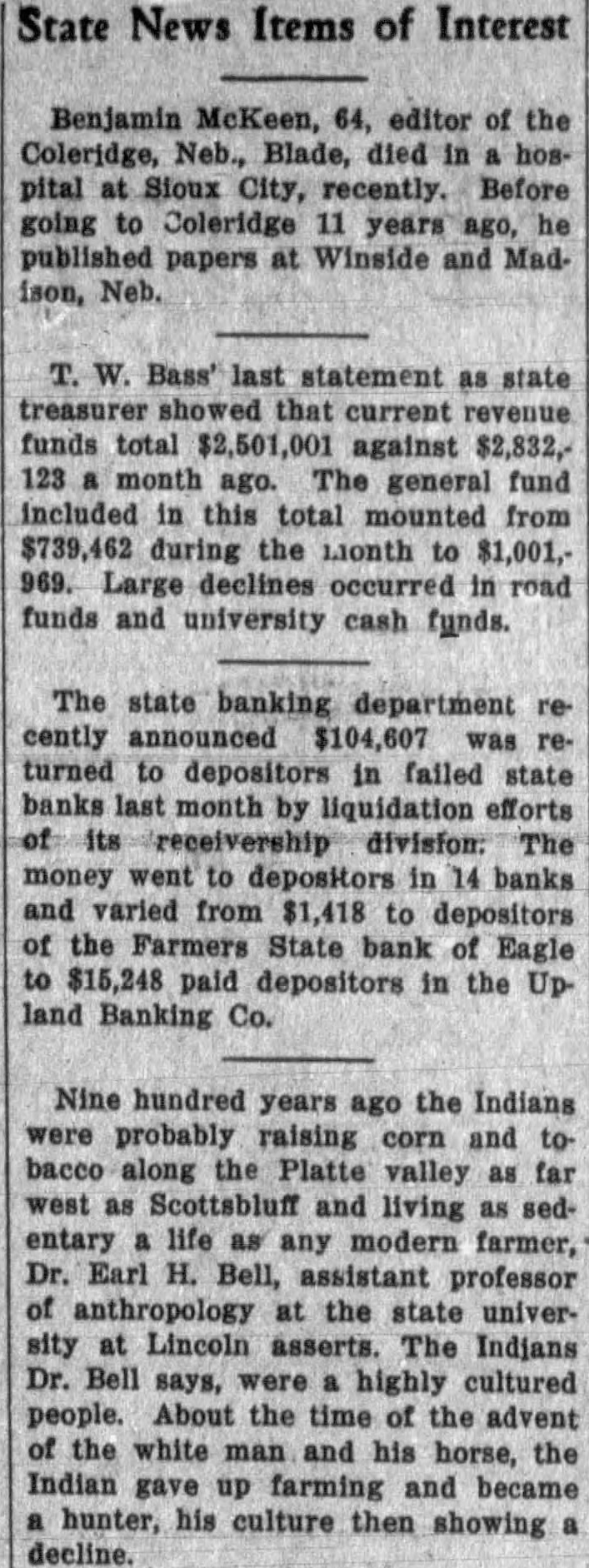
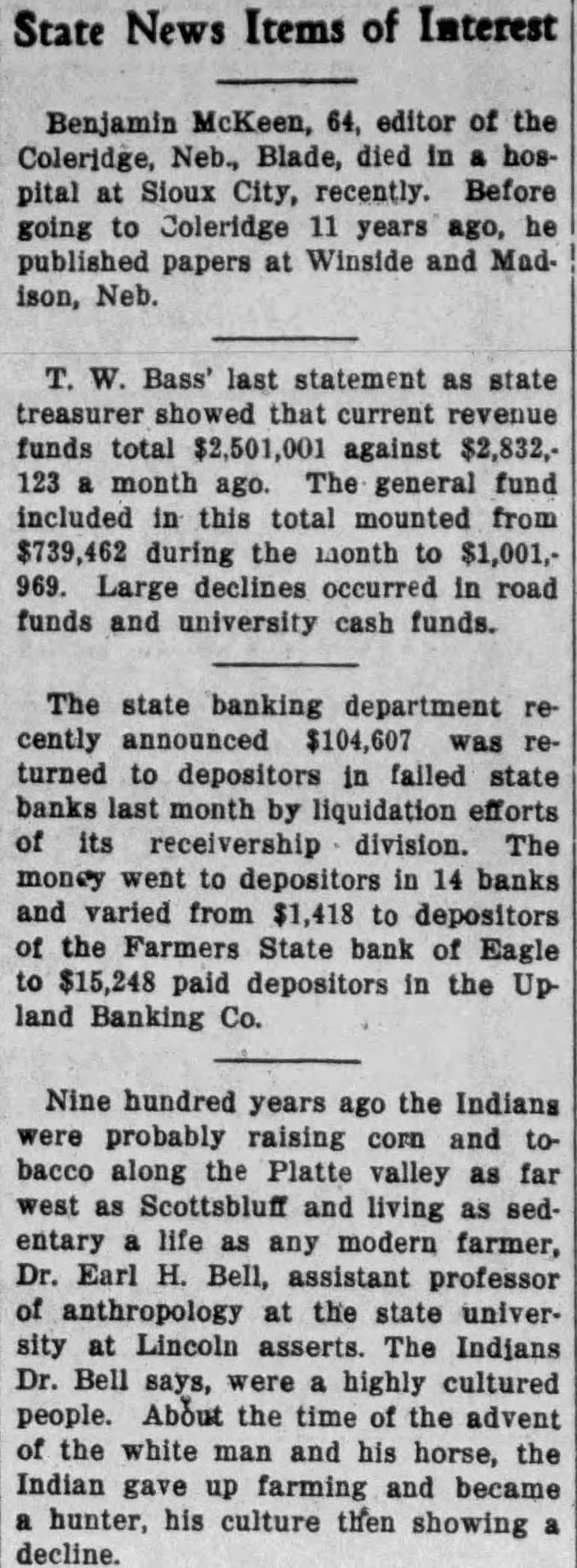
Multiple Nebraska newspapers (Jan 12โ€“13, 1933) report the state banking department returned funds to depositors of failed state banks; depositors of the Farmers State Bank of Eagle received $1,418. No run is mentioned; the bank was in receivership/liquidation and permanently closed.

Events (1)

1. January 13, 1933 Receivership
Newspaper Excerpt
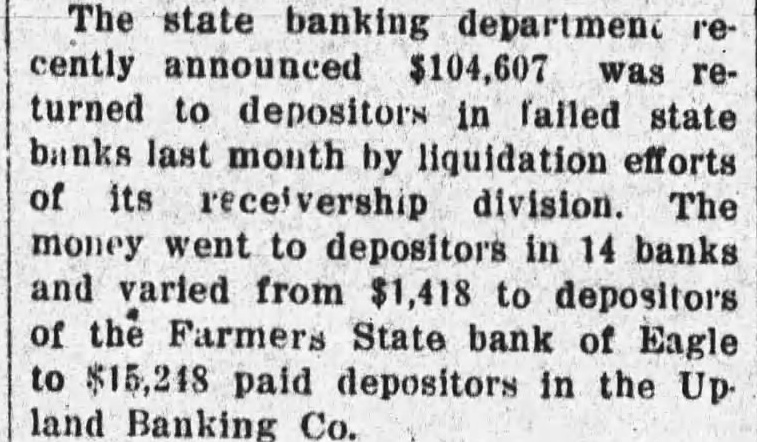
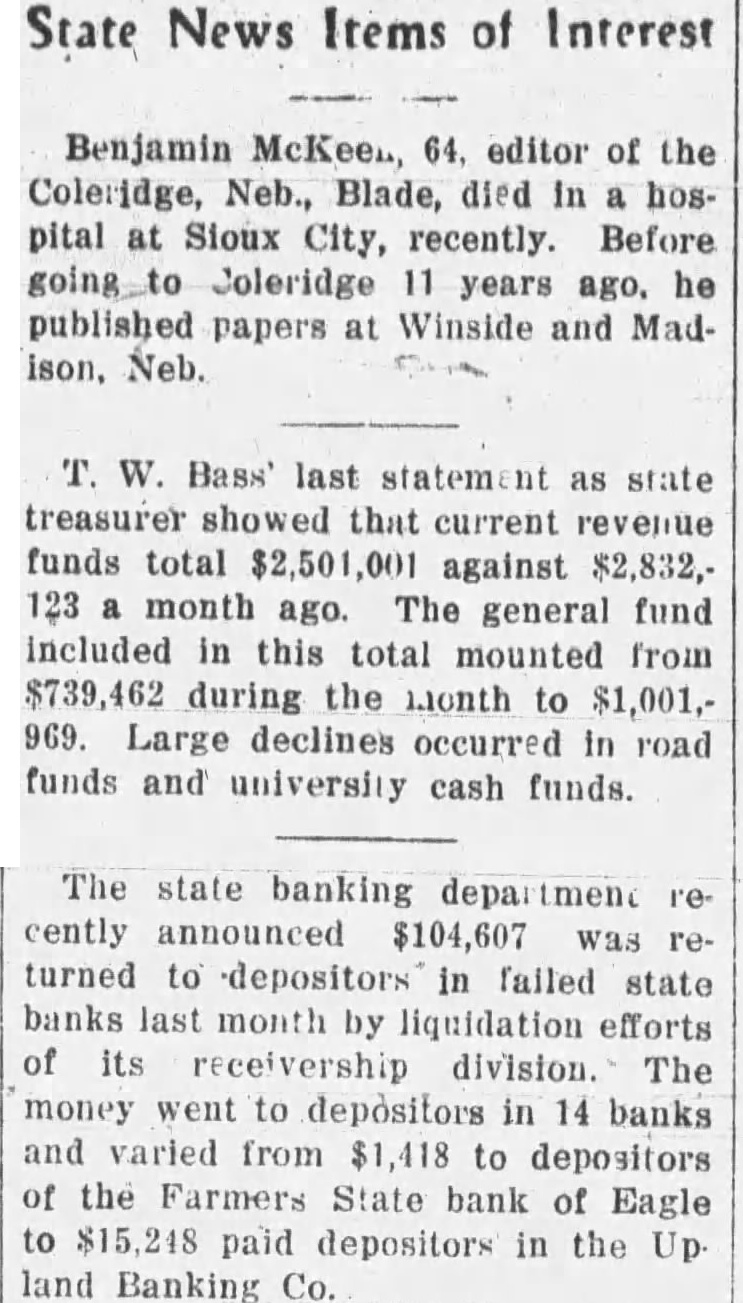
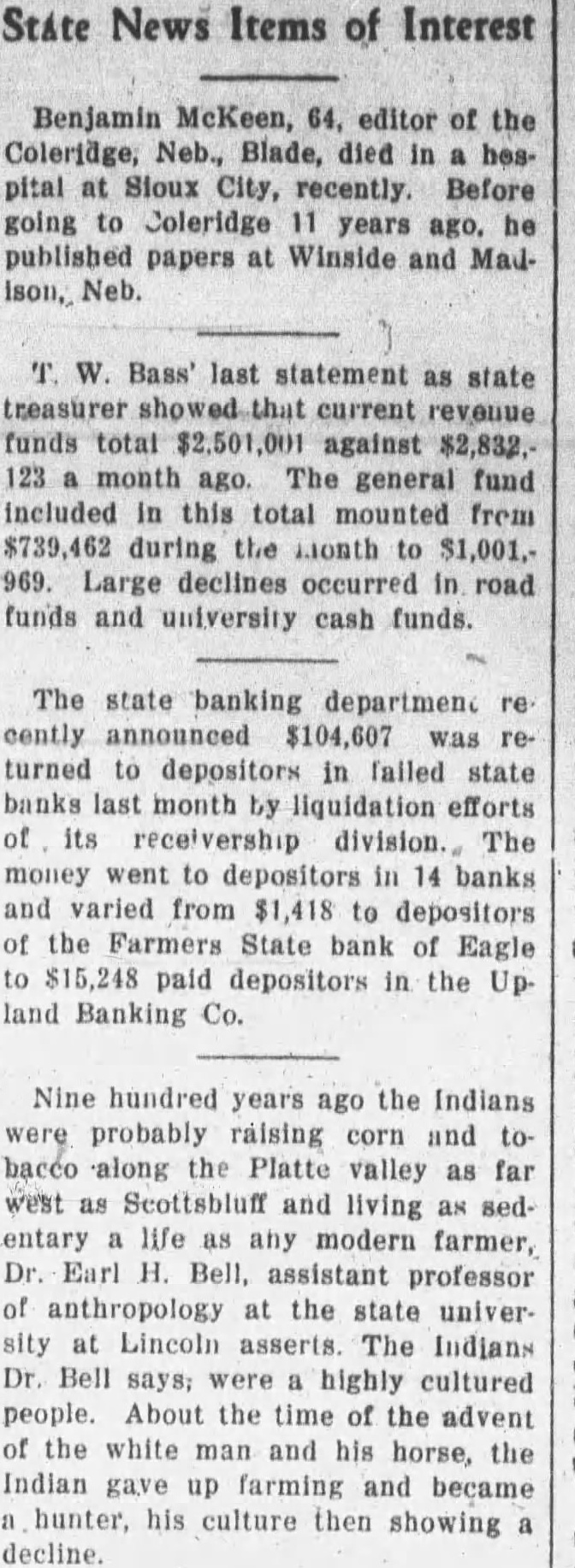
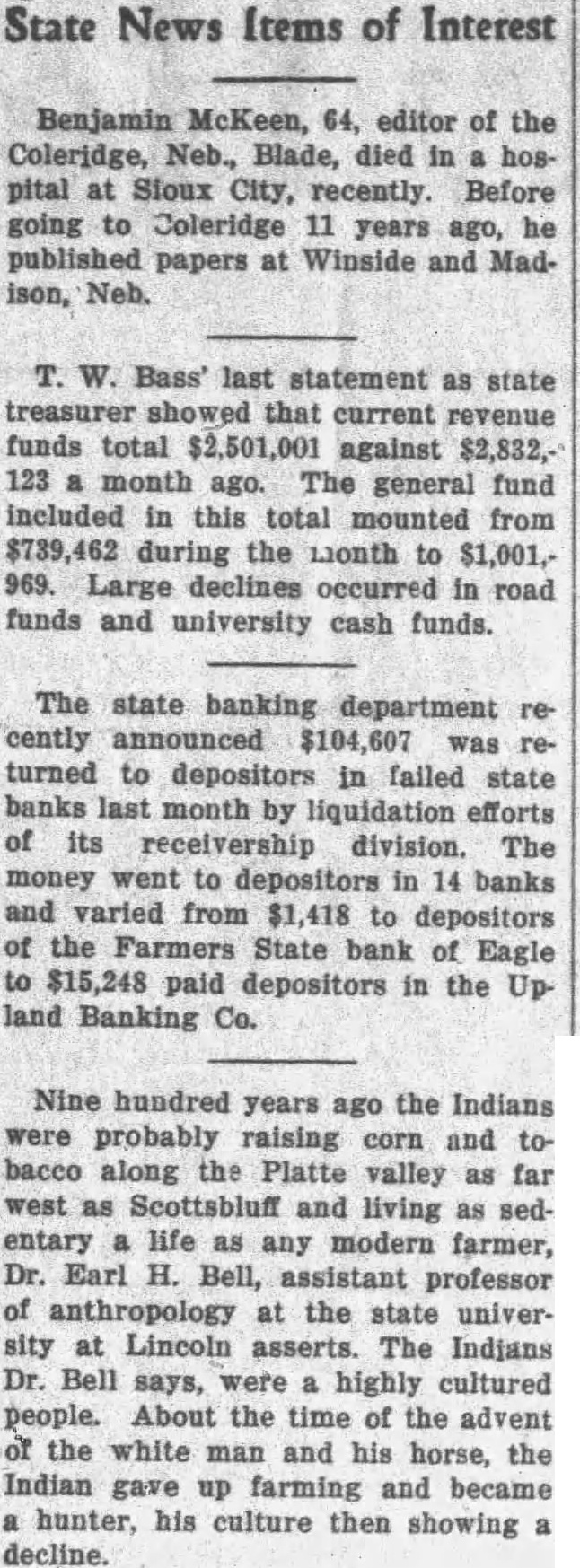
The state banking department recently announced $104,607 was returned to depositors in failed state banks ... depositors of the Farmers State bank of Eagle $1,418 paid depositors
Source
newspapers

Newspaper Articles (10)

Article from The Brainard Clipper, January 12, 1933

Click image to open full size in new tab

Article Text

State News Items of Interest Benjamin McKeen, 64, editor the Coleridge, Neb., Blade, died in hospital Sioux City, recently. Before going to Coleridge ago, published papers Winside and ison, Neb. Bass' last statement state treasurer showed that current revenue funds total against $2,832,123 month ago. The general fund included in this total mounted from during the month to $1,001,Large declines occurred in road funds and university cash funds. The department cently announced turned to depositors in failed state banks last month by liquidation efforts of its receivership division. The money went depositors in banks and varied from $1,418 to depositors the Farmers State bank of Eagle paid depositors the land Banking hundred years the Indians probably raising corn and bacco along the Platte valley as far west Scottsbluff and living as sedentary life as any modern farmer, Dr. Bell, assistant professor of anthropology at the state university at Lincoln asserts. The Indians says, cultured people. About the time of the advent the white man and his horse, the Indian gave up farming and became hunter, his culture then decline.
Article from The Beemer Times, January 12, 1933

Click image to open full size in new tab

Article Text

Items of Interest Benjamin McKeen, editor of the Coleridge, Neb., Blade, died in hospital Sioux City, recently. Before going to Coleridge years ago, he published papers Winside and Madison, Neb. Bass' statement treasurer showed that current revenue funds total against $2,832.month ago. The general fund included this total mounted from $739,462 during the Month to $1,001,969. Large declines occurred in road funds and university cash funds. The state banking department cently announced $104,607 was turned depositors in failed state banks liquidation efforts of its rece'vership division. The money went depositors in banks and varied from $1,418 depositors the Farmers State bank of Eagle $15,248 paid depositors the Upland Banking Co.


Article from The News Cedar Bluffs Standard, January 12, 1933

Click image to open full size in new tab

Article Text

Items of Interest Benjamin McKeen, editor the Coleridge, Neb., Blade, died pital Sioux City, recently. Before going to Coleridge 11 papers Winside and MadNeb. statement state that current funds total against $2,832,month ago. The general fund included in this total mounted from during the month to $1,001,Large declines funds and university cash funds. The state banking department cently announced was turned to depositors in failed state banks month liquidation efforts division: money went depositors in banks and varied from depositors the Farmers State bank of Eagle $15,248 paid depositors in the land Banking Co. Nine hundred years the Indians probably raising and bacco along the Platte valley far west Scottsbluff and living sedentary life any modern farmer, Dr. Earl H. Bell, assistant professor of anthropology the state Lincoln asserts. The Indjans Dr. Bell says, highly cultured people. About the time of the advent the white man and his horse, the Indian gave farming and became hunter, his culture then showing decline.


Article from The Nehawka Enterprise, January 12, 1933

Click image to open full size in new tab

Article Text

Items of Benjamin McKeen, editor of the Coleridge, Neb., Blade, died hospital Sioux City, recently. Before going to Coleridge ago, he published papers Winside and ison, Neb. Bass' last statement state treasurer showed that current revenue funds total against $2,832,123 month ago. The general fund included in this total mounted from during the month to $1,001,969. Large declines occurred in road funds and university cash funds. The state banking department cently announced $104,607 was returned to depositors in failed state banks month by liquidation efforts of its receivership division. The money went depositors in banks and varied from $1,418 to depositors of the Farmers State bank of Eagle $15,248 paid depositors in the Upland Banking Co. Nine hundred years the Indians probably raising corn and tobacco along the Platte valley as far west Scottsbluff and living as sedentary life modern farmer, Dr. Earl H. Bell, assistant professor of anthropology the state university at Lincoln asserts. The Indians Dr. Bell says, highly cultured people. About the time of the advent of the white man and his horse, the Indian gave farming and became hunter, his culture then showing decline.


Article from The Daykin Herald, January 13, 1933

Click image to open full size in new tab

Article Text

The state banking department recently announced $104,607 was returned to depositors in failed state banks last month by liquidation efforts of its receivership division. The money went to depositors in 14 banks and varied from $1,418 to depositors of the Farmers State bank of Eagle to $15,248 paid depositors in the Up land Banking Co.


Article from The Gresham Gazette, January 13, 1933

Click image to open full size in new tab

Article Text

State News Items of Interest Benjamin McKeen, 64, editor of the Coleridge, Neb., Blade, died in a hospital at Sioux City, recently. Before Coleridge 11 years ago, he published papers at Winside and Madison, Neb. T. W. Bass' last statement as state treasurer showed that current revenue funds total against $2,832,123 a month ago. The general fund included in this total mounted from $739,462 during the Month to $1,001,969. Large declines occurred in road funds and university cash funds. The state banking recently announced $104,607 was returned to depositors in failed state banks last month by liquidation efforts of its receivership division. The money went to depositors in 14 banks and varied from $1,418 to depositors of the Farmers State bank of Eagle to paid depositors in the Up land Banking Co.


Article from Louisville Courier, January 13, 1933

Click image to open full size in new tab

Article Text

State Items of Interest Benjamin McKeen, editor the Neb., Blade, died in hesCity, recently. Before going Coleridge years he published papers Winside and Mad- Bass' last statement state treasurer current revenue funds against month ago. The general fund included in this total mounted from during the to 969. Large declines occurred road funds and university cash funds. The state banking department cently announced $104,607 was turned depositors in failed state last month liquidation efforts its receivership division. The money went depositors banks and varied from depositors the Farmers State bank of Eagle paid depositors the Upland Banking Co. Nine hundred years the Indians ago probably raising corn and along the Platte valley as far west Scottsbluff and entary life modern farmer, Earl Bell, assistant professor anthropology the state Lincoln asserts. The Indians Bell says; highly cultured people. About the time of the advent the white man and his horse, the Indian gave farming and became his culture then decline.


Article from Nuckolls County Herald, January 13, 1933

Click image to open full size in new tab

Article Text

of Interest McKeen, 64, editor of the Coleridge, Neb., Blade, died in hospital Sioux City, recently. Before going Coleridge ago, he published papers Winside and MadNeb. Bass' last statement state showed that current revenue funds total against $2,832,month ago. The general fund included in this total mounted from during the month $1,001,Large declines occurred road funds and university cash funds. The state banking department cently announced was returned to depositors in failed state banks last month by liquidation efforts its receivership division. The money went to depositors in banks and varied from $1,418 depositors the Farmers State bank of Eagle $15,248 paid depositors in the land Banking Nine hundred years the Indians probably raising and tobacco along the Platte valley far west Scottsbluff and sedentary life any modern farmer, Dr. Earl H. Bell, assistant professor anthropology the state university Lincoln asserts. The Indians Dr. Bell says, highly cultured people. About the time of the advent the white man and his horse, the Indian gave farming and became hunter, his culture then showing decline.


Article from Palmyra Items, January 13, 1933

Click image to open full size in new tab

Article Text

State News Items of Interest Benjamin McKeen, 64, editor of the Coleridge, Neb., Blade, died in hospital at Sioux City, recently. Before going Coleridge years ago, he published papers at Winside and Madison, Neb. Bass' last statement as state treasurer showed that current revenue funds total $2,501,001 against $2,832,123 month ago. The general fund included in this total from $739,462 during the month to $1,001,969 Large declines in road funds and university cash funds. The state banking department cently announced $104,607 was turned depositors in failed state banks last month by liquidation efforts of its receivership division. The money went to depositors in banks and varied from $1,418 to depositors of the Farmers State bank of Eagle $15,248 paid depositors in the Upland Banking Co. Nine hundred years ago the Indians were probably raising corn and to bacco along the Platte valley as far west as and living as sedentary life as any modern farmer, Dr. Earl H. Bell, assistant professor of anthropology the state univer sity at Lincoln asserts. The Indians Dr. Bell says, were highly cultured people. About the time of the advent of the white man and his horse, the Indian gave up farming and became hunter, his culture then showing decline.


Article from The Wymore Arbor State, January 13, 1933

Click image to open full size in new tab

Article Text

Items of Benjamin McKeen, editor the Coleridge, Neb., Blade, died pital Sioux City, recently. Before going Coleridge years published papers Winside and Neb. Bass' last statement treasurer that current funds total against $2,832,month ago. The general fund included this total mounted from during the month to $1,001,Large declines occurred in road funds and university cash funds. The state banking department cently announced turned depositors in failed state banks last month by liquidation efforts receivership division. The money went depositors in banks and varied from to depositors the Farmers State bank of Eagle $15,248 paid depositors in the land Banking Co. Nine hundred years the Indians probably raising corn and bacco along the Platte valley far west Scottsbluff and living sedentary life as any modern farmer, Dr. Earl Bell, assistant professor anthropology the state university at Lincoln asserts. The Indians Dr. Bell says, highly cultured people. the time of the advent of the white man and his horse, the Indian gave farming and became hunter, his culture then showing decline.