Click image to open full size in new tab
Article Text
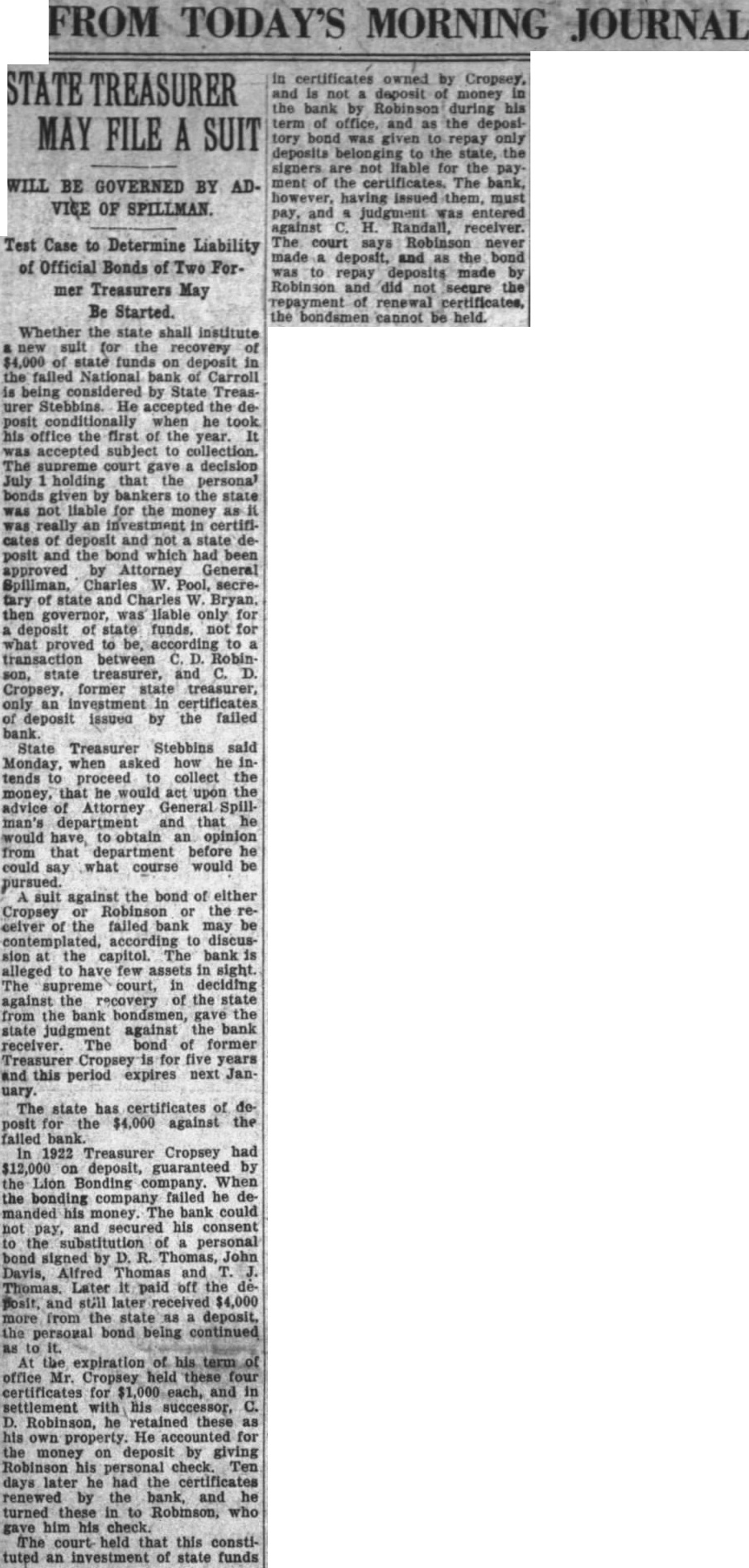
FROM TODAY'S MORNING JOURNAL
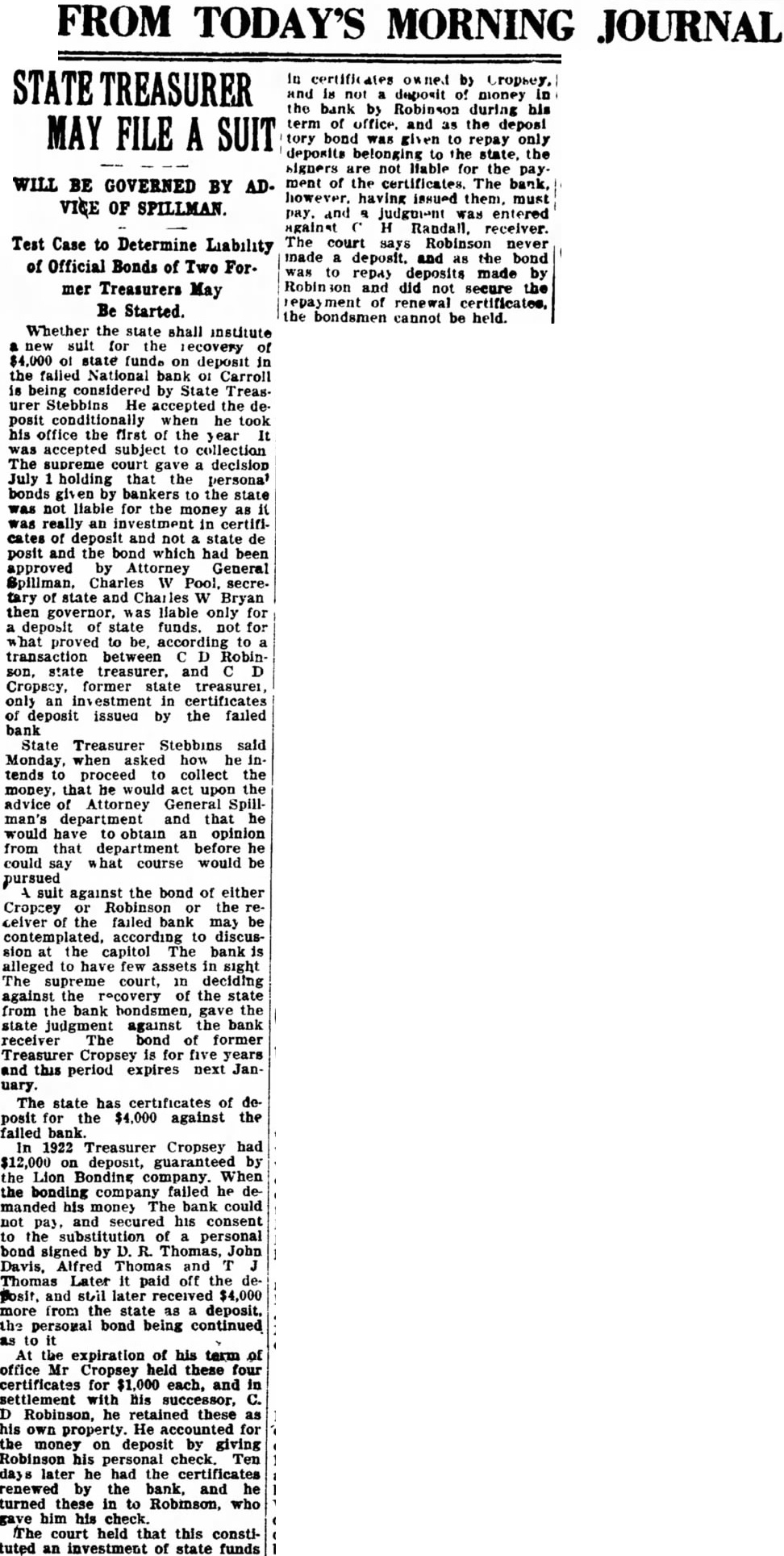
STATE TREASURER MAY FILE A SUIT
WILL BE GOVERNED BY ADVICE OF SPILLMAN.
Test Case to Determine Liability of Official Bonds of Two Former Treasurers May Be Started. Whether the state shall institute sult for the recovery $4,000 of state funds on deposit the failed National bank of Carroll being by State TreasStebbins. He accepted the deconditionally when he his office the first of the year. accepted subject to collection. The supreme court gave decision July holding that the personal bonds given bankers state was not liable for the money was really in certificates of deposit and not state deposit and the bond which had been approved by Attorney General Spillman, Charles W. Pool, secretary of state and Charles W. Bryan. then governor, was liable only for deposit of state not for what proved to be, according to transaction between D. Robinson, state treasurer, and C. D. Cropsey, former state treasurer, only investment in certificates of deposit issued by the failed bank. State Treasurer Stebbins said Monday, when asked how he tends to collect the money, that he would act upon the advice Attorney Spillman's and that he would have, to obtain an opinion from that department before he could say what course would pursued. suit against the bond of elther Cropsey Robinson the ceiver of the failed bank may be according to discussion at the capitol. The bank is alleged to have few assets in sight. The supreme court, in deciding against the recovery of the state from the bank gave the state judgment against the bank receiver. The bond of former Treasurer Cropsey for five years and this period expires next January. The state has certificates of posit for $4,000 against the failed bank. In 1922 Treasurer Cropsey had $12,000 deposit, guaranteed by the Lion Bonding company. When the bonding company failed he demanded his money. The bank could not pay, secured his consent the substitution of personal bond signed by R. Thomas, John Davis, Alfred Thomas and Thomas. Later It paid off the posit, and still later received $4,000 more from the state as deposit, the personal bond being continued to it. At the expiration of his term office Mr. Cropsey held these certificates for each, and settlement with his Robinson, he retained these own property. He for money on deposit by giving Robinson his check. Ten days later he had the certificates renewed by the bank, and he turned in to Robinson, who gave him his check. The court held that this constituted an investment of state funds in certificates owned by Cropsey, and is not deposit money in the bank by Robinson during his term of office, and as the depository bond was given to repay only deposits belonging to the state, the signers are not liable for the payment of the certificates. The bank, however, having issued them, must and judgment was entered against H. Randall, receiver. The court says Robinson never made deposit, and as the bond was to repay deposits made by Robinson did not secure the renewal certificates, the bondsmen cannot be held.