Click image to open full size in new tab
Article Text
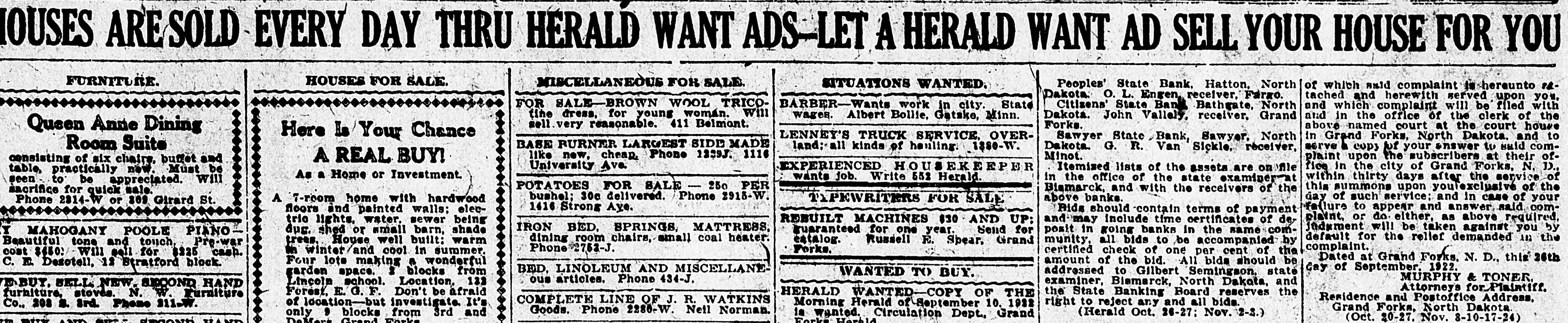
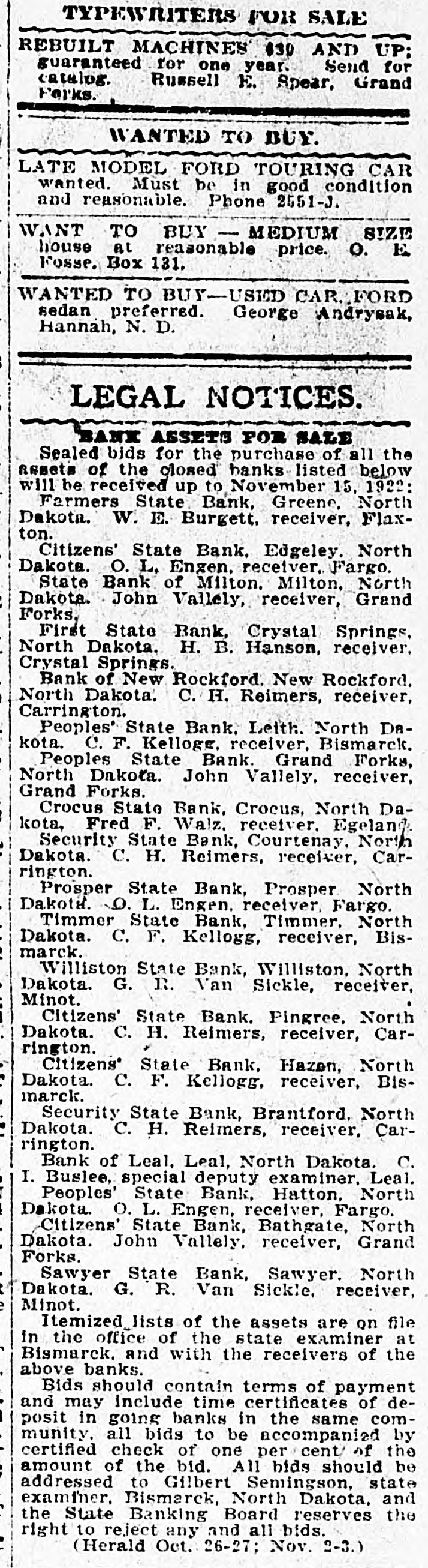
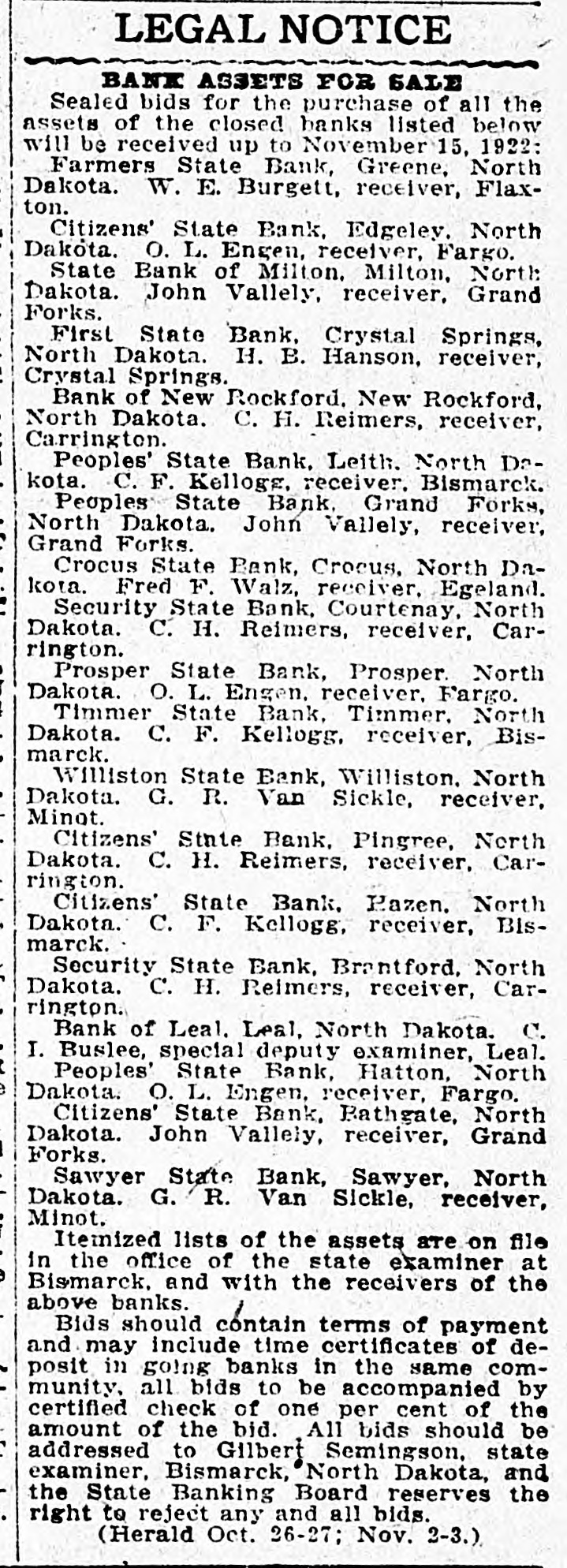
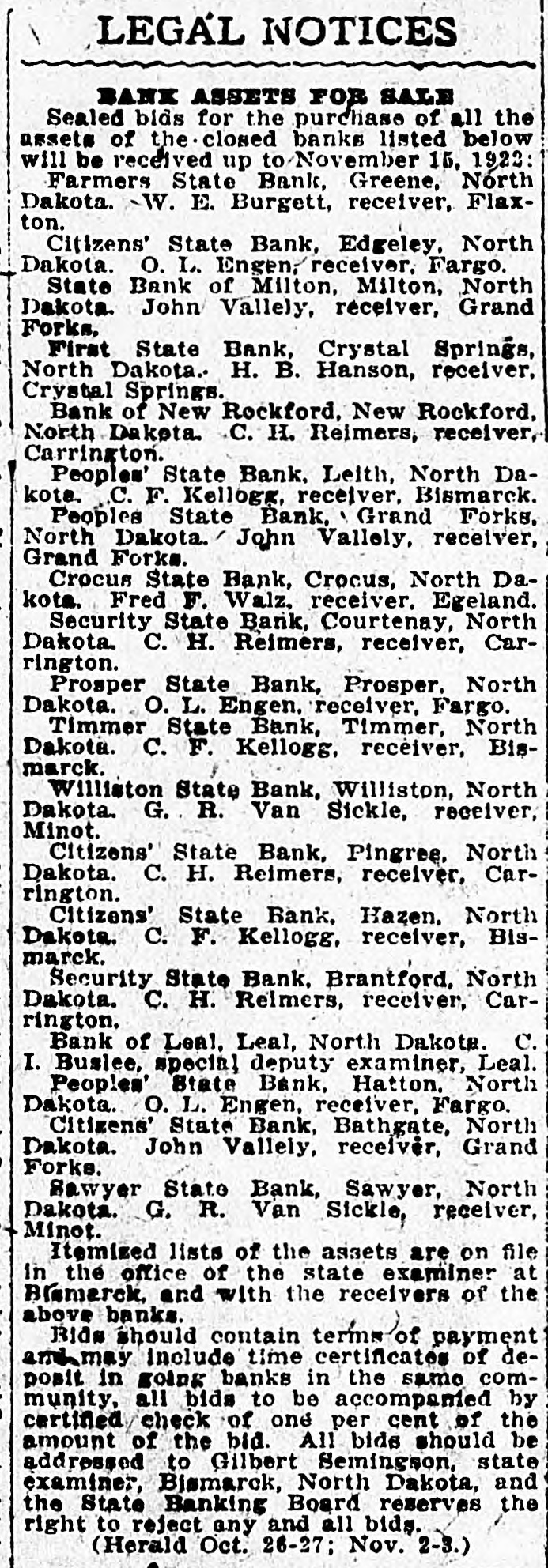
LEGÁL NOTICES BANK ASSETS FOR SALE Sealed blds for the purchase of all the assets of the closed banks listed below will be received up to November 15, 1922: Farmers State Bank, Greene, North Dakota. W. E. Burgett, receiver, Flaxton. Citizens' State Bank, Edgeley, North Dakota. O. L. Engen, receiver, Fargo. State Bank of Milton, Milton, North Dakota. John Vallely, receiver, Grand Forks, First State Bank, Crystal Springs, North Dakota. H. B. Hanson, receiver, Crystal Springs. Bank of New Rockford, New Rockford, North Dakota. C. H. Reimers, receiver, Carrington. Peoples' State Bank. Leith, North Dakota. C. F. Kellogg, receiver, Bismarck. Peoples State Bank, Grand Forks, North Dakota. John Vallely, receiver, Grand Forks. Crocus State Bank, Crocus, North Dakota. Fred F. Walz, receiver, Egeland. Security State Bank, Courtenay, North Dakota. C. H. Reimers, receiver, Carrington. Prosper State Bank, Prosper. North Dakota. O. L. Engen. receiver, Fargo. Timmer State Bank, Timmer, North Dakota. C. F. Kellogg, receiver, Bismarck. Williston State Bank, Williston, North Dakota. G. R. Van Sickle, receiver, Minot. Citizens' State Bank, Pingree, North Dakota. C. H. Reimers, receiver, Carrington. Citizens' State Bank, Hazen, North Dakota. C. F. Kellogg, receiver, Bismarck. Security State Bank, Brantford, North Dakota. C. H. Reimers, receiver, Carrington. Bank of Leal, Leal, North Dakota. C. I. Buslee, special deputy examiner, Leal. Peoples' State Bank, Hatton. North Dakota. O. L. Engen, receiver, Fargo. Citizens' State Bank, Bathgate, North Dakota. John Vallely, receiver, Grand Forks. Sawyer State Bank, Sawyer, North Dakota. G. R. Van Sickle, receiver, Minot. Itemized lists of the assets are on file in the office of the state examiner at Bismarck, and with the receivers of the above banks. Bids should contain terms of payment and may include time certificates of deposit in going banks in the same community, all bids to be accompanied by certified check of one per cent of the amount of the bid. All bide should be addressed to Gilbert Semingson, state examiner, Bismarck, North Dakota, and the State Banking Board reserves the right to reject any and all bids. (Herald Oct. 26-27; Nov. 2-3.)