Click image to open full size in new tab
Article Text
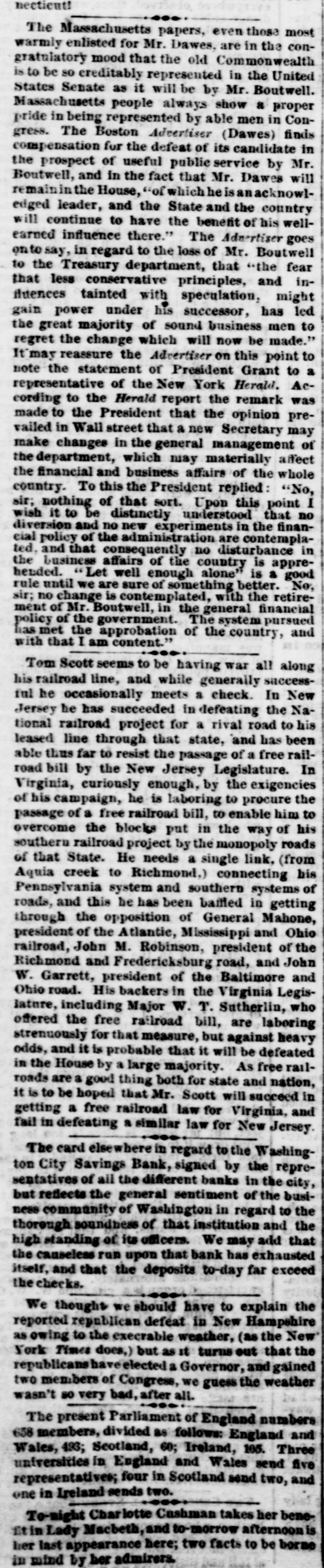
The Massachusetts papers, even those most warmly enlisted for Mr. Dawes, are in the con-gratulatory mood that the old Commonwealth is to be so creditably represented in the United States Senate as it will be by Mr. Boutwell. Massachusetts people always show a proper pride in being represented by able men in Congress. The Boston Advertiser (Dawes) finds compensation for the defeat of its candidate in the prospect of useful public service by Mr. Boutwell, and in the fact that Mr. Dawes will remain in the House, "of which he is an acknowledged leader, and the State and the country will continue to have the benefit of his well-earned influence there." The Advertiser goes on to say, in regard to the loss of Mr. Boutwell to the Treasury department, that "the fear that less conservative principles, and influences tainted with speculation, might gain power under his successor, has led the great majority of sound business men to regret the change which will now be made." It may reassure the Advertiser on this point to note the statement of President Grant to a representative of the New York Herald. According to the Herald report the remark was made to the President that the opinion prevailed in Wall street that a new Secretary may make changes in the general management of the department, which may materially affect the financial and business affairs of the whole country. To this the President replied: "No, sir; nothing of that sort. Upon this point I wish it to be distinctly understood that no diversion and no new experiments in the financial policy of the administration are contemplated, and that consequently no disturbance in the business affairs of the country is apprehended. "Let well enough alone" is a good rule until we are sure of something better. No, sir; no change is contemplated, with the retirement of Mr. Boutwell, in the general financial policy of the government. The system pursued has met the approbation of the country, and with that I am content."
Tom Scott seems to be having war all along his railroad line, and while generally successful he occasionally meets a check. In New Jersey he has succeeded in defeating the National railroad project for a rival road to his leased line through that state, and has been able thus far to resist the passage of a free railroad bill by the New Jersey Legislature. In Virginia, curiously enough, by the exigencies of his campaign, he is laboring to procure the passage of a free railroad bill, to enable him to overcome the blocks put in the way of his southern railroad project by the monopoly roads of that State. He needs a single link, (from Aquia creek to Richmond,) connecting his Pennsylvania system and southern systems of roads, and this he has been baffled in getting through the opposition of General Mahone, president of the Atlantic, Mississippi and Ohio railroad, John M. Robinson, president of the Richmond and Fredericksburg road, and John W. Garrett, president of the Baltimore and Ohio road. His backers in the Virginia Legislature, including Major W. T. Sutherlin, who offered the free railroad bill, are laboring strenuously for that measure, but against heavy odds, and it is probable that it will be defeated in the House by a large majority. As free railroads are a good thing both for state and nation, it is to be hoped that Mr. Scott will succeed in getting a free railroad law for Virginia, and fail in defeating a similar law for New Jersey.
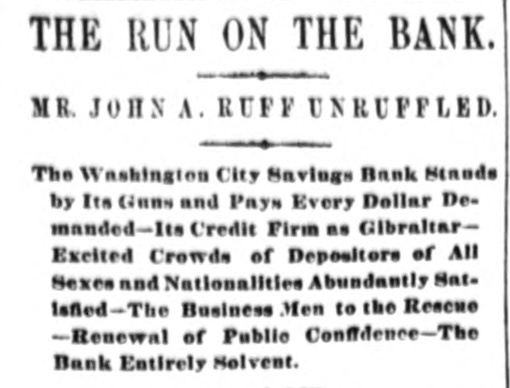
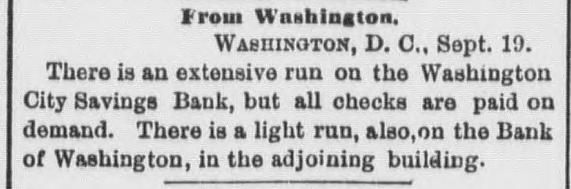
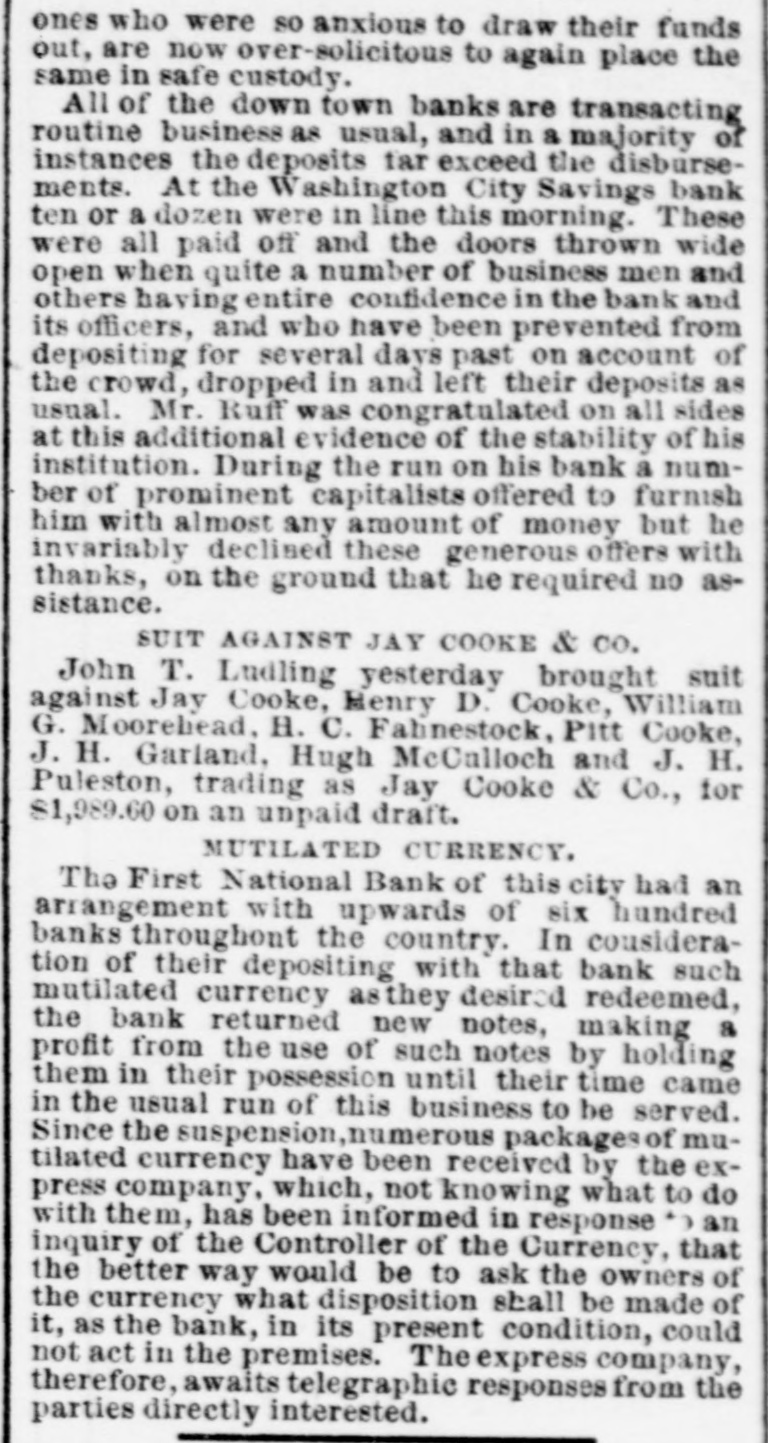
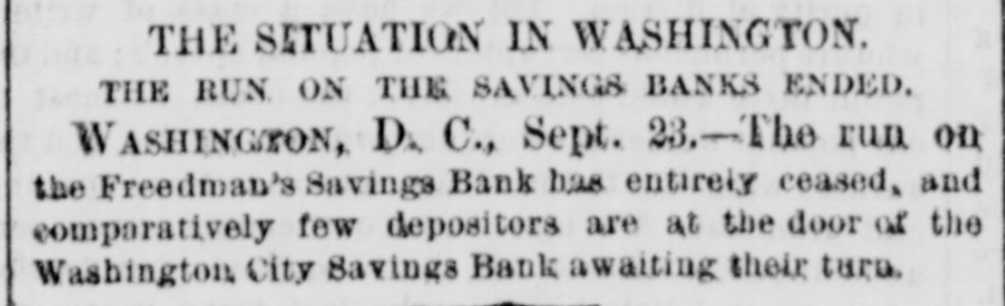
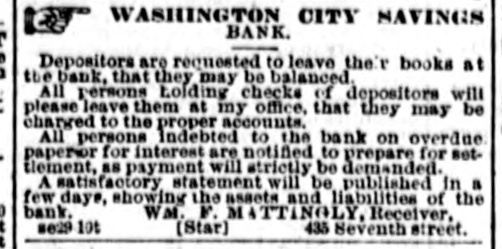
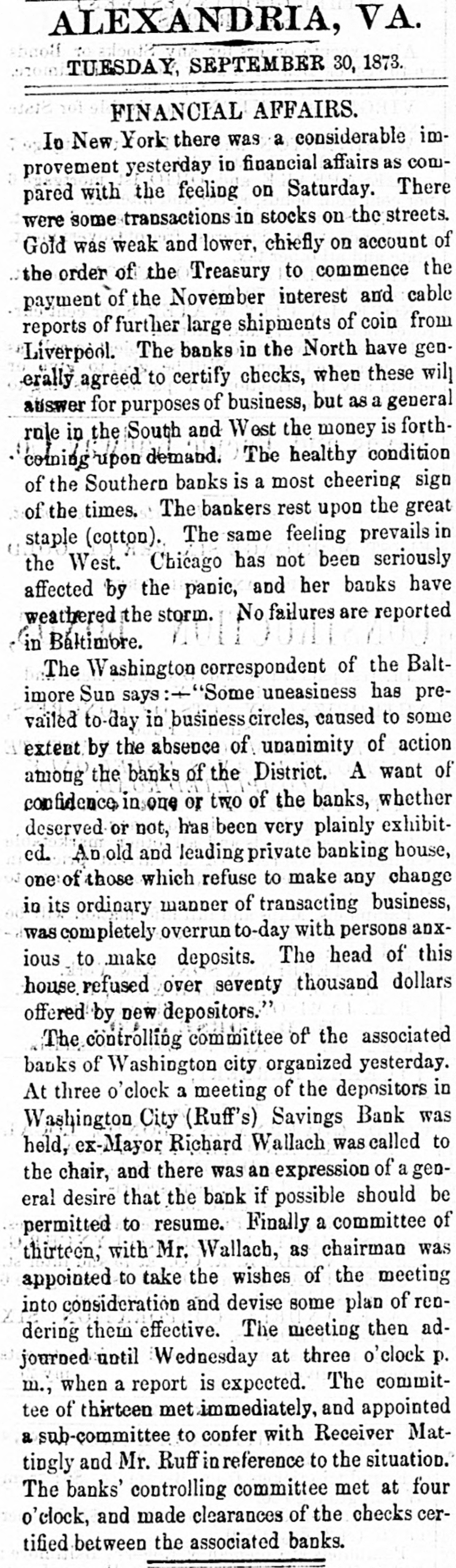
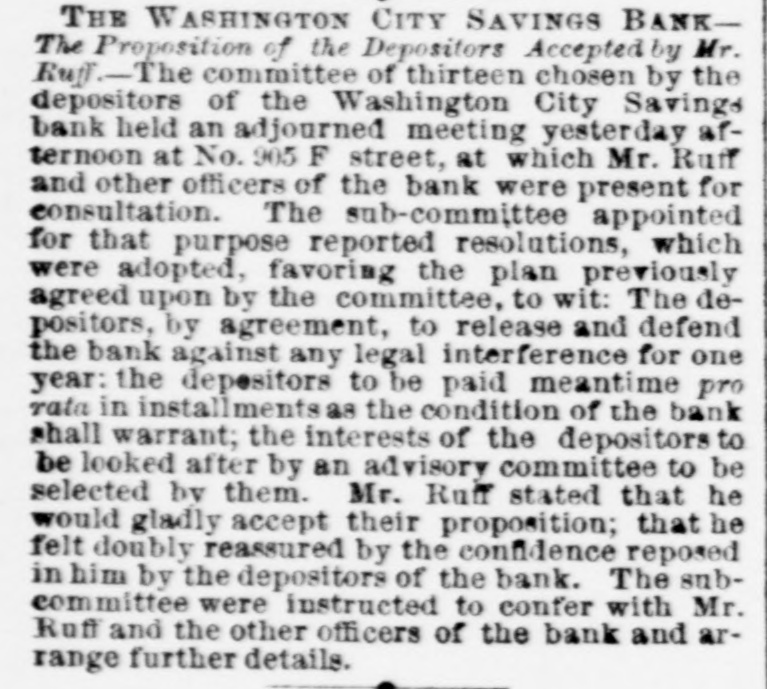
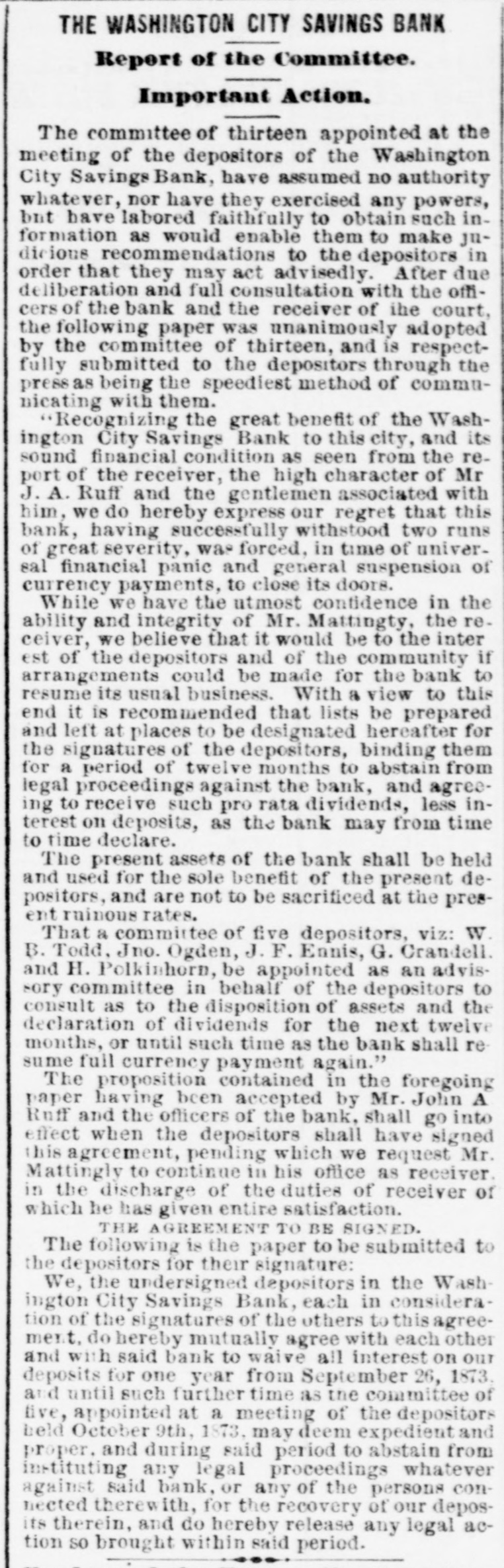
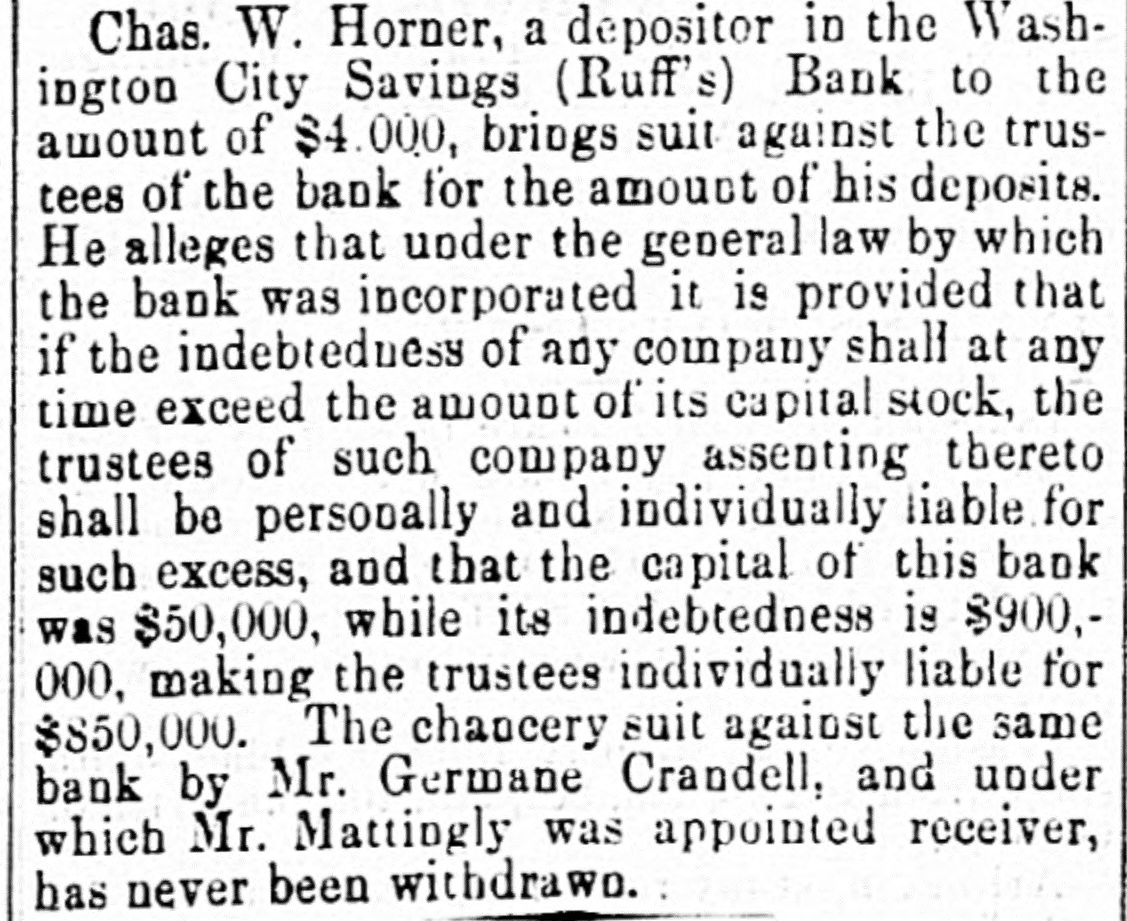
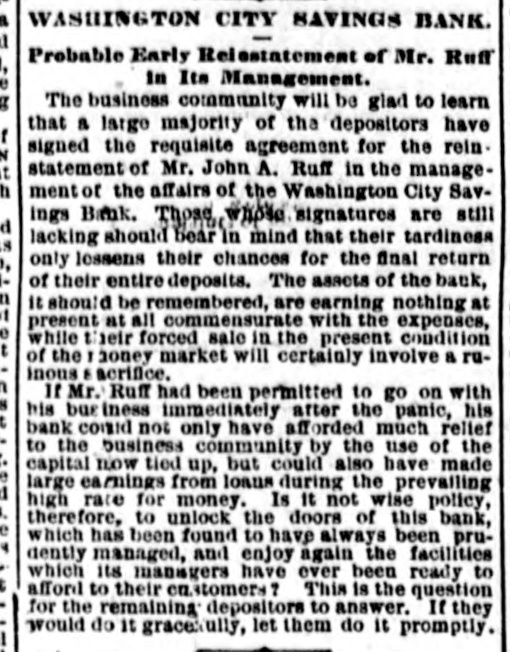
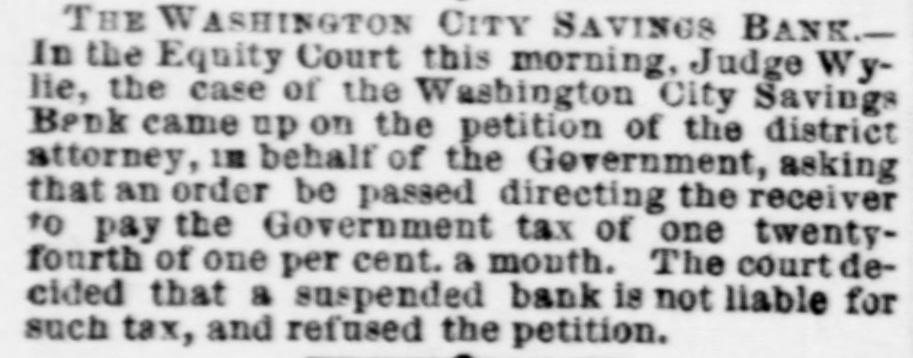
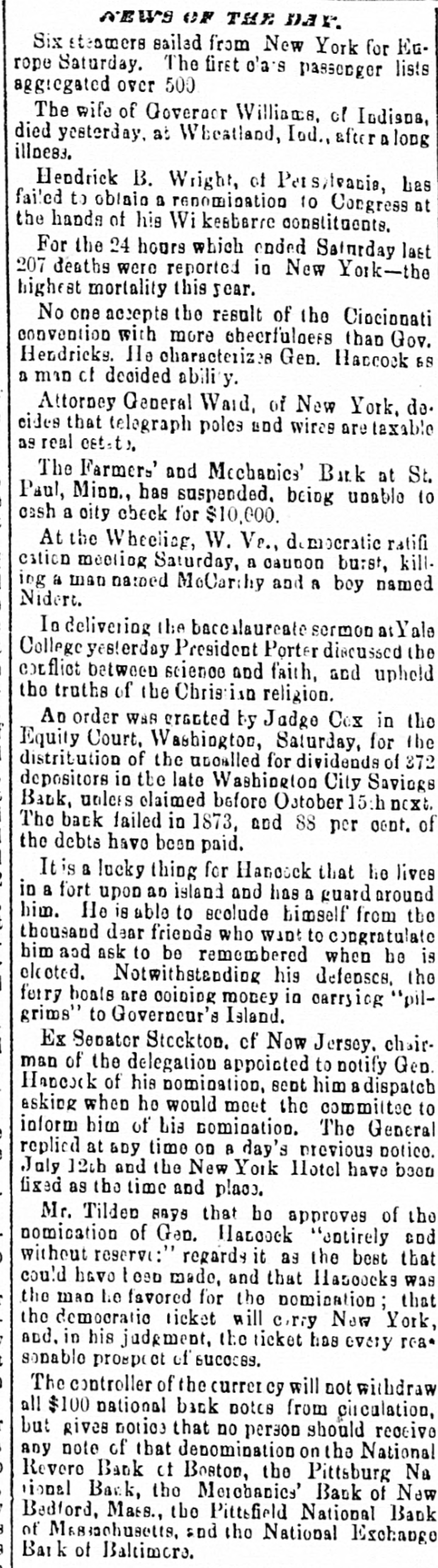
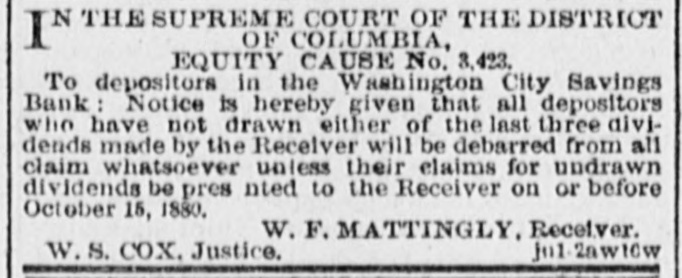
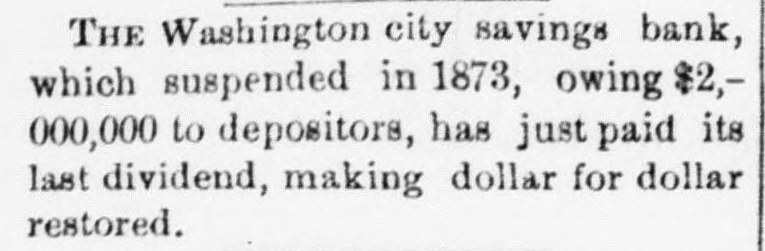
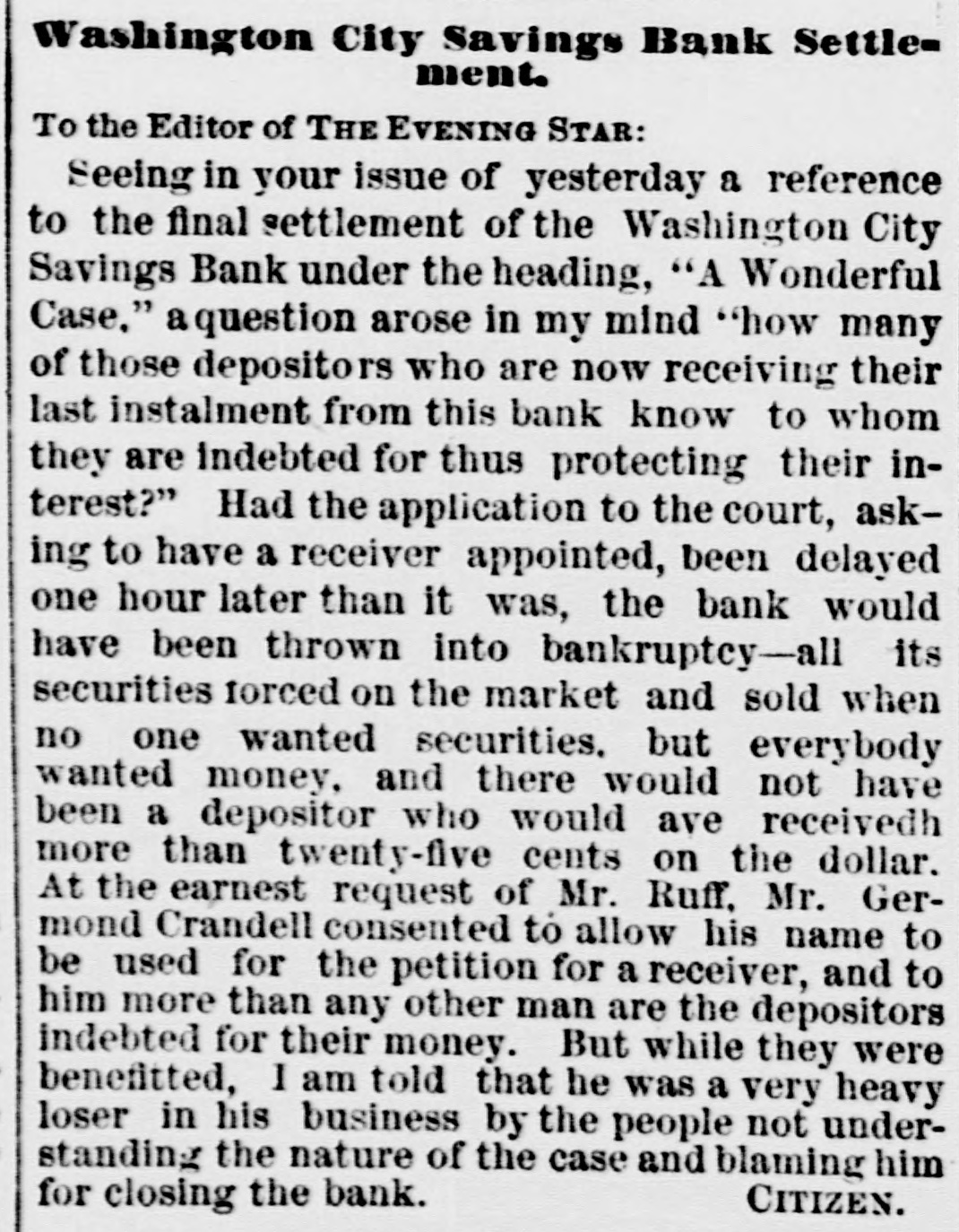
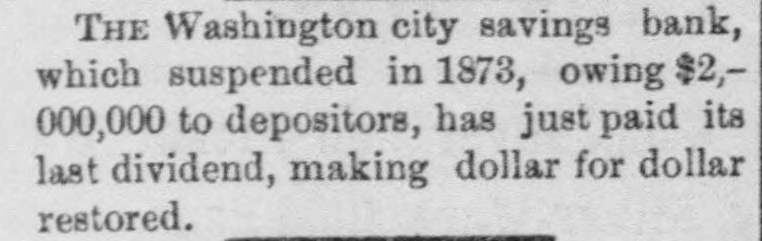
The card elsewhere in regard to the Washington City Savings Bank, signed by the representatives of all the different banks in the city, but reflects the general sentiment of the business community of Washington in regard to the thorough soundness of that institution and the high standing of its officers. We may add that the causeless run upon that bank has exhausted itself, and that the deposits to-day far exceed the checks.
We thought we should have to explain the reported republican defeat in New Hampshire as owing to the execrable weather, (as the New York Times does,) but as it turns out that the republicans have elected a Governor, and gained two members of Congress, we guess the weather wasn't so very bad, after all.
The present Parliament of England numbers 658 members, divided as follows: England and Wales, 493; Scotland, 60; Ireland, 105. Three universities in England and Wales send five representatives; four in Scotland send two, and one in Ireland sends two.
To-night Charlotte Cushman takes her benefit in Lady Macbeth, and to-morrow afternoon is her last appearance here; two facts to be borne in mind by her admirers.