Article Text
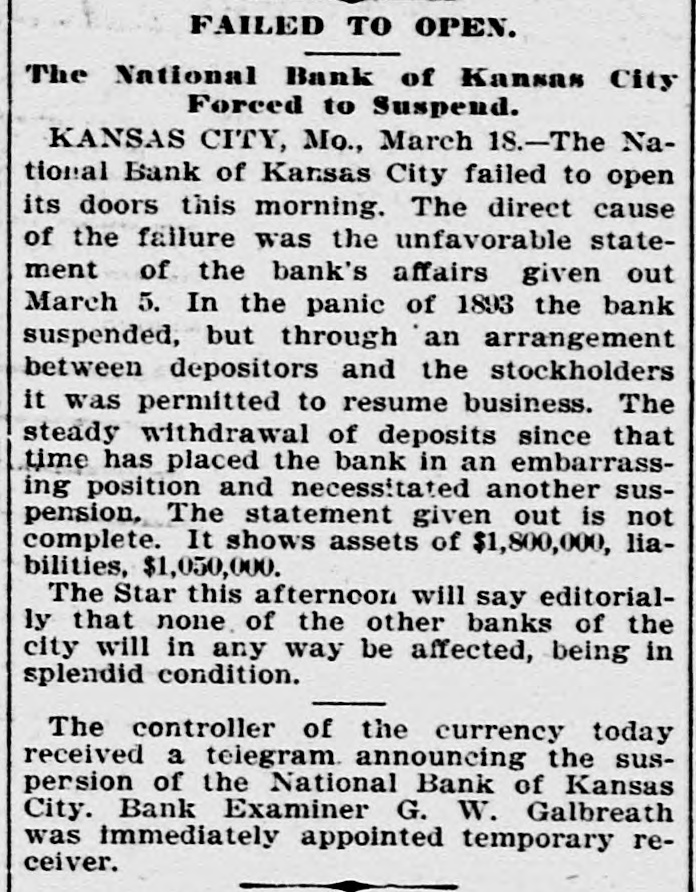
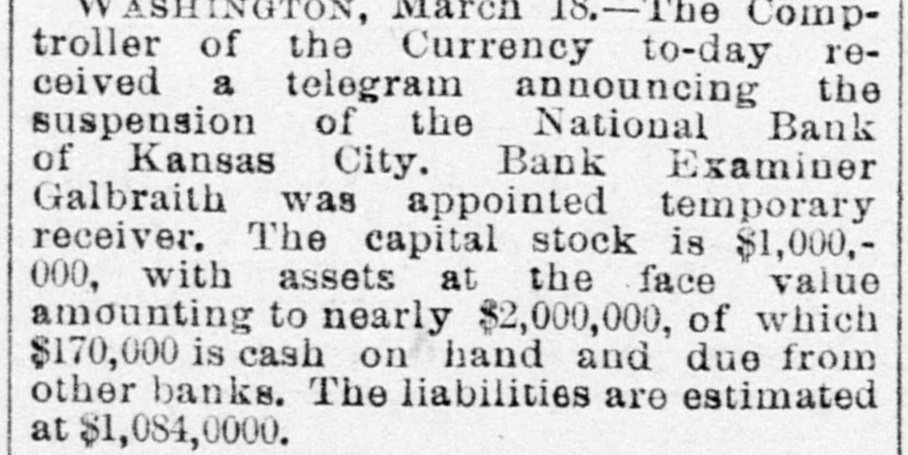
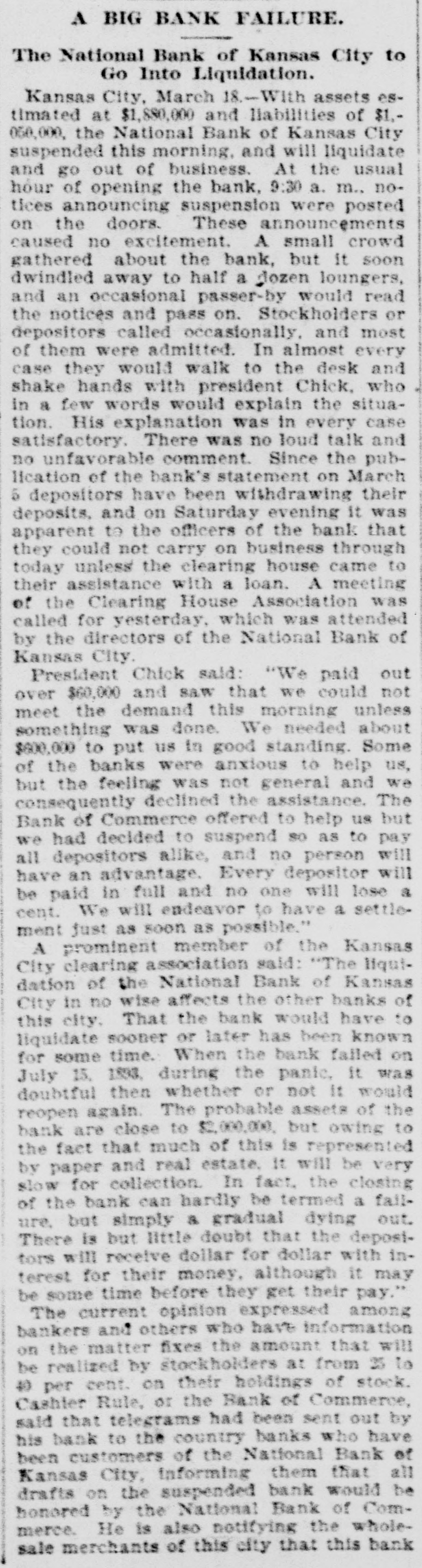
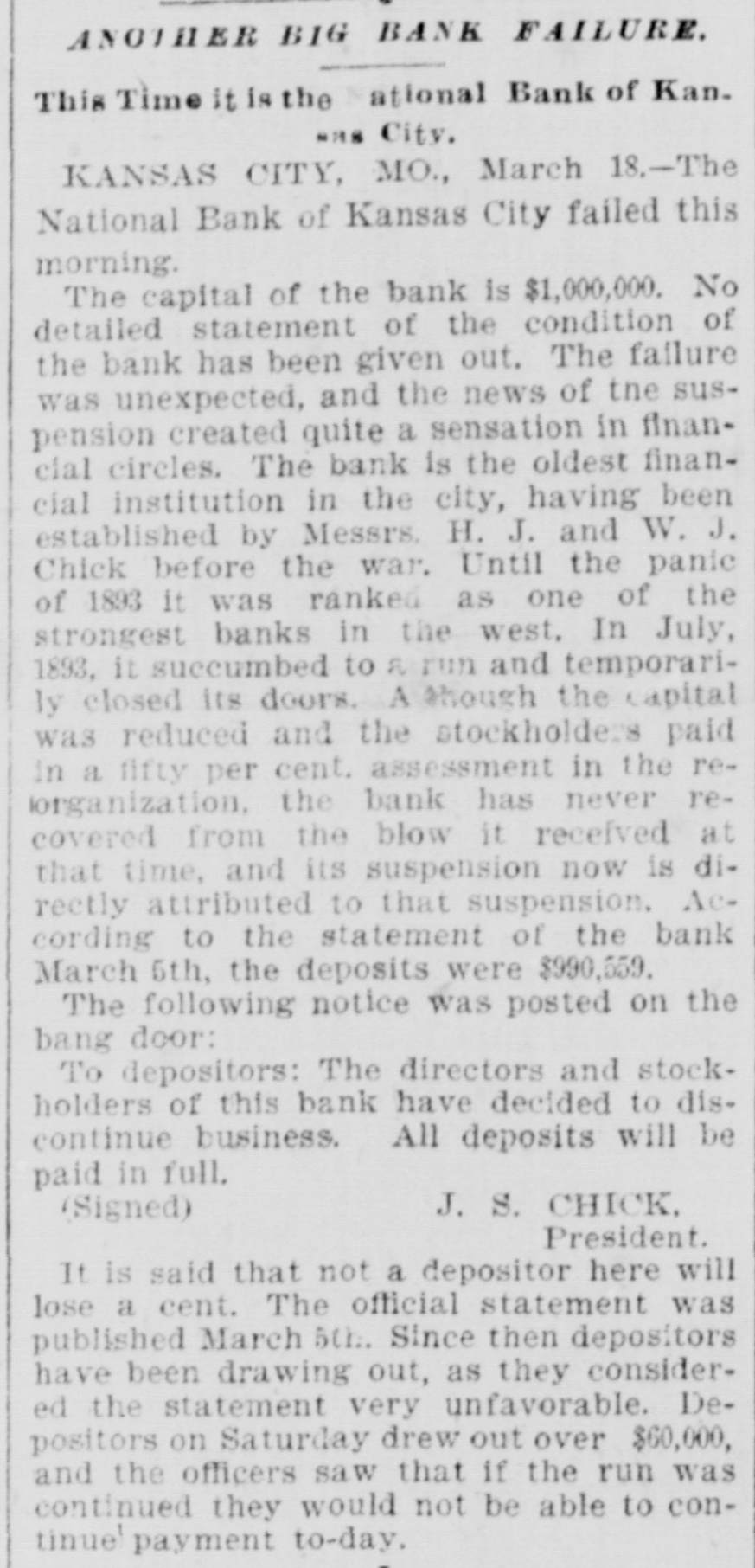
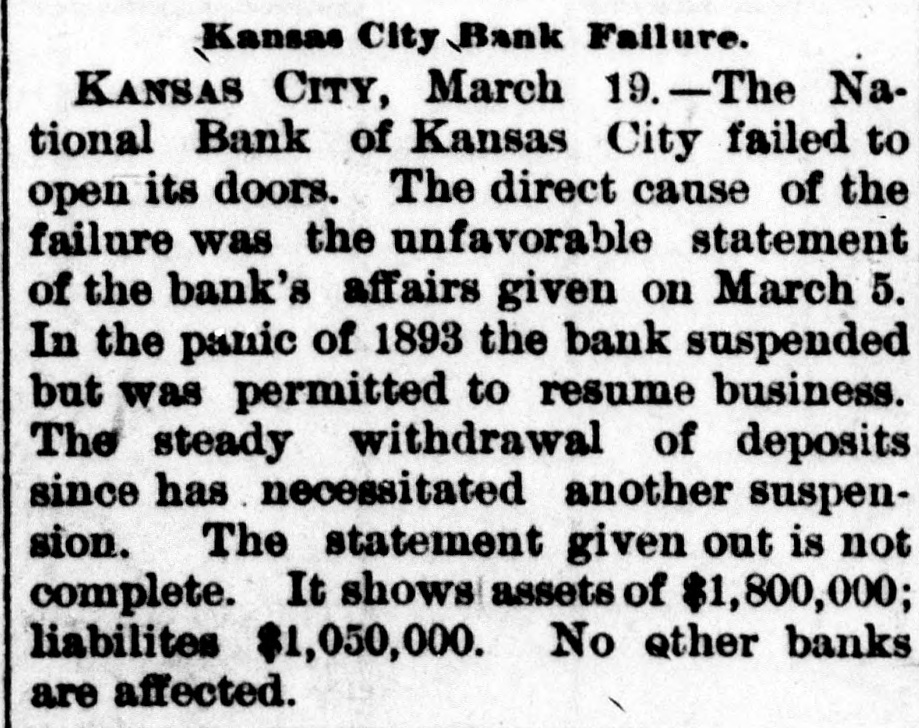
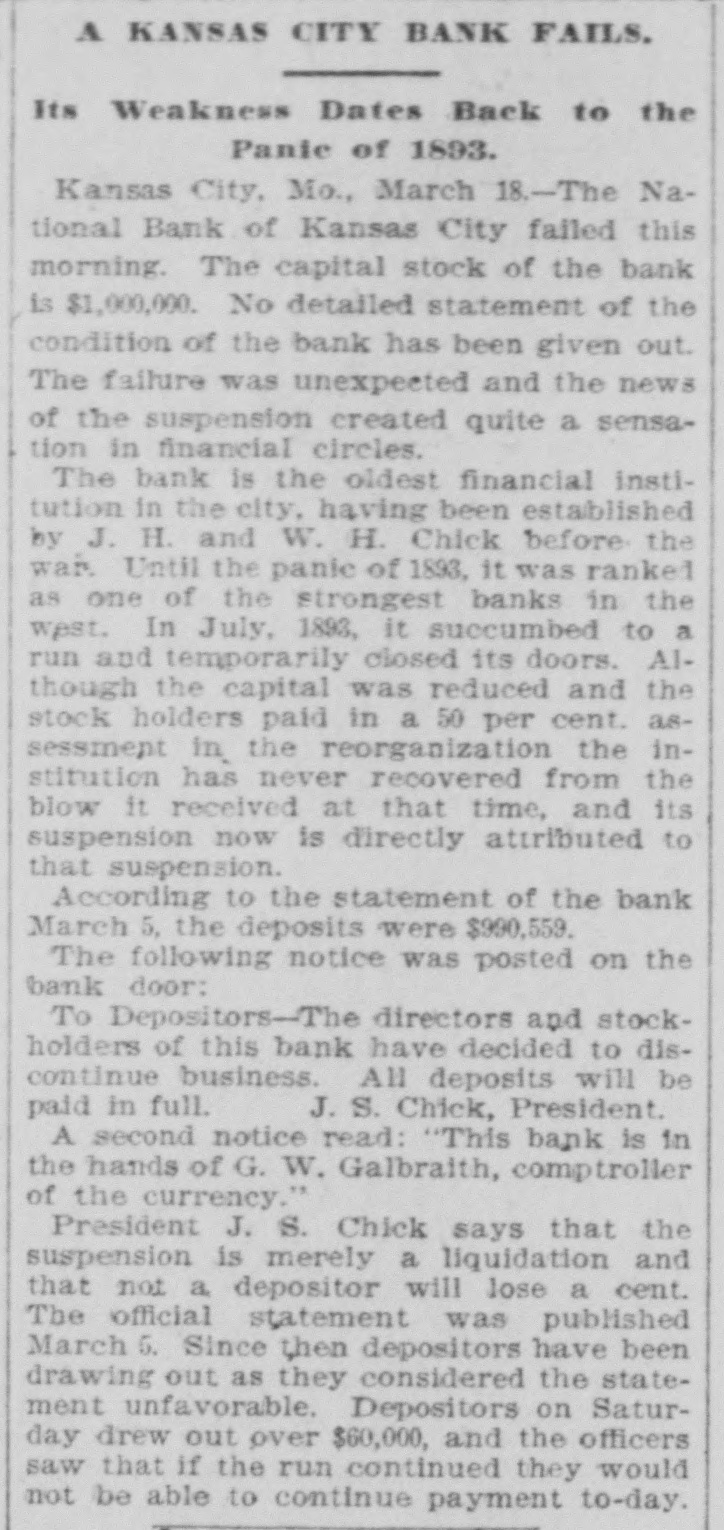
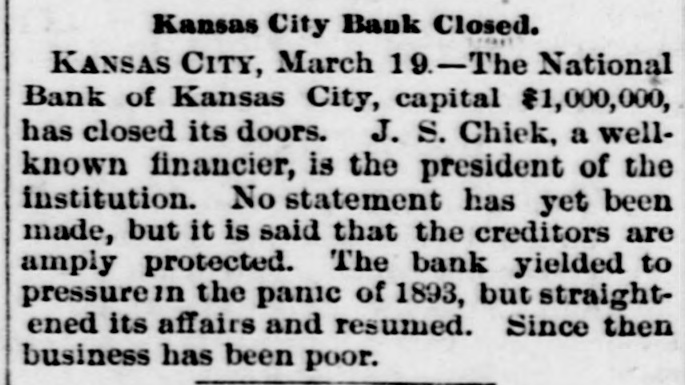
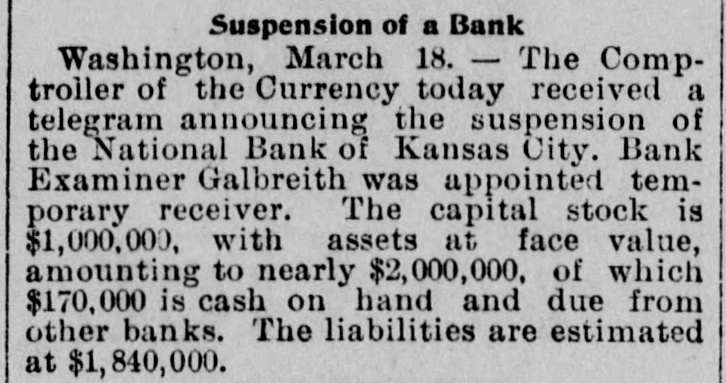
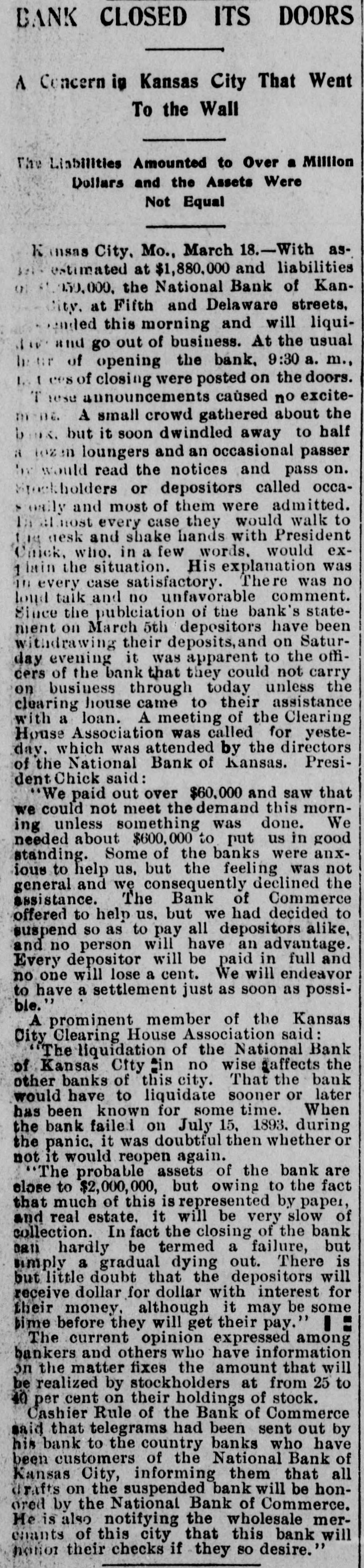
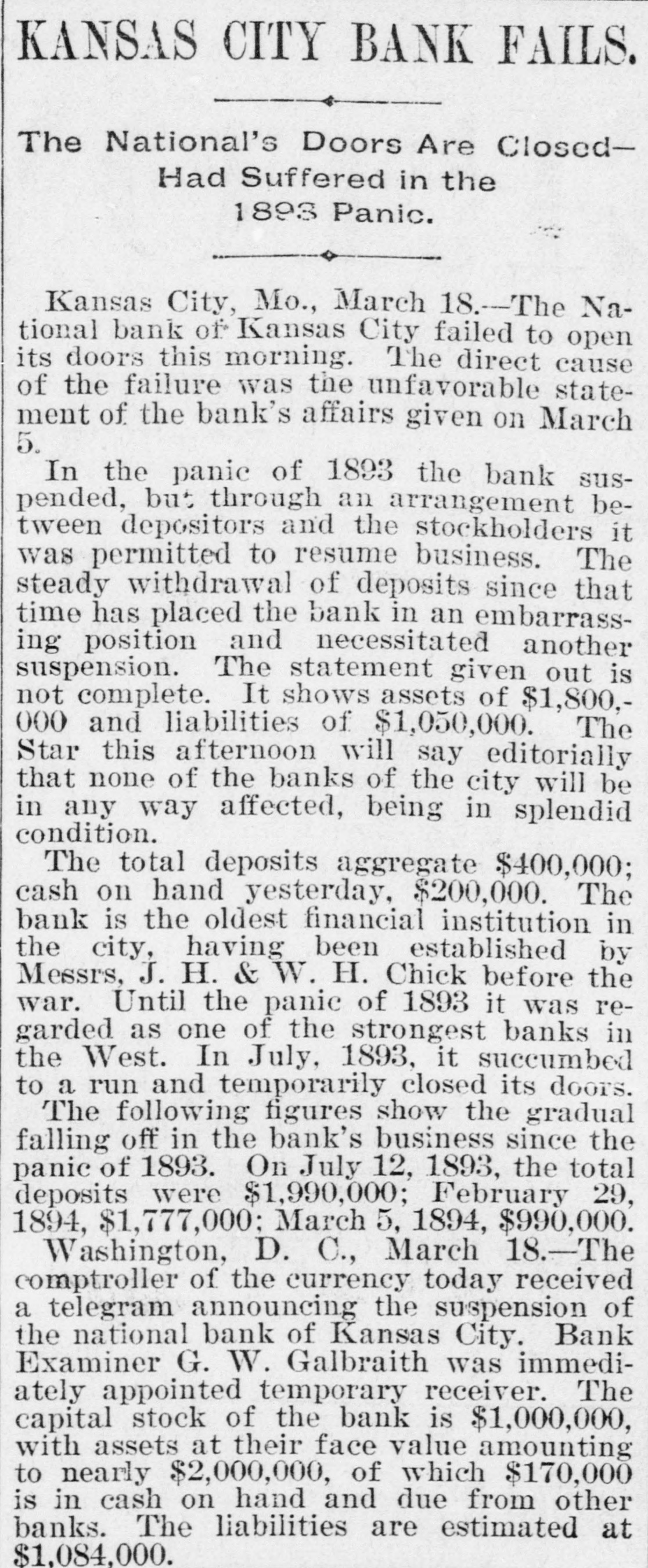
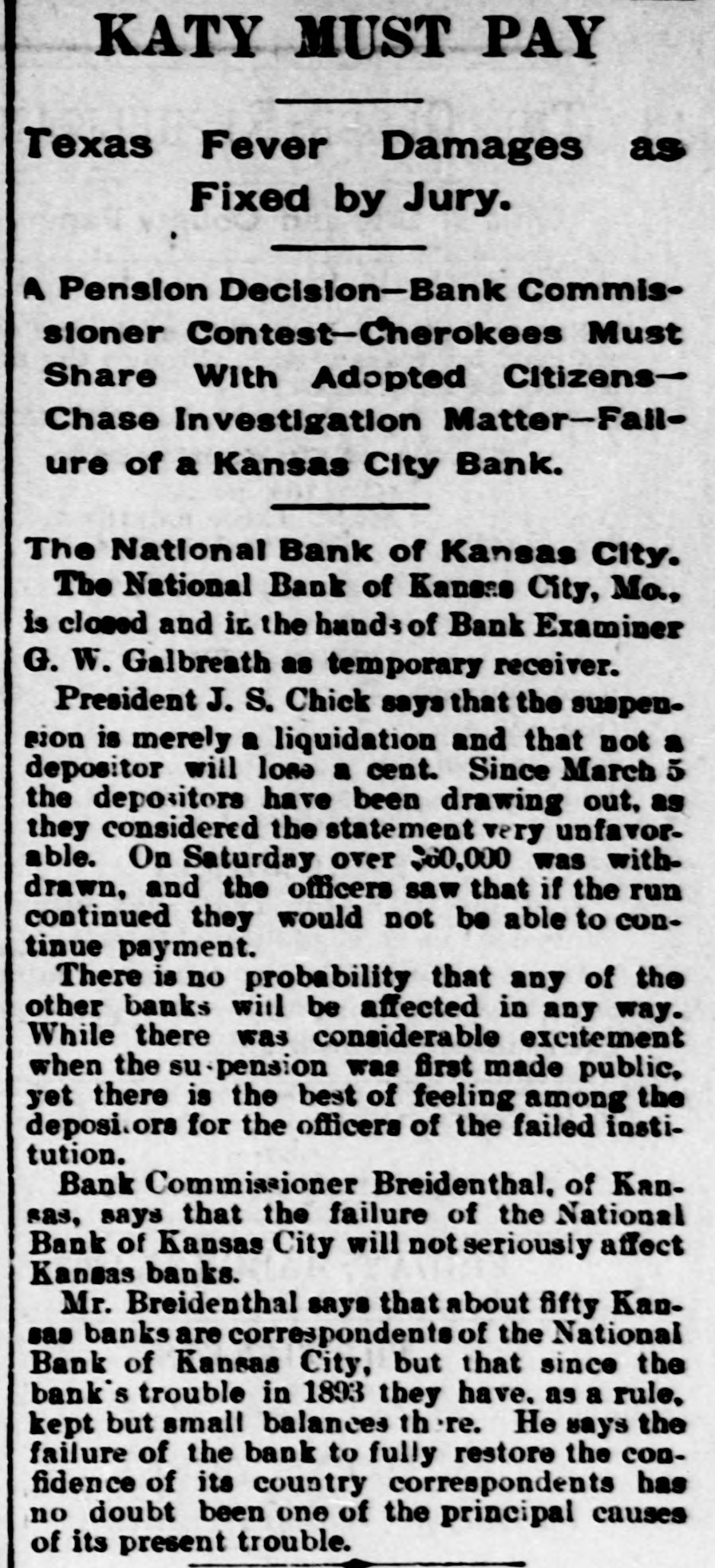
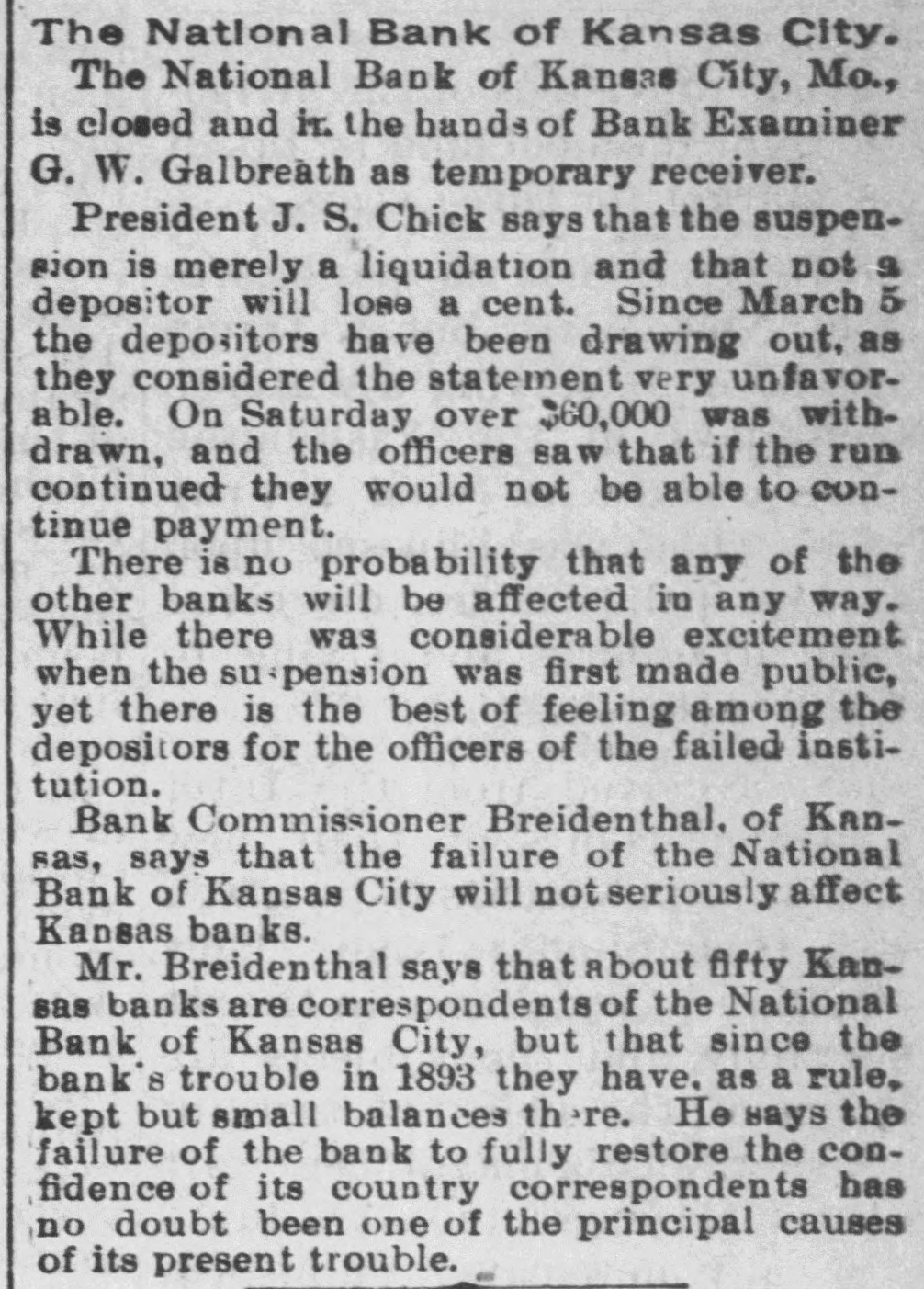
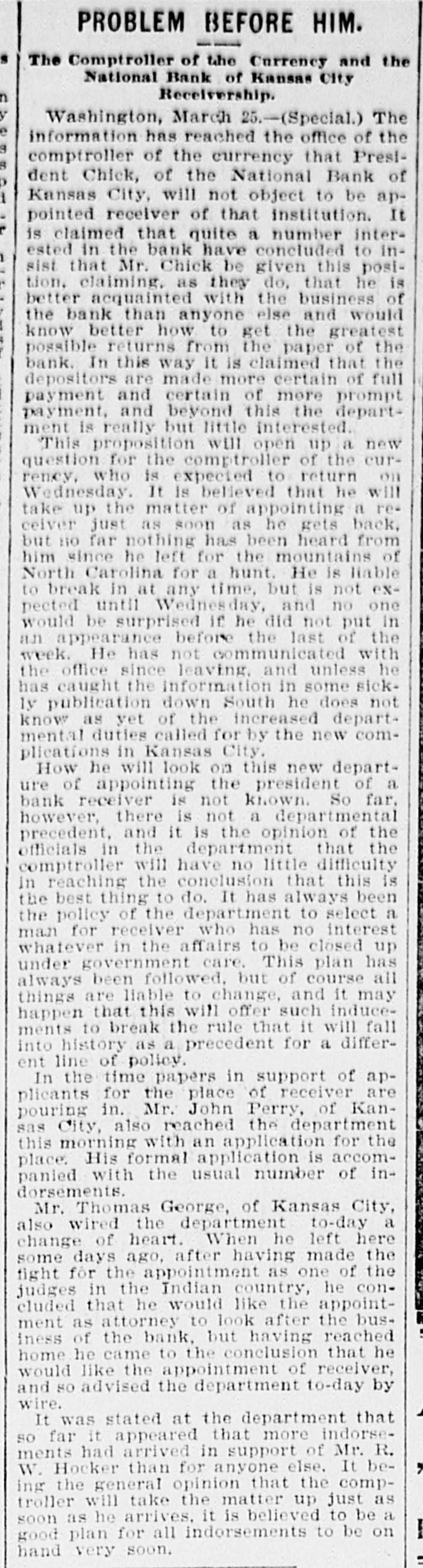
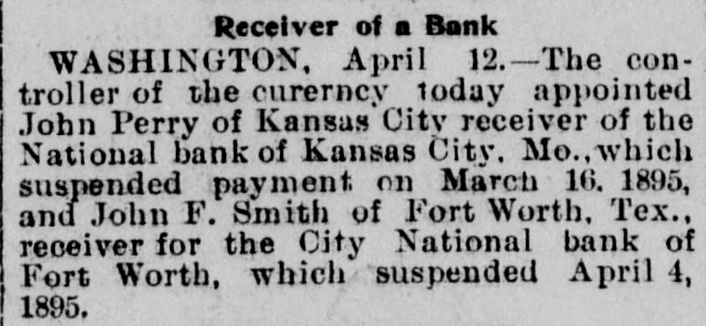
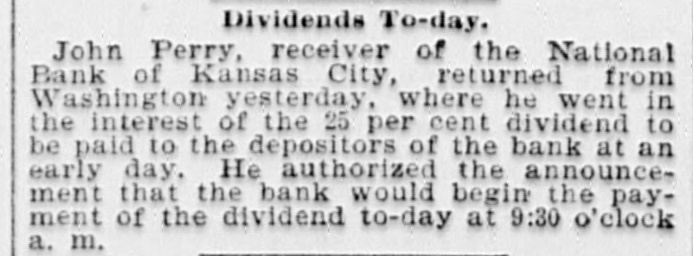
BIG BANK FAILS. National Bank of Kansas City Closes Its Doors. Steady Withdrawal of Deposits Since 1893 the Cause. SUSPENDED BEFORE. The Same Bank Closed During the Panic of '93. None of the Other Banks Will be Affected. KANSAS CITY, March 18.-The National bank of Kansas City failed to open its doors this morning. The direct cause of the failure was the unfavorable statement of bank affairs given out March 5. In the panic of 1893 the bank suspended, but through arrangements between depositors and stockholders it was permitted to resume business. The steady withdrawal of deposits since that time has placed the bank in an embarrassing position and necessitated another suspension. The statement given out is not complete. It shows assets of $1,800,000; liabilities $1,084,000. The Star this afternoon will say editorially that none of the other banks of the city will be in anyway affected, being in splendid condition. Though the bank was known to have been in a shaky condition, the failure was unexpected and the news of the suspension created quite a sensation in financial circles here. The following notices posted on the bank doors were the first intimation the public had that the bank's business had dropped off so much as to force it to close its doors: "10 depositors: The directors and stockholders of this bank have decided to discontinue business. All deposits will be paid in full. "[Signed,) J.S. CHICK, President." A second notice read: 'To W om it May Concern: "Time bank is in the hands of the unG. W. GALBREATH, dersigned. "Comptroller of the Currency." The following figuressh the gradual falling off in the bank's business since the panic of 1893: On July 12, 1893, the total deposits were $1,990,000; February 28, 1894, $1,777,000; March 5, 1895, $990,000. The total deposits aggregate $400,000; cash on hand yesterday $200,000. The bank is the oldest financialinetitution in the city, having been established by J: H. and W. H. Chick before the war. Until the panic of 1893 it was ranked as one of the strongest banks in d the west. In July, 1893, it succumbed to a run and temporarily closed its doors. n Although the capital was reduced and the stockholders paid in a 50 per cent h assessment in the reorganization, the institution has never recovered from the blow it received at that time and its suspension now is directly attributed to that suspension. The officers of the bank are closeted with several of the heavy depositors at this time. It is understood that it is the f intention to wind up the affairs of the ina stitution and retire from business. e President J. S. Chick says that the suspension is merely a liquidation and that not a depositor will lose a cent. Since March 5 the depositors have n been drawing out as they considered S the statement very unfavorable. On Saturday over $60,000 was withdrawn, and the officers saw that if the run continued, they would not be able to cone tinue payment today. f There is 110 probability that any of the other banks will be aflected in any way. t While there was considerable excitement when the suspension was first made public, yet there is the best of feeling among depositors for the officers of the failed institution.