Click image to open full size in new tab
Article Text
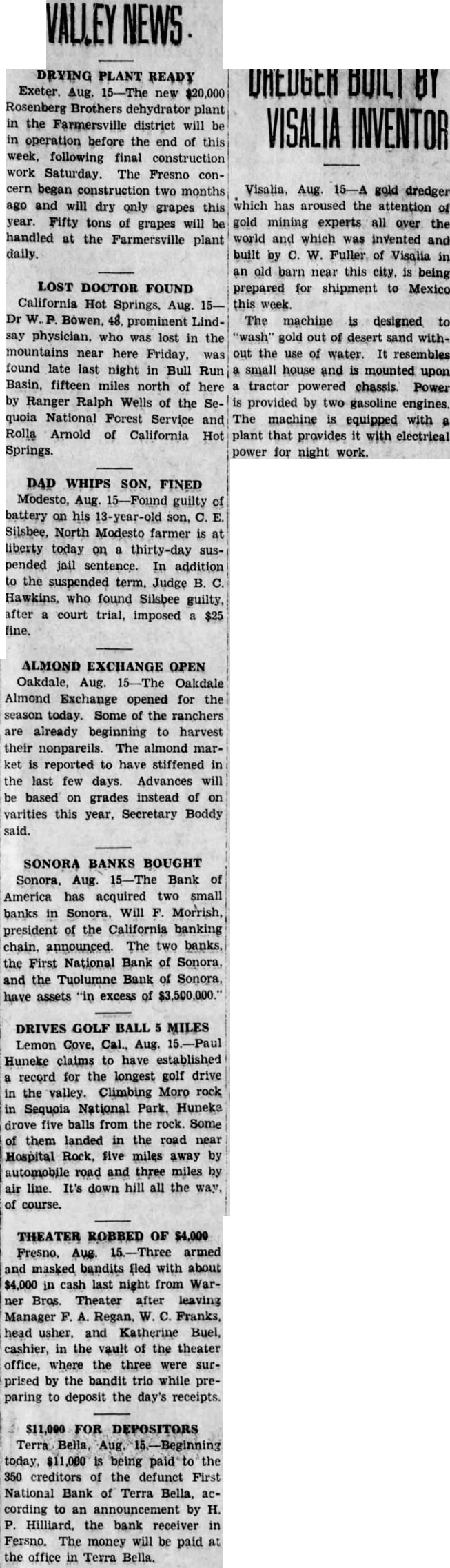
DRYING PLANT READY new $20,000 Rosenberg Brothers dehydrator plant in the Farmersville district will be operation before the end of this week, following final construction work Saturday. The Fresno conbegan construction two months Visalia, Aug dredger ago and will dry only which has aroused the grapes this attention year. Fifty tons of grapes will gold mining experts all over the handled at the Farmersville world and which was invented and plant daily. built by Fuller of Visalia
LOST DOCTOR FOUND prepared for to shipment Mexico California Hot Springs, Aug. Dr Bowen, prominent Lind- The machine designed to who was lost in the "wash" gold out of desert sand withmountains near here out the use of water. Friday, resembles found late last night in small house and Bull is mounted upon Basin, fifteen miles north of here tractor powered chassis. Power by Ranger Ralph Wells of the provided by two gasoline engines. quoia National Forest Service and The machine equipped with Rolla Arnold of California Hot plant that with electrical provides Springs. power for night work.
DAD WHIPS SON, FINED Modesto, guilty battery his Silsbee, North Modesto farmer liberty today on pended jail sentence. In addition the suspended Judge Hawkins, who found Silsbee guilty, after court trial, imposed fine.
ALMOND EXCHANGE OPEN Oakdale, Aug. Oakdale Almond Exchange opened for season today. Some of the ranchers already beginning to harvest their nonpareils. The almond ket reported to have stiffened the last few days. Advances will be based on grades instead of varities this year, Secretary Boddy said.
SONORA BANKS BOUGHT Sonora, Aug. Bank America has acquired two small banks in Sonora, Will Morrish, president of the California banking announced. The two banks, the First National Bank of Sonora, and the Tuolumne Bank of have assets excess of
DRIVES GOLF MILES Lemon Cove, Cal., Aug Huneke claims to have established record for the longest golf drive the valley. Climbing Moro rock in Sequoia National Huneke drove five balls from the rock. Some them landed in the road near Hospital Rock. five miles away automobile road and three miles by air line. It's down hill all the course.
THEATER ROBBED OF Aug armed and masked bandits fled with about $4,000 in cash last night from Warner Bros. Theater after leaving Manager Regan, Franks, head and Katherine Buel, cashier, in the vault of the theater office, where the three were surprised by the bandit trio while preparing to deposit the day's receipts.
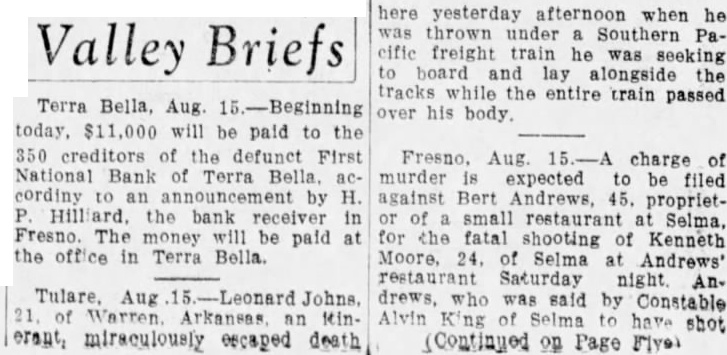
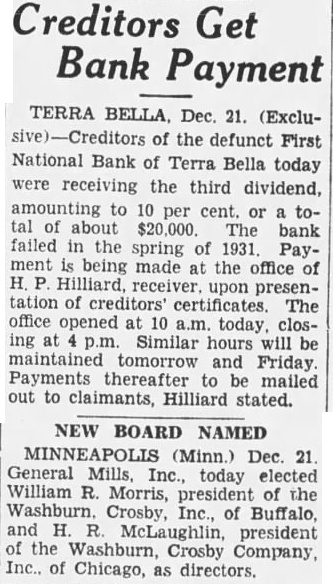
Terra being the 350 creditors of the defunct First National Bank of Terra Bella, cording to an announcement by the bank receiver Fersno. The money will be the office in Terra Bella.