Article Text
Crumbling Pay
Throughout 1931 the wage scales began to crumble severely. Little was said of it. Funds were being raised in all cities to care for the unemployed. That was the function of private charity, said Mr. Hoover. Bread lines defaced city streets. Shanty villages of scrap tin and wood fragments rose called Hoover cities. Secretary of Commerce Lamont said, following a census, there were 6,050,000 unemployed. Large industries maintained mythical wage scales, but the beneficiaries were not working. In the Spring of 1931 I made a tour of the nation. In steel mill towns—Braddock, East Pittsburgh, Homestead—I found mills closed tight. In textile towns I found the smoke stacks sold and smokeless. Membership in the federation was dwindling.
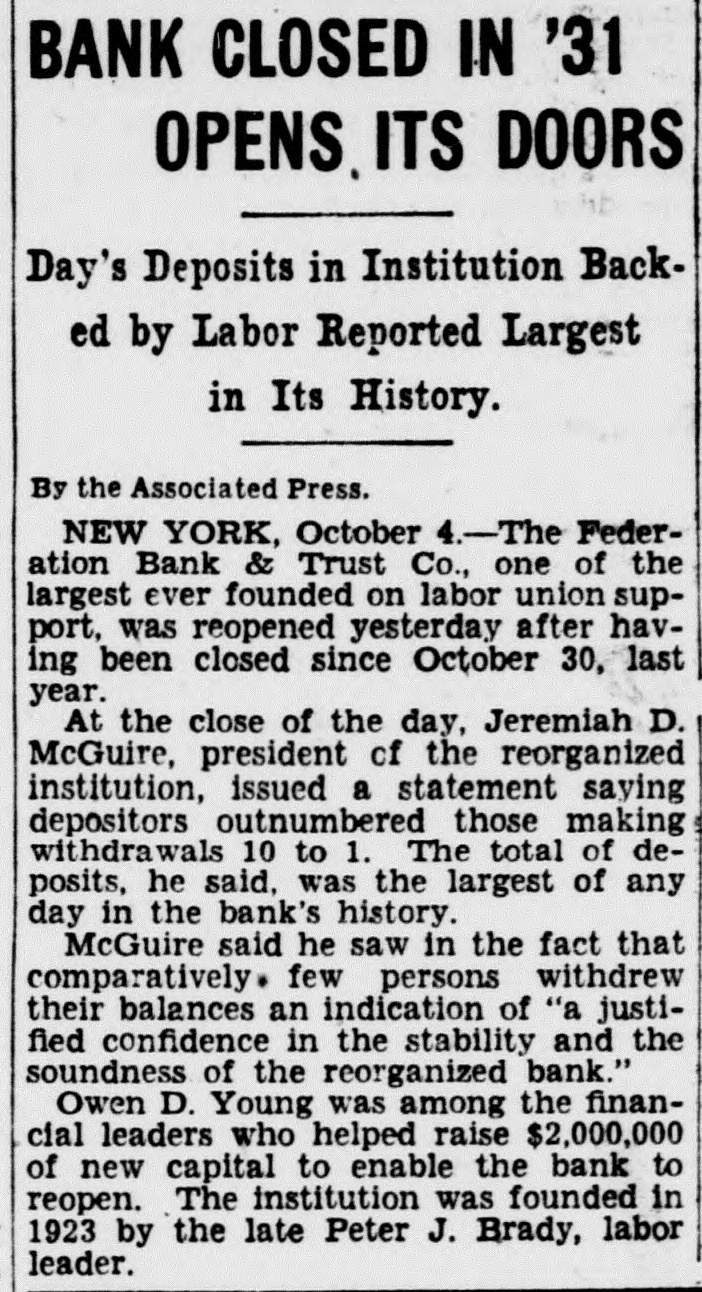
That year three severe blows struck labor. Oct. 1, the United States Steel announced a cut in wages of 10 per cent. This was the signal for wage cuts everywhere. Then the Federation Bank and Trust Company failed in New York—Peter J. Brady's adventure in labor banking. Labor banks had been failing everywhere. The crumbling of this shining mark seemed then to mark the end of labor banking. The third thing was a kind of general admission by Mr. Hoover that we were in a bad way.
The country rang with proposals to solve the unemployment problem. Some suggested the six-hour day. Some urged the five-day week. Others called for a share-the-work movement. Some manufacturers made repairs to keep staffs busy. Others manufactured for stock rather than reduce forces further. The six-hour day was actually adopted in the railroad shops. Gerard Swope came forward with his famous Swope plan which resembled so closely the NRA which was to follow. Organized labor seemed utterly baffled. It advocated keeping children in school to reduce competition with labor, but did not say how the children would eat. It demanded preference for workers with dependents. It called on business to hire more workers, but did not say how they were to be paid.