Article Text
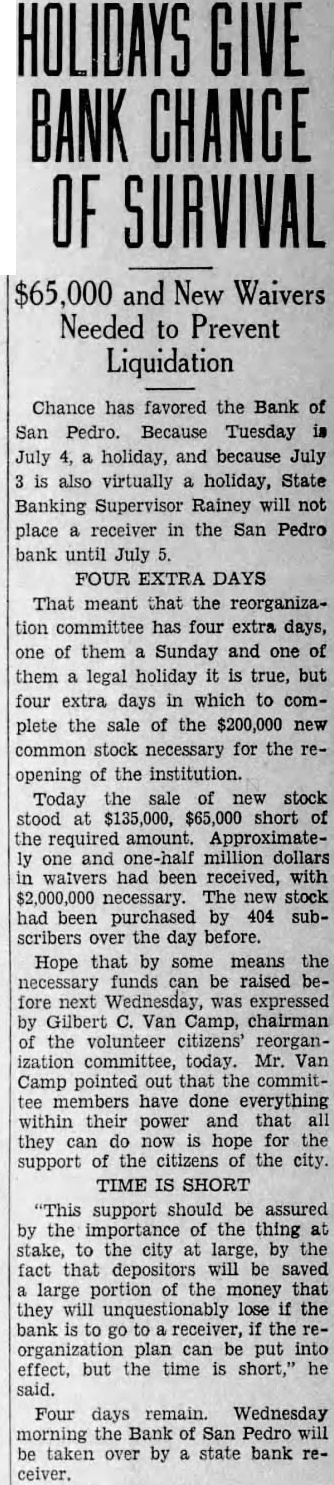
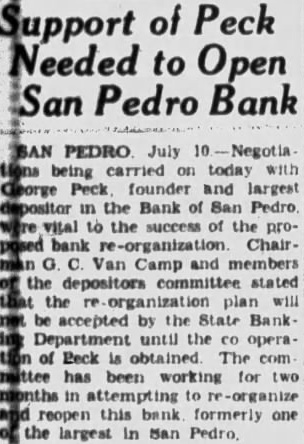
monster that has been poised unfortunate Bank of San the Pedro for many weeks, for few more days by strained of State Banking Suconcession There still perintendent Rainey. about $65,000 to be added remains stock issue of to the new common $200,000, vital to the reopening of the institution. The depositors' volunteer committee has virtually its list of available exhausted Their efforts stock prospects. have been titanic even if the result meagre in dollars subscribed. There is little more they except to remain on the can do, job the bank and all who desire to help in saving situation. The committee has the all the citizens volunteered can; will have to do the from now San Pedro gardens will be judged shortly after Augand the best front yard, ust back yard and all-around that group. Last lected from the contest, which an tries in sponsored by the annual event San Pedro garden club, were taken yesterday. Appropriateness and comfort, not extensiveness, to be the deciding factor in the judging of the gardens. Hence small yard garden has an chance with the big place, equal according to Mrs. dynamic general chairman of the contest. The scheme to saddle Cabrillo beach with parking fee to help pay for the cost of life guards at Santa Monica has failed. The county proposal to control life service has dwindled to acguard by Manhattan ceptance Hermosa. Long Beach was and to frown on the plan. the first Then the Los Angeles beaches catch. It not clear whether the parking fee will be established Redondo, Manhatand Hermosa for the benefit of becoming part of the county control system. any rate they can be expected to produce some revto offset the life guard enue deficit, which greatest in the Santa Monica Fort MacArthur will come little closer Monday to being the center United States Army activities Los Angeles county. The station maintained at Los Angeles will be for business under the open command of Colonel Paul Galleher. Civilian corps work focused much attention on the harbor defense post, which some day fated to become the anti-aircraft training headquarters the nation. The importance the fort major link in national defense becoming to be realized and the time arriving when military authorities in Washington will begin to see as something more than sub-station of San Francisco. "The Key to the Sea" has swing that judges in the 0-30 club contest for San Pedro slogan could resist. With it, Mrs. H. B. Kirkpatrick, 3037 Kerckhoff avenue, wins $10 prize and the appreciation of the sponsoring club and friends of the harbor community. The slogan plies shipping, the Navy and the fishing significant San Pedro. It is the hope of the and others that the slowill soon be seen on letterheads, cards, envelopes and all forms of advertising sent out from San Pedro.